
5 min read ·
How Car Hail Damage Is Inspected, Estimated and Paid
See how hail dents are documented, how repair methods affect the estimate, and how the deductible or a total-loss decision changes payment.
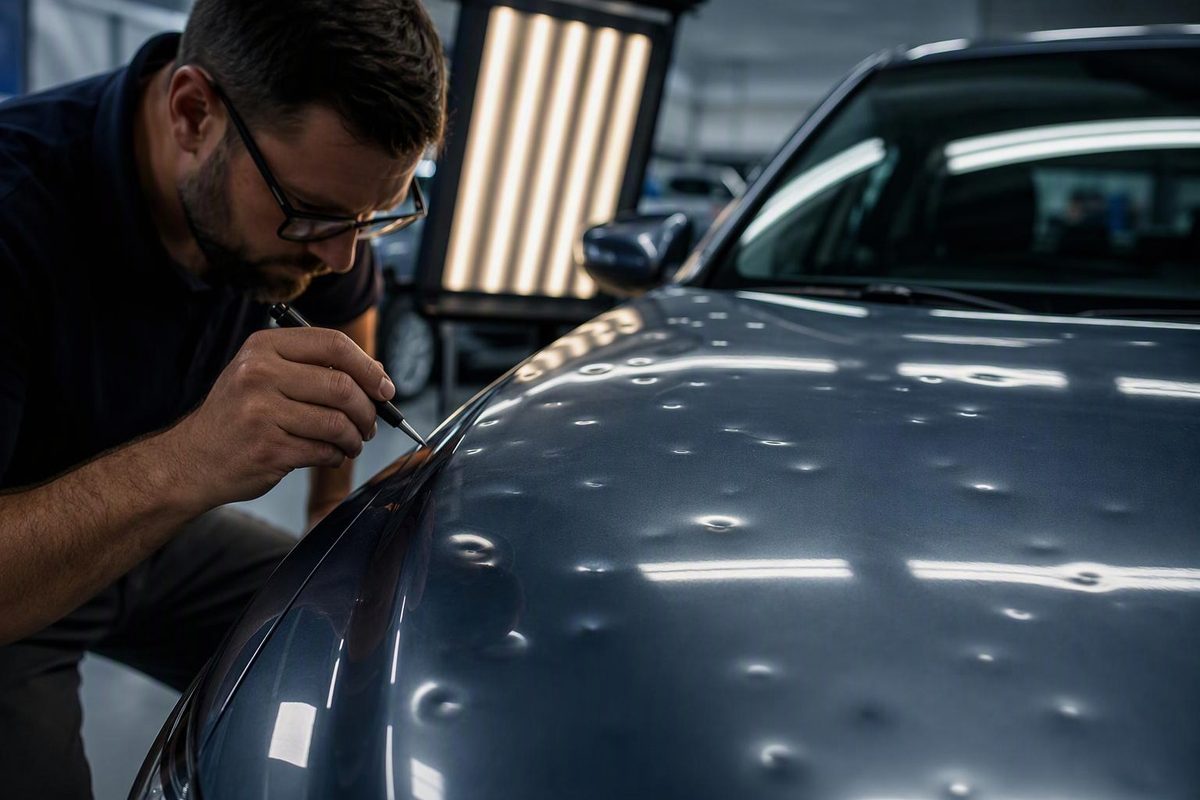
Hail damage is usually assessed panel by panel. An insurer or repair shop documents damage attributed to the reported storm, determines how each damaged area can be repaired, and estimates the necessary parts, labor and materials. The insurer then applies the comprehensive deductible or, if repair is uneconomical, evaluates the car as a possible total loss.
What the inspection records
Shallow dents can be difficult to see, so an in-person inspection may use lighting and reflections to reveal changes in a panel’s surface. The assessor typically works around the vehicle and records damage to areas such as the:
- hood, roof, trunk lid or liftgate
- fenders, doors and quarter panels
- roof rails, body lines and panel edges
- moldings, trim and exterior lights
- windshield, back glass and mirrors
The estimate may account for the number, concentration, size and depth of dents on each panel. Panel material, dent location and access to the back of the metal can also affect the proposed repair. Existing dents, scratches, rust and unrelated collision damage should be distinguished from damage attributed to this hail event.
Photos can support the claim, but the first photo-based estimate is not necessarily the final repair scope. Progressive says an estimate covers visible claim-related damage and may be updated when additional damage is found during repairs (Progressive).
The repair method drives the estimate
The assessor next determines what each damaged part requires.
Paintless dent repair (PDR) may be suitable when the paint remains intact and a technician can reshape the metal without conventional bodywork. The shop may need to remove a headliner, interior trim, lamps or other parts to reach the underside of a panel. A dent’s location, shape or severity can make PDR impractical.
Conventional repair and refinishing may be needed when paint is cracked or PDR cannot restore the panel. A badly damaged bolt-on part, such as a hood, may instead be priced for replacement. Depending on the vehicle and work involved, an estimate may include body labor, paint and materials, replacement parts, removal and installation of trim, and scans or calibrations associated with affected equipment.
This is why two cars caught in the same storm can receive different estimates. Numerous shallow dents with intact paint do not require the same work as sharp dents that split paint or strike hard-to-access edges. For more pricing context, see hail damage car repair cost by severity and method.
What the insurer evaluates
The physical inspection and coverage decision are related but separate. Hail damage is generally handled under comprehensive coverage—not liability or collision—but only if that coverage applied when the loss occurred. Colorado’s Division of Insurance, for example, lists hail as a cause covered by comprehensive and says comprehensive is typically written with a deductible (Colorado Division of Insurance). Your declarations page, policy and applicable state rules control.
The claim review generally addresses:
- Cause and timing: Is the damage consistent with the reported event, and was coverage active then?
- Repair scope: Which panels and attached parts were damaged by that event, and what work is required?
- Price: What parts, labor operations, rates and materials are reasonable for the covered repair?
- Prior damage: Which marks predate the storm or came from another cause?
- Repair or total loss: Is repair economical compared with the vehicle’s pre-loss value under the applicable total-loss method?
An estimate should itemize the visible claim-related repairs and the associated parts, labor and materials. If the shop later identifies omitted damage or needs a different operation, it can submit a supplemental hail damage estimate. A supplement is a proposed change; the insurer still reviews whether the additional work is related to the covered loss and reasonably priced.
Example: estimate, deductible and payment
Assume:
- approved covered hail repairs: $5,200
- comprehensive deductible: $1,000
- physical-damage payment subject to the policy’s valuation provisions
- old dents and unrelated paint damage excluded from this hail claim
If the car is repairable and the insurer approves $5,200 in covered work, the calculated claim payment is $4,200:
$5,200 covered repair amount − $1,000 deductible = $4,200
That calculation does not guarantee the shop’s final invoice will equal the first estimate. An approved supplement could increase both the repair amount and insurer payment; the deductible generally is not subtracted again for the same loss. Charges the insurer does not approve may remain disputed or become the vehicle owner’s responsibility, depending on the policy, state law and circumstances.
When hail damage totals the car
A drivable car can still be declared a total loss. This can happen when the projected repair cost is too high relative to its pre-loss actual cash value under the insurer’s method and applicable state rules.
A total-loss valuation commonly considers the vehicle’s year, make, model, mileage, equipment and pre-loss condition. The precise method and required settlement items vary by state. In Washington, for example, an insurer owes the actual cash value of a totaled car and may determine it using a comparable replacement or comparable local vehicles. The state insurance regulator recommends requesting the total-loss valuation report to review the data used; it also describes policy appraisal as one possible way to address a value dispute (Washington Office of the Insurance Commissioner).
Title treatment also varies by state. A salvage title is a warning, not a full diagnosis.
How to check the assessment
Before treating the scope as complete:
- Compare the estimate with the car panel by panel under lighting that makes shallow dents visible.
- Check whether damaged glass, trim, lamps and moldings are addressed—not only sheet metal.
- Ask which panels are assigned PDR, conventional repair or replacement, and why.
- Confirm whether removing and reinstalling trim or a headliner is included where access is needed.
- Give the shop the insurer’s estimate and ask it to obtain approval for supplemental claim work before proceeding.
- If the car is totaled, request the valuation report and verify the mileage, trim, options, condition adjustments and comparable vehicles.
The assessment is a documented repair and coverage proposal, not merely a visual dent count. The initial inspection identifies visible storm damage; repair access, policy terms, the deductible, supplements and the vehicle’s value determine what is ultimately approved and paid.