
24 min read ·
When the First Hail Estimate Does Not Cover the Full Repair Plan
The repair shop or contractor documents what it believes the repair requires. The insurer evaluates causation, coverage, necessity and payable amounts.
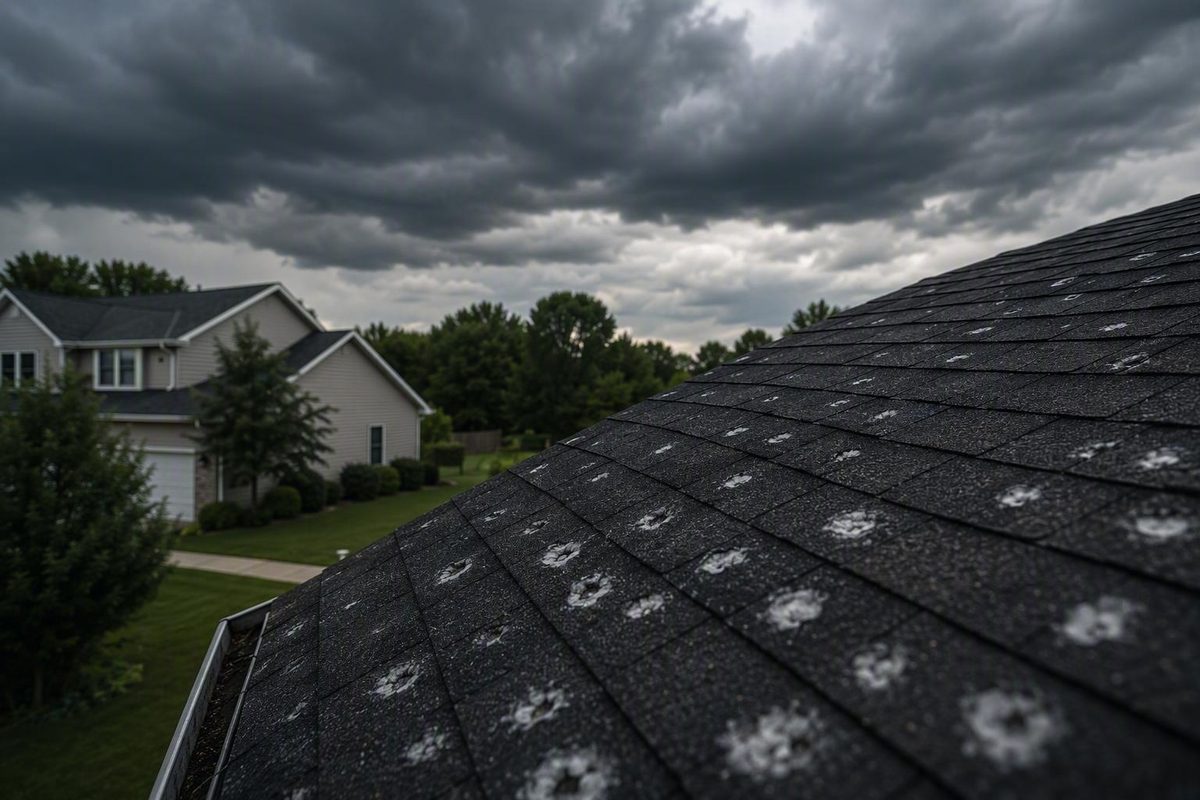
When the first hail estimate does not cover the full repair plan
A supplemental hail damage estimate is generally an itemized request to revise the repair scope associated with an existing insurance claim. It may identify damage, labor, materials, measurements, pricing, or repair operations that were omitted or described differently in the insurer’s first estimate. Terminology and claim treatment can vary, particularly when the date or cause of later-discovered damage is disputed.
A supplement is not proof that the insurer owes more money. The repair shop or contractor documents what it believes the repair requires; the insurer evaluates causation, coverage, necessity, quantities, repair methods, and payable amounts under the policy.
The details differ substantially between vehicle and property claims:
- Auto supplements commonly address dent counts, panel access, damaged trim, replacement parts, paintless dent repair, conventional body repair, and refinishing.
- Property supplements commonly address roof-system components, exterior damage, measurements, labor, permits, code requirements, and conditions exposed during tear-off.
In either case, the most useful approach is to compare the estimates line by line and support each requested change separately.
What a supplemental hail damage estimate means
A supplemental estimate is a revised, itemized repair request connected to damage already reported under a claim. Depending on the insurer or repair provider, it may be called a supplement, supplemental estimate, or supplemental claim.
For an auto claim, the supplement may be prepared after a repair facility cleans the vehicle, examines it under controlled lighting, maps dents panel by panel, or removes components that obstruct access. Automotive repair guidance describes supplements as updated requests for costs or operations missing from the original estimate, while emphasizing that the insurer—not the repair facility—determines coverage and payment under the policy (CD Dents’ explanation of automotive hail estimates).
For a property claim, a contractor may prepare a supplement after comparing the insurer’s scope with roof measurements, exterior observations, manufacturer information, code documentation, or conditions found during the work. The revised estimate may include corrected quantities, additional materials, labor, or newly exposed conditions.
The important distinction is between an estimate and coverage:
- An estimate describes proposed work, quantities, repair operations, and cost.
- The policy controls what property and types of loss are covered, excluded, limited, or subject to conditions.
- The insurer reviews the request and decides which proposed items it accepts as payable.
- A contractor or repair shop can document repair needs without necessarily having authority to decide coverage or settle a claim.
Not every hail claim needs a supplement. The initial estimate may already contain the covered work necessary for the repair. A difference between two estimates may also involve unrelated damage, excluded work, unnecessary operations, unsupported quantities, or different pricing assumptions.
| Issue | Initial estimate | Supplemental estimate | New claim |
|---|---|---|---|
| Purpose | Records the first assessed scope and cost | Requests additions or corrections to the existing repair scope | Reports damage attributed to a separate loss or event |
| Timing | Usually prepared after the initial claim inspection | Prepared after closer inspection, estimate comparison, disassembly, tear-off, or new documentation | Opened when another potentially covered event is reported |
| Claim number | Establishes or uses the assigned claim number | Commonly submitted under the existing claim number when it concerns the same reported loss | Classification and numbering depend on the insurer and circumstances |
| Evidence | Initial photographs, observations, statements, and measurements | Line-item differences supported by photographs, counts, measurements, invoices, technical findings, or code documents | Evidence addressing the separate event, date of loss, resulting damage, and claimed amount |
Property-focused guidance similarly describes a supplement as an additional request for omitted, corrected, or newly discovered items after review of the original estimate—not automatically as a separate loss (property hail supplement overview).
If later damage may have resulted from a different storm or cause, do not assume it belongs under the original claim. Ask the insurer how it wants the condition reported and classified.
Why an initial hail estimate and a repair estimate can differ
A higher repair-shop or contractor estimate does not automatically establish that the insurer underpaid. The total may be higher for supported reasons, unsupported reasons, or a combination of both.
An initial estimate may rely on:
- Photographs submitted through an app
- An exterior or drive-in inspection
- Remote roof measurements
- A brief inspection before a vehicle is cleaned
- Conditions visible before vehicle disassembly or roof tear-off
- Preliminary information about labor, materials, or repair methods
These methods can produce a starting estimate, but they may not reveal every operation required by the eventual repair plan. A subsequent inspection may identify additional damage, different quantities, access requirements, damaged accessories, or a repair method that could not be confirmed earlier.
Potentially defensible reasons for a difference include:
- Newly visible dents or damaged components
- Omitted removal-and-reinstallation labor
- Corrected roof dimensions or panel counts
- A proposed change from paintless dent repair to conventional repair
- Damaged clips, moldings, flashing, vents, gutters, or downspouts
- Updated and itemized material or labor support
- A documented permit fee
- A specifically identified code requirement
- Conditions exposed during disassembly or tear-off
Rather than debating only the bottom-line totals, separate the difference into five categories:
- Scope: Is an operation or damaged component absent from one estimate?
- Quantity: Do the estimates use different dent counts, roof areas, lengths, component counts, or waste calculations?
- Price: Do they apply different labor rates, material prices, taxes, fees, or equipment costs?
- Repair method: Does one propose repair while the other proposes replacement, or PDR instead of conventional body repair?
- Coverage or causation: Is there disagreement over whether hail caused the condition or whether the policy covers it?
A provider’s estimate can document these differences, but a higher total alone does not show that every line is necessary, reasonably priced, hail-caused, or covered. Property claim guidance recommends comparing scopes item by item because a disagreement may involve omitted work, quantities, pricing, depreciation, or how an operation was described—not merely the final number (HailScore’s claim and supplement overview).
Conditions found during repairs require particular care. Removing a headliner may reveal an access obstacle, while removing roof covering may expose deteriorated decking. Those findings may support a supplement, but the timing of discovery does not prove that hail caused the condition.
Possible explanations can include:
- Hail damage
- Wear or deterioration
- Prior damage
- Defective installation
- Moisture intrusion from another source
- Maintenance problems
- A policy exclusion or limitation
Document where the condition was found, its extent, why the provider associates it with the claimed loss, and what repair is proposed. Avoid assumptions that initial estimates are routinely deficient, intentionally low, or short by a predictable percentage. No fixed percentage can determine whether a particular claim needs a supplement.
The supplement process from inspection to insurer decision
The exact procedure depends on the insurer, policy, repair provider, and type of claim. A practical workflow generally looks like this.
1. Obtain the original documents
Collect the insurer’s estimate, scope of loss, claim correspondence, payment explanation, photographs if available, and claim number. For a property claim, identify whether the estimate separately lists replacement cost, actual cash value, depreciation, and the deductible.
Also review any insurer instructions governing:
- How supplements must be submitted
- Whether a particular form or portal is required
- Whether the insurer wants notice before disassembly or tear-off
- Whether a reinspection must occur before disputed work proceeds
- What deadlines or proof requirements apply to the claim
2. Conduct the detailed inspection
The shop or contractor examines the damaged vehicle or property. This may occur before work begins, after a vehicle enters controlled inspection conditions, or when parts of a structure become visible during repairs.
The provider should record observations rather than merely state that the first amount is inadequate.
3. Compare the estimates line by line
Match equivalent operations first. Then mark:
- Items included in both estimates
- Items missing from one estimate
- Quantity differences
- Price differences
- Different repair methods
- Items whose coverage or causation may be disputed
This reduces duplicate charges and gives the reviewer a clearer list of requested changes.
4. Document every addition
Each added line should answer three questions:
- What is being requested?
- Why was it not included or described correctly before?
- What evidence supports the change?
“Additional labor required” provides little detail. A more useful note would be: “Remove and reinstall left roof rail to reach documented dents on the left roof edge; see photographs 12–15 and technician access note.”
5. Submit the documentation using the insurer’s required process
When the supplement concerns the same reported hail loss, it is commonly associated with the existing claim. Confirm the claim number and submission instructions with the insurer rather than relying on the repair provider to determine claim classification.
A shop or contractor may send repair records to the insurer when authorized. Auto-repair guidance describes a common sequence in which the owner reports the claim, the insurer prepares an initial estimate, the shop documents additions, and the insurer reviews the request (48-Hour Auto Hail Repair’s process description).
Before signing an authorization, determine exactly what it permits the provider to do.
6. Await review and respond to questions
Depending on its procedures, the insurer may use:
- A desk review of the estimate and photographs
- A virtual inspection
- Live video with the repair provider
- An in-person reinspection
- Additional review of technical, pricing, or code documentation
Possible outcomes include:
- Full approval
- Partial approval
- Revised quantities or pricing
- Acceptance of one repair method but not another
- A request for more evidence
- Reinspection
- Denial of specific lines
- Denial of the entire request
A partial approval creates a clearer separation between accepted work and disputed items. It does not necessarily require restarting the entire claim.
7. Monitor payment and unresolved items
Keep your own claim file and ask the adjuster:
- Was the complete supplement received?
- Which version and submission date are under review?
- Is a reinspection required?
- Which lines have been accepted?
- Which lines remain open or disputed?
- What additional evidence is requested?
- When should I request another status update?
- Are there policy-specific deadlines or completion requirements?
There is no reliable universal turnaround period. Review time can vary with claim complexity, inspection availability, storm volume, missing records, and insurer procedures.
If further potentially covered damage appears later, another supplement may be possible. Any later request still requires documentation and remains subject to the policy, insurer procedures, applicable deadlines, and causation review.
What a well-supported supplement package contains
A strong supplement is organized around differences, not accusations. It should allow a reviewer to move from a disputed estimate line directly to the evidence supporting it.
Submission checklist
Include, as applicable:
- Claim number and policyholder name
- Insured vehicle information or property address
- Reported date of loss
- Insurer’s original estimate and scope
- Revised, itemized estimate
- A change summary identifying every revised line
- Labeled contextual and close-up photographs
- Panel maps, roof diagrams, or exterior elevations
- Dent counts, dimensions, component counts, or measurement reports
- Technician or contractor findings
- Access or disassembly notes
- The reason each line was added
- Itemized invoices, supplier quotes, or local estimates
- Permit documentation and actual fees
- Relevant manufacturer requirements
- Specific code provisions when applicable
- Moisture findings or other testing records
- Vehicle pre-scan information when relevant
- Contact information for follow-up
Evidence matrix
| Discrepancy | Useful support |
|---|---|
| Omitted damage | Wide photograph showing location, close photograph showing detail, and a label identifying the panel, roof plane, elevation, or component |
| Quantity dispute | Dent map, manual measurements, aerial report, component count, roof diagram, or calculation |
| Access labor | Disassembly photographs, technician notes, component location, and an explanation of why access is required |
| Pricing difference | Itemized estimates, supplier quotes, invoices, labor-rate support, or an explained estimating entry |
| Repair-method dispute | Technician findings, paint-condition photographs, access limitations, relevant manufacturer procedure, or technical information |
| Code-related item | Specific provision, jurisdiction information, permit record, inspection instruction, and explanation of why the rule applies |
| Hidden condition | Before-and-after photographs, exact location, dimensions, removed-material photographs, test findings, and causation explanation |
Photographs should establish both context and detail. A close-up may show a dent or damaged roof component without identifying its location. A wide image may establish the vehicle panel or roof plane without showing the condition clearly. Use both and label them consistently.
For example:
- “Photo A1: Full passenger side for context”
- “Photo A2: Dent cluster on front passenger door”
- “Photo R1: South roof plane before tear-off”
- “Photo R2: Exposed decking condition, south plane, three feet above eave”
Automotive supplement packages may include controlled-light photographs, dent counts, access notes, pre-scan information, and estimating-software output. One auto-repair source describes using these materials to organize a supplement for insurer review (Dents By Hand’s documentation overview). Property packages may use roof diagrams, measurement reports, moisture findings, contractor notes, manufacturer specifications, and applicable code documents.
Estimating software is useful, but its function should not be overstated:
- Xactimate can organize property repair line items, quantities, labor, materials, waste, and pricing.
Software output does not independently prove that hail caused a condition, that the policy covers it, that an operation is necessary, or that the insurer owes the amount. It structures an estimate; it does not make a coverage decision.
The same distinction applies to weather evidence. A storm report may support the proposition that hail occurred near a location. It does not, by itself, prove that hail damaged a particular vehicle, roof, gutter, or wall. Location-specific photographs, physical findings, timing, and other evidence still matter.
Preserve all claim-file versions in one place:
- Original estimate
- Every revised estimate
- Original, full-resolution photographs
- Emails and portal messages
- Inspection reports
- Invoices and receipts
- Permit records
- Insurer approvals and denials
- Payment explanations
- Completion documents
Use dates or version numbers in filenames so everyone can identify the current estimate.
Auto hail supplements: dents, access, parts, and repair methods
Automotive hail damage can be difficult to record in outdoor photographs. Reflections, vehicle color, dirt, viewing angle, and surrounding light can obscure shallow dents. A clean vehicle examined with controlled reflective or LED lighting may reveal panel deformation that was not clear during the first review.
An auto supplement should document damage panel by panel. Depending on the estimating method, this may include:
- Panel name and location
- Dent count
- Dent-size category
- Dent density
- Close and contextual photographs
- Access conditions
- Panel material
- Proposed repair method
- Itemized estimating entries
Controlled lighting does not make every observed condition hail damage. It improves visibility; the technician must still assess the shape, distribution, location, and likely cause.
Access operations
Paintless dent repair often requires access to the reverse side of a panel or a workable tool path. That may require removal and reinstallation of:
- Headliners
- Interior trim panels
- Lamps
- Belt moldings
- Roof rails
- Weatherstrips
- Other nearby components
The supplement should identify the damaged panel, the component obstructing access, the proposed operation, and the evidence showing why it is required.
Removal may also reveal a need for parts. Clips can break or have limited reuse; adhesive-mounted moldings may not be reusable; trim may already be cracked, distorted, or hail-damaged. These facts should be documented rather than treated as automatic charges. Vehicle-specific repair guidance identifies headliners, moldings, lamps, roof rails, clips, and restricted access as possible supplemental considerations when supported by the repair plan.
PDR versus conventional repair
Paintless dent repair, or PDR, reshapes a damaged panel without conventional refinishing when the panel and finish are suitable. Conventional repair may involve bodywork, repair materials, paint preparation, and refinishing. Replacement may be proposed when the damage or repair approach makes panel repair impractical.
A change in method may be supported by:
- Cracked or fractured paint
- Scratches requiring refinishing
- Severe panel deformation
- Damage on difficult bodylines or edges
- Unsuitable tool access
- A component that cannot be repaired as initially proposed
- Broken glass or related damage
Automotive industry guidance distinguishes PDR from conventional repair when paint is cracked, scratching is present, or parts and glass are damaged (World Hail Network’s estimate glossary). The appropriate method remains vehicle- and damage-specific.
None should be treated as an automatically payable surcharge. The estimate should identify the vehicle-specific operation, explain why it is required, and provide relevant support.
Hypothetical auto example
This example illustrates documentation structure only. It does not represent typical pricing or a guaranteed outcome.
Original estimate
- Hood: 15 dents, PDR
- Roof: 20 dents, PDR
- Left front fender: PDR
- No access operations
Proposed supplement
-
Hood count revised from 15 to 32 dents - Support: controlled-light photographs, hood panel map, and categorized dent count. - Review issue: quantity.
-
Remove and reinstall headliner for roof access - Support: technician note identifying inaccessible roof areas, interior photographs, and the proposed access procedure. - Review issue: scope and necessity.
-
Replace identified limited-use roof-rail clips - Support: part identification and applicable repair documentation. - Review issue: parts and necessity.
-
Change left front fender from PDR to conventional repair and refinish - Support: close photographs showing cracked paint and a technician explanation. - Review issue: repair method.
The insurer could approve all four items, accept only some, revise the dent quantity, request an inspection, or dispute causation or necessity. The shop documents its findings; the insurer decides what is payable under the claim.
Property hail supplements: roof components, measurements, and hidden conditions
A property hail estimate may involve more than field shingles or another primary roof covering. A complete comparison should account for the roof system, exterior components, access requirements, measurements, and operations required to perform the proposed repair.
Potentially omitted items can include:
- Starter shingles
- Ridge and hip caps
- Underlayment
- Valley materials
- Flashing
- Drip edge
- Vents and ventilation components
- Pipe boots
- Gutters and downspouts
- Documented siding or soft-metal damage
- Detach-and-reset operations
Examples may include a downspout, satellite-related component, or another obstruction. The contractor should identify the affected repair area and explain why temporary removal is necessary.
Measurements and quantities
Two estimates may differ because they use different:
- Roof dimensions
- Slope measurements
- Numbers or lengths of ridges, hips, valleys, and eaves
- Roof heights
- Design-complexity assumptions
- Material quantities
- Waste calculations
- Component counts
A roof diagram or measurement report can help isolate the difference. It does not establish coverage, but it can explain why one estimate uses a different quantity.
Property supplement guidance identifies starter materials, ridge and hip caps, underlayment, valleys, flashing, drip edge, vents, gutters, and downspouts as possible scope items. It also describes Xactimate as a tool for comparing quantities, labor, materials, and pricing (Grand Prairie property supplement guide). Whether a particular line is payable still depends on the documented damage, policy, and insurer review.
Hidden conditions during tear-off
Roof tear-off can expose decking, fasteners, moisture, or structural conditions that were not visible before work began. If a newly exposed condition may relate to the reported loss, practical documentation steps include:
- Pause work in the immediate area when conditions and safety permit.
- Take wide and close photographs.
- Record the exact roof plane and location.
- Measure the affected area.
- Record what layers were removed and what was observed.
- Preserve representative removed material when safe and practical.
- Notify the insurer and ask whether it requires a reinspection before the condition changes.
Do not characterize every exposed condition as hail damage. Rot, long-term moisture, deterioration, prior installation problems, and unrelated structural defects may have a different cause or coverage treatment.
Permits and code requirements
A permit line should be supported by the actual requirement and fee rather than an unsupported allowance. A code-related request should identify:
- The specific requirement
- The jurisdiction or authority applying it
- Why it applies to the proposed repair
- The resulting operation or material
- Available permit, inspection, or building-department documentation
A code citation can show that a requirement exists, but it does not establish that a particular policy pays for the resulting work. Ask the insurer whether the policy contains applicable ordinance-or-law coverage, limits, exclusions, or other conditions.
Manufacturer instructions can similarly support a proposed component or installation method, but they should be tied to the actual product and repair.
Hypothetical property example
This example is illustrative and does not use typical dollar amounts.
Before work
The insurer’s estimate includes field shingles and underlayment but does not include the contractor’s measured ridge-cap quantity or a proposed flashing operation at a roof-to-wall intersection.
The contractor submits:
-
Added ridge-cap quantity - Support: roof diagram, ridge measurement, and pre-work photographs. - Review issue: quantity and scope.
-
Added flashing operation - Support: contextual photograph of the intersection, close photograph of the existing flashing, and an explanation of the proposed repair sequence. - Review issue: scope and repair method.
During tear-off
The crew exposes a section of discolored and deteriorated decking.
A separate addition records:
- Decking condition - Support: wide photograph establishing location, close photographs, dimensions, test findings if taken, and contractor observations. - Review issue: causation, necessity, and coverage.
The first two additions can be reviewed separately from the third. The insurer might accept the ridge quantity and flashing while disputing whether the decking condition resulted from hail. Separating the issues makes that distinction clear.
How deductibles, depreciation, and payment affect the supplement
Approval of additional work does not necessarily produce an immediate payment equal to the approved addition. The actual calculation may also reflect:
- The applicable deductible
- Prior payments
- Depreciation
- Replacement-cost conditions
- Policy limits or sublimits
- Exclusions or noncovered work
- Other claim adjustments
- The payees named on a check
Do not assume that a same-claim supplement either creates or avoids another deductible. Confirm how the insurer has classified the request, which deductible it is applying, and whether the policy contains a separate wind or hail deductible. Deductible structures can vary by policy and type of loss (Insurance Roster’s deductible overview).
For a property claim, the estimate may use terms such as:
- Replacement cost value (RCV): The estimate’s stated cost to repair or replace the covered damaged property before subtracting depreciation, subject to the policy.
- Actual cash value (ACV): The amount calculated after applicable depreciation is deducted from replacement cost.
- Depreciation: The reduction applied for factors such as age or condition under the insurer’s estimate and policy.
- Recoverable depreciation: An amount that may be released if the policy permits recovery and its repair or documentation conditions are met.
- Nonrecoverable depreciation: An amount not available for later recovery under the insurer’s application of the policy.
A published walkthrough of one property estimate shows how RCV, ACV, depreciation, and a deductible can result in an initial payment below the stated replacement-cost amount. It also illustrates that release of withheld depreciation may depend on completing and documenting repairs (HomeHudl’s hail-estimate explanation).
Ask the insurer which documents apply to your claim. Depending on its instructions and the policy, it may request invoices, completion photographs, a final bill, proof of incurred costs, or another completion record before considering release of withheld amounts.
Illustrative calculation—not typical amounts
Assume one property claim is calculated as follows:
Original calculation
| Original calculation step | Amount |
|---|---|
| Original approved replacement-cost scope | $20,000 |
| Original depreciation withheld | −$3,000 |
| Original ACV amount | $17,000 |
| Deductible | −$2,500 |
| Prior payment | $14,500 |
Revised calculation after approval of a supplement
| Revised calculation step | Amount |
|---|---|
| Original approved replacement-cost scope | $20,000 |
| Approved supplemental scope | +$5,000 |
| Revised replacement-cost scope | $25,000 |
| Revised total depreciation withheld | −$4,000 |
| Revised ACV amount | $21,000 |
| Deductible | −$2,500 |
| Revised ACV-based payable amount | $18,500 |
| Prior payment | −$14,500 |
| Immediate additional payment | $4,000 |
| Total potentially recoverable depreciation | $4,000 |
In this hypothetical, the approved repair scope increases by $5,000, but the immediate additional payment is $4,000 because total withheld depreciation also increases by $1,000. The policyholder might later receive up to the stated $4,000 depreciation holdback only if the policy allows recovery and its conditions are satisfied. Actual claim calculations can differ substantially.
Approval also does not establish that the policyholder will owe only the deductible. Ask who is responsible for:
- Work the insurer does not approve
- Owner-selected upgrades
- Amounts above policy limits
- Nonrecoverable depreciation
- Unresolved price differences
- Unrelated repairs
- Provider or financing charges
- Additional deterioration found during work
Payment routing also requires claim-specific confirmation. Ask the insurer:
- Who will receive each payment?
- Will a vehicle lender, mortgage company, contractor, or repair shop be named?
- Will more than one endorsement be required?
- Is there a direction-to-pay document in the file?
- What must be submitted to request release of withheld depreciation?
- Is a final invoice or completion inspection required?
- Which approved amounts have already been paid?
- Which amounts remain withheld or disputed?
What to do when the insurer disputes or only partly approves the supplement
Start by requesting an itemized response. “The supplement was reduced” does not explain whether the issue is scope, quantity, price, repair method, code applicability, causation, or coverage.
A partial approval can help isolate accepted work from unresolved items. It does not necessarily require reopening every accepted line.
| Type of dispute | Productive next step |
|---|---|
| Scope | Show the omitted operation or component and explain why it is required for the proposed repair |
| Quantity | Supply measurements, dent counts, component counts, diagrams, or calculations |
| Price | Provide itemized supplier quotes, invoices, local estimates, or labor support |
| Repair method | Submit technical findings, access notes, paint-condition photographs, or relevant procedures |
| Code | Identify the requirement, issuing authority, and resulting work; ask the insurer how the policy addresses it |
| Causation | Provide location-specific evidence and address prior damage, deterioration, or alternate causes |
| Coverage | Ask which policy language or claim rationale the insurer is applying and review the complete policy |
Before escalating formally, determine whether the reviewer lacked evidence that already exists. A corrected photograph label, clearer measurement, invoice, or access explanation may resolve a narrow disagreement. Request clarification or reinspection when the existing file does not adequately show the disputed condition.
When work cannot wait
Emergency mitigation, exposed roofing, or a vehicle left in an unsafe disassembled condition may make delay impractical. Ask the insurer for instructions as soon as possible and preserve evidence before repairing or discarding the condition:
- Take wide photographs establishing location.
- Take close photographs showing detail.
- Record measurements and quantities.
- Note the date and stage of work.
- Photograph removed materials.
- Retain representative material when safe and practical.
- Notify the insurer promptly.
- Ask whether video review or immediate reinspection is available.
Evidence preservation does not guarantee payment, but it gives the insurer a record to evaluate after the physical condition has changed.
Possible escalation routes
Available options depend on the policy, dispute, jurisdiction, and amount involved. Rather than assuming that any particular remedy applies, ask about:
- Adjuster clarification
- Supervisor review
- Reinspection
- A revised supplement containing genuinely new evidence
- Appraisal, including whether the policy provides for it and whether the particular dispute falls within that process
- Information or complaint assistance from the relevant insurance regulator
- A properly licensed public adjuster for a property claim, where permitted
- Advice from a qualified attorney
Commercial claim guidance lists reinspection, appraisal, public-adjuster assistance, and legal advice as possible options, but none guarantees a higher payment (StormIntel’s hail-claim guide).
Rules governing appraisal, public adjusters, contractor communications, claim deadlines, assignments, and settlement documents vary. Obtain policy-specific or qualified local guidance before relying on a general description of those subjects.
Before signing a work authorization, direction-to-pay document, or assignment, ask:
- Who controls communication about the claim?
- Who can approve changes to the repair plan?
- Who receives the insurance payment?
- Can the document be canceled, and on what terms?
- What fees or cancellation charges apply?
- Does the provider claim an interest in the proceeds?
- What happens if the insurer approves only part of the estimate?
- Who is responsible for any unpaid difference?
- Does the document authorize repair work, claim communication, payment collection, or all three?
Frequently asked questions
Is a supplemental hail damage estimate a new insurance claim?
When the request concerns additional or corrected work associated with the same reported hail loss, it is commonly submitted under the existing claim rather than treated as a newly reported storm loss.
That should not be assumed when the damage may have resulted from another event or date of loss. Ask the insurer how it wants the condition reported and whether it considers the request part of the existing claim.
Can more than one hail supplement be submitted?
Potentially. One supplement may address findings from a detailed inspection, while another may address conditions exposed during vehicle disassembly or roof tear-off.
Each later request should identify what is new, why it was not documented previously, and how it relates to the reported loss. Whether the insurer will consider it depends on its procedures, the policy, applicable deadlines, and the available causation evidence.
Should repairs begin before the insurer reviews the supplement?
When practical, ask the insurer whether it wants to review or reinspect disputed work before the original condition changes. Do not assume that a provider’s estimate has been approved merely because it was submitted.
If temporary protection, mitigation, or safety-related work cannot wait, notify the insurer promptly and preserve the condition with wide and close photographs, measurements, descriptions, video, and retained materials where safe and practical. Ask the insurer how proceeding may affect its review and who will be responsible for unapproved amounts.
Does a hail supplement create another deductible?
Do not rely on a universal rule. Confirm the reported date of loss, claim number, claim classification, deductible amount, and any special wind or hail deductible with the insurer.
If the insurer treats part of the request as a different loss, ask for an explanation and identify the policy terms it is applying.
Who receives an approved supplemental payment?
Payment arrangements vary by claim. Ask whether payment will be issued to the policyholder alone or whether another person or entity will be named, such as a repair provider, vehicle lender, contractor, or mortgage company.
Also confirm whether endorsements, final invoices, completion photographs, proof of incurred costs, or other documents are required before funds can be released.
The first hail estimate is neither automatically final nor automatically deficient. A useful supplement isolates each proposed change, explains why it belongs in the repair plan, and connects it to evidence appropriate for the vehicle or property. Confirm coverage, deductible treatment, deadlines, payment routing, and dispute options through the policy, insurer, and qualified local professionals.
Insurance Roster provides general insurance education, not policy-specific insurance, legal, or financial advice. Coverage, deadlines, deductible treatment, payment routing, and dispute rights depend on the policy, insurer, claim facts, jurisdiction, and applicable law.