
4 min read ·
Roof Hail Damage Looks Random—Not Like Ordinary Aging
Learn how hail marks differ by roof material, what to inspect safely after a storm, and how deductibles, limits and exclusions affect a claim.
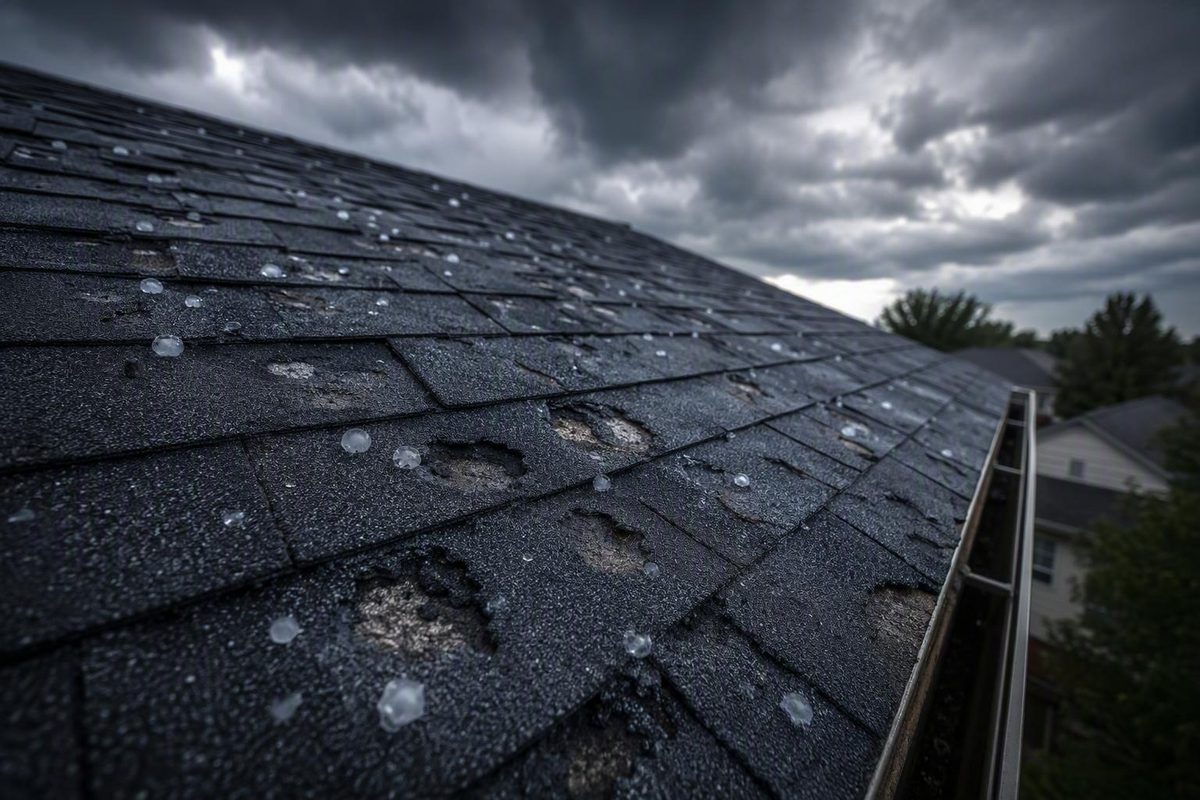
Hail damage usually appears as scattered impact marks rather than an even band of wear. On asphalt shingles, look for round or irregular dark spots, shallow divots, missing granules and bruised areas. Wood shingles may show fresh-looking splits with sharp edges and an impact dent along the split. Metal roof components may be visibly dented.
A mark is not proof of a covered hail loss by itself. Its pattern, condition and timing must fit the storm, and your policy still determines whether the resulting damage is covered.
Signs by roofing material
Asphalt or composition shingles
Common signs include:
- Randomly distributed dark or black impact marks
- Small depressions or divots
- Missing granules, sometimes exposing shiny asphalt or the mat below
- A soft, bruised area around an impact
- Cracks or splits that may not be obvious from above
Travelers describes asphalt-shingle hail damage as random, with black hits, granule loss, shiny exposed material and spots that feel like an apple bruise. It also warns that some weathering and manufacturing conditions can look similar (Travelers). Owens Corning adds that damage on the back of a shingle can be hidden unless a professional lifts and reseals it (Owens Corning).
Wood shingles and shakes
Look for a fresh brown or orange split with sharp corners, little deterioration at the edges, and an impact mark along the split. Older splits tend to look weathered rather than freshly exposed. Hail can also crack wood shakes rather than leave the dark bruise seen on asphalt shingles (Travelers).
Metal, vents, gutters and other surfaces
Dents in metal gutters, downspouts, flashing or roof vents can support the conclusion that hail struck the property. Plastic components may crack instead. Also check air-conditioning fins, siding, vehicles and outdoor furniture from the ground; damage across several exposed surfaces gives an inspector useful context.
These collateral signs do not prove that the shingles were functionally damaged. Roof materials absorb impact differently, and wind, hailstone size, barriers, roof age and pre-storm condition all affect the result (Travelers).
Hail damage versus ordinary wear
Granule loss alone is not enough to identify hail. Asphalt shingles naturally lose granules as they age, while blisters, cracking, flaking, algae, installation scuffs and manufacturing imperfections may mimic impact marks. State Farm notes that normal aging erodes granules and that roof blisters are raised, bubble-like areas associated with trapped moisture and heat (State Farm).
The more persuasive hail pattern is a group of discrete, random impacts that lines up with fresh dents or damage on other storm-facing surfaces. An evenly weathered field of shingles, widespread curling or old cracks points more toward age or another cause. For a closer visual comparison, see hail damage versus blistering.
Check safely and preserve the evidence
Start without walking on the roof:
- Photograph hail on the ground, if any, beside a ruler or familiar object. Note the date and approximate time.
- Take wide and close photos of dents, cracked siding, damaged plants and visible roof marks from a safe location.
- Check ceilings and an accessible attic for new stains, wet insulation or daylight through the deck.
- Arrange an inspection by a reputable roofer if damage is not visible from the ground or the roof is steep, wet or otherwise unsafe. Ask for labeled photos identifying the roof slope, component and suspected cause.
- If water is entering, make only safe temporary measures and keep receipts. Do not discard damaged material before the insurer has had an opportunity to inspect it.
The Texas Department of Insurance recommends photographing and listing interior and exterior damage, preventing further damage, saving receipts and being present for the adjuster’s visit (TDI). The NAIC likewise advises reporting a claim promptly once you decide to file and asking whether a separate hail, wind or hurricane deductible applies (NAIC claims guide).
What the marks could mean for an insurance payment
First check the declarations, roof endorsement and loss-settlement section for:
- Wind or hail coverage and any separate deductible
- Replacement cost value (RCV) versus actual cash value (ACV)
- A roof payment schedule or roof-specific limit
- A cosmetic-damage exclusion
- Notice, inspection and repair deadlines
Under RCV, covered damage is valued without a depreciation deduction; under ACV, depreciation reduces the covered value. The NAIC also notes that some policies exclude wind or hail and some apply special roof or wind/hail deductibles (NAIC).
Illustrative claim—not a coverage promise: Assume covered roof repairs cost $18,000, the applicable roof limit is $15,000 and the deductible is $2,000. If the policy first caps the covered amount at $15,000 and then subtracts the deductible, the payment would be $13,000. If an ACV provision instead values the covered damage at $11,000, the payment would be $9,000 after that deductible. If the only marks are excluded cosmetic damage, the payment for those marks could be $0. Actual calculations depend on the policy’s exact wording, depreciation, limits and covered scope.
Before accepting a scope, compare the insurer’s listed slopes, shingles, flashing, vents, gutters and code-related work with the contractor’s findings. A later-discovered item can be presented through a supplemental hail-damage estimate; a supplement requests review but does not guarantee payment. If the dispute is broader, compare the policy, physical damage, insurer scope and documented costs.