
19 min read ·
What a Salvage Brand Tells You—and What It Does Not
The car was usually declared a total loss or met a state's salvage rules. The title does not show what happened, damage extent, repair status or condition today.
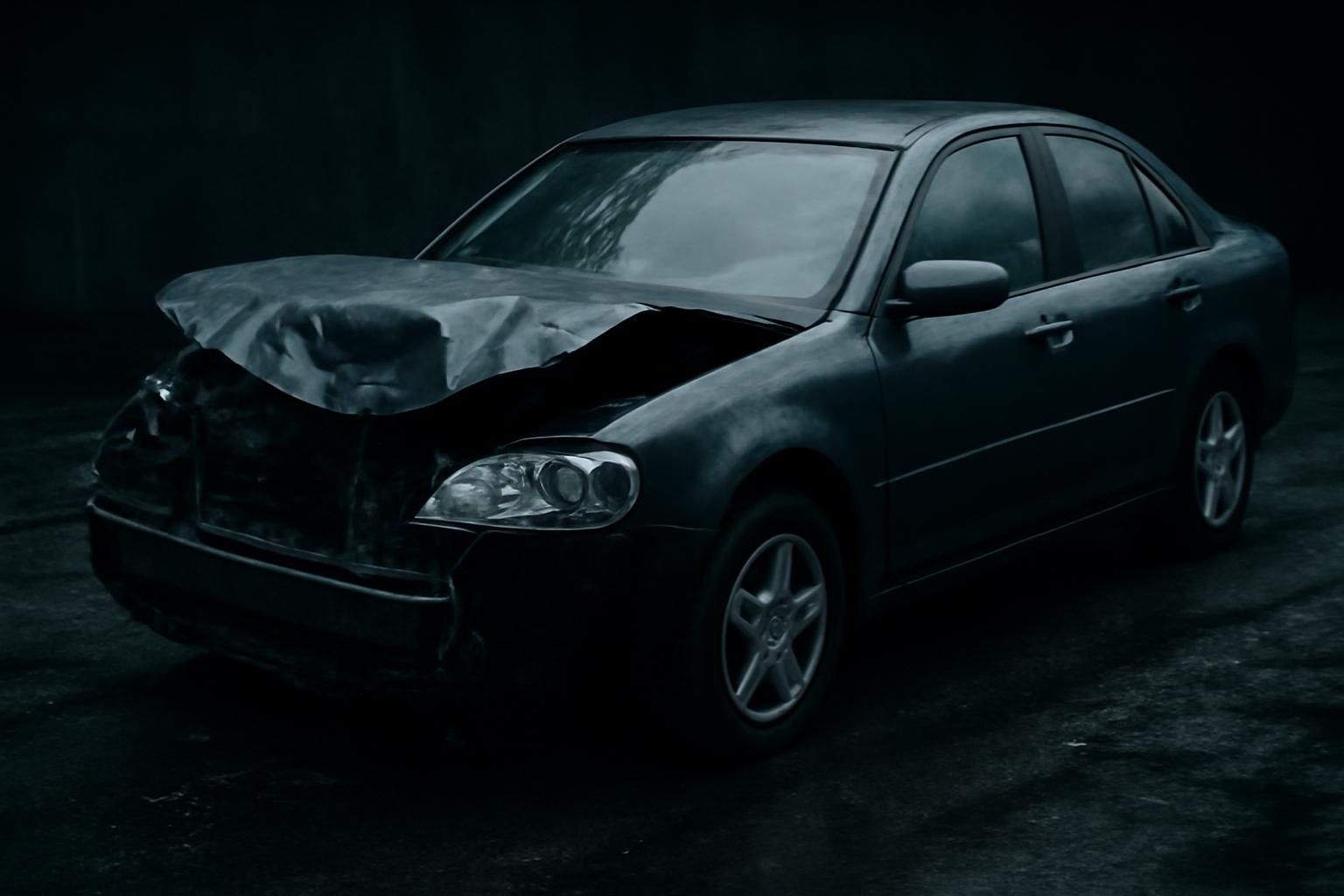
The short answer: what a salvage title means
A salvage title generally means a vehicle was declared a total loss or otherwise met a state’s criteria for salvage branding. An insurance company commonly makes the total-loss determination, while the state motor-vehicle agency administers the title and applies the appropriate brand. Definitions, thresholds, terminology, and legal consequences vary by state; for example, the Texas Department of Motor Vehicles defines and administers several distinct salvage-related brands.
In plain English, the brand is a warning about the vehicle’s legal status and history. It tells you that something significant happened in the vehicle’s past, but it does not tell you exactly what happened, how extensive the damage was, whether repairs have been completed, or what condition the car is in today.
That distinction between history and present condition matters. A salvage vehicle may start, move under its own power, and be physically repairable. But running does not necessarily make it eligible for ordinary registration or public-road use. A vehicle carrying current salvage status generally must complete the applicable state restoration process before it can receive rebuilt, reconstructed, or equivalent status and return to normal road use.
The exact wording on the current title is therefore critical:
- Salvage usually describes a vehicle that has not completed the state’s restoration process.
- Rebuilt or reconstructed generally means a formerly salvaged vehicle was repaired and completed an applicable state procedure.
- Non-repairable, junk, or parts only generally describes a vehicle that cannot be restored for ordinary public-road use.
- Flood, fire, or another specific brand may identify the type of loss, depending on the state.
Do not rely solely on a seller’s use of the phrase “salvage car.” Some sellers use it informally for vehicles that now carry rebuilt titles. Others may describe a currently salvaged vehicle as “repairable” without clearly explaining that it cannot yet be registered for normal road use.
Inspect the official title, copy the brand exactly as printed, and note the issuing state. Then confirm what the brand means with the motor-vehicle agency in the state where you intend to title and register the car.
The central point is simple: a salvage title is a reason to investigate, not a complete diagnosis of the vehicle.
Why a car can be totaled without being destroyed
A total loss is often an economic determination rather than a declaration that the vehicle has been physically destroyed.
Consider an older car with a relatively low pre-loss value. It might need a repairable combination of bodywork, paint, lamps, sensors, and suspension components. The work could cost too much relative to the car’s value even though the engine runs and the passenger compartment remains recognizable.
There is no single nationwide repair-cost percentage that governs every total-loss or salvage determination. States use different definitions and thresholds, and not every qualifying event is evaluated in exactly the same way.
Common events that can lead to a total loss or salvage brand include:
- Collision damage
- Flooding
- Fire
- Hail
- Hurricanes and other major storms
- Theft followed by recovery
- Missing or damaged components after theft
- Owner retention after a total-loss settlement
There can also be less obvious circumstances. Texas recognizes salvage-related brands associated with owner retention, theft after an insurance payout, abandonment, owner designation, and reasons other than physical damage. Its guidance also makes clear that the brand itself does not necessarily establish the precise type or extent of damage.
The cause of the loss matters because different events create different questions:
- Flood loss: Ask about water intrusion, corrosion, wiring, connectors, electronic modules, carpeting, insulation, and fluids. Electrical or corrosion problems may not become obvious immediately.
- Collision loss: Ask about structural alignment, suspension mounting points, repaired rails or crush structures, airbags, seat-belt systems, crash sensors, and fitted driver-assistance equipment.
- Fire loss: Determine which areas were exposed to heat, smoke, damaged wiring, or extinguishing agents, including areas outside the visibly burned section.
- Hail loss: Damage may be concentrated in exterior panels and glass, yet extensive repairs can still be uneconomical relative to the vehicle’s value.
- Theft recovery: The vehicle may have missing parts, damaged locks or wiring, or an uncertain period of use without necessarily having sustained a major collision.
The risk profile can therefore differ substantially from one rebuilt vehicle to another. Consumer Reports notes, for example, that heavy hail damage raises different concerns from a serious crash and that flood exposure can produce corrosion-related electrical problems that appear later.
Never infer that a salvage vehicle was definitely crushed in a severe accident. But do not make the opposite assumption either. A seller’s statement that the loss was “only cosmetic” should be tested against original loss photographs, auction records, an insurer’s damage description when available, itemized repair documents, and an independent inspection.
Clean, salvage, rebuilt, and non-repairable titles compared
Title terminology is not fully standardized across the country. “Rebuilt,” “reconstructed,” “prior salvage,” and similar terms can carry different definitions or procedures depending on the issuing state. The following comparison reflects general usage rather than a substitute for jurisdiction-specific rules; Progressive’s general guidance similarly distinguishes salvage, rebuilt, and non-repairable or parts-only certificates.
| Title status | General meaning | Typical road-use status | Main question a buyer should investigate |
|---|---|---|---|
| Clean | The current title does not carry brands such as salvage, rebuilt, junk, or flood | Usually eligible for ordinary registration, subject to normal requirements | Does the vehicle have accident, flood, repair, lien, or mechanical history that is not reflected by a title brand? |
| Salvage | The vehicle was declared a total loss or met another qualifying salvage criterion and has not completed the state restoration process | Generally not eligible for ordinary registration and road use | What caused the brand, what damage remains, and can the vehicle legally qualify for rebuilt status? |
| Rebuilt or reconstructed | A formerly salvaged vehicle was repaired and completed the applicable state process | Commonly eligible for registration, subject to state requirements | What was repaired, how well was it repaired, and what did the state process actually examine? |
| Non-repairable, junk, or parts only | A designation distinct from ordinary salvage that generally limits the vehicle to parts, dismantling, or disposal | Generally ineligible for restoration to public-road use | Is reconstruction legally prohibited, and how may the vehicle be transferred or disposed of? |
A clean title is not a clean bill of health. It generally means the current state title record does not display a major brand. A clean-title vehicle can still have prior collision repairs, water exposure, mechanical defects, poor maintenance, or damage that was never reported to an insurer or title agency.
A salvage title usually represents the vehicle’s current pre-restoration legal status. It does not necessarily mean the vehicle can never be repaired. It generally means the required repair, documentation, inspection, and retitling process has not been completed—or has not resulted in a different title status.
A rebuilt or reconstructed title generally indicates that the vehicle previously held salvage status and later completed the issuing state’s process for returning it to registrable status. That process may involve an application, ownership evidence, repair records, parts receipts, photographs, and one or more inspections.
A non-repairable or parts-only designation is more restrictive than ordinary salvage. It generally prevents the vehicle from being legally restored for public-road operation, although the exact name, ownership rules, and transfer restrictions depend on the state.
Because informal language is unreliable, ask to see the current official title rather than accepting an advertisement that says “salvage,” “rebuilt salvage,” “reconstructed,” or “ready to register.” Record the exact brand and issuing state, then verify the legal effect with the issuing agency and the agency where you plan to register the vehicle.
How a totaled vehicle typically becomes rebuilt
Although procedures differ by jurisdiction, the usual path from a qualifying loss to a rebuilt title looks like this:
- A qualifying event occurs. The vehicle is damaged, stolen and recovered, retained after a total-loss settlement, or affected by another event recognized under state rules.
- A total-loss or salvage determination is made. An insurer commonly makes the economic total-loss decision, although state definitions may cover other circumstances.
- Salvage status is issued or recorded. The insurer, owner, buyer, or another authorized party submits the required title documents.
- The vehicle is repaired. The owner or rebuilder restores the vehicle and retains the evidence required by the state.
- Documentation and inspection requirements are completed. The process may address ownership, vehicle identity, major parts, theft prevention, repairs, equipment, or roadworthiness.
- A rebuilt or reconstructed title is issued. The vehicle may then become eligible for registration and public-road use, subject to the applicable rules.
This sequence is illustrative, not a nationwide procedure. Each state controls its applications, evidence requirements, inspections, transfer restrictions, fees, terminology, and registration rules. Requirements may also depend on whether the applicant is an owner, insurer, dealer, rebuilder, or out-of-state resident.
Texas example: A vehicle treated as salvage in Texas must be rebuilt and inspected before it can be operated on the road again. Without that process, it remains eligible only for the title or disposal status allowed under Texas rules.
New Jersey example: New Jersey requires salvage vehicles to be titled whether or not they will be restored. Its process can require an assigned title, insurance information, loss and damage details, lien documentation, and other records. The state also instructs an owner restoring a vehicle to photograph it before repairs, illustrating why buyers and rebuilders should review the applicable salvage procedures before work begins.
Depending on the jurisdiction, an applicant may need:
- Original damage photographs
- Repair invoices
- Receipts for major replacement parts
- Identifying information from donor components
- An insurer’s estimate or loss description
- Proof of ownership
- Lien releases
- Inspection applications and fees
- Evidence that specified equipment was repaired or replaced
Starting work before learning the documentation rules can create an expensive problem. A legitimate repair may become difficult to prove if the rebuilder discarded receipts, failed to photograph the original damage, or installed a major used component without recording its source.
It is equally important to understand what a required inspection evaluates. Some processes focus heavily on vehicle identity, supporting paperwork, and whether major parts appear stolen. Others may include equipment or roadworthiness checks. A title or anti-theft review should not automatically be treated as equivalent to a comprehensive pre-purchase inspection by a qualified mechanic or collision-repair specialist.
A rebuilt title therefore confirms completion of an applicable administrative process. It does not by itself prove that every repair was performed correctly, that hidden damage is absent, or that the vehicle will remain safe and reliable over time.
Can you drive, register, or insure a salvage-title car?
A vehicle carrying current salvage status generally cannot be registered and driven on public roads in the same way as an ordinary used vehicle. That remains true even if it starts, moves, or appears to have been repaired. It commonly must complete the applicable state process and receive rebuilt, reconstructed, or equivalent status first.
The binding rule comes from the motor-vehicle agency where the vehicle will be titled and registered. Do not assume that a rule described for another state applies to your transaction.
Insurance involves a separate distinction: coverage for a currently salvaged vehicle is not the same as coverage for a vehicle that has already received rebuilt status.
An insurer may be unwilling to issue an ordinary personal auto policy for a vehicle that remains in salvage status and cannot be normally registered. Once the car has rebuilt status, some insurers may accept it, but available coverage can still differ from that offered on a comparable clean-title vehicle. Progressive advises that, when an insurer accepts rebuilt-title vehicles, coverage beyond auto liability may be limited.
Before buying or completing repairs, give the insurer the exact VIN and ask:
- Will you insure this specific vehicle with its current title brand?
- Must it first receive rebuilt or reconstructed status?
- Which liability limits are available?
- Are collision and comprehensive coverage offered?
- Is roadside assistance, rental reimbursement, or other optional coverage available?
- Do you require photographs, an appraisal, receipts, or an inspection?
- How would you determine the vehicle’s value after a future covered loss?
- Would prior or unrepaired damage be excluded?
- Is any special endorsement or restriction required?
- What deductibles would apply to the available physical-damage coverage?
Obtain the answer in writing when possible. A general statement that an insurer “covers rebuilt cars” does not establish that it will insure a particular VIN, offer every desired coverage, or value the vehicle as though it had a clean title.
The ownership costs beyond the purchase price
The lower asking price is only one part of the cost of owning a salvage or rebuilt vehicle. A realistic comparison should include:
- Immediate and unfinished repairs
- Diagnostic work
- State title and inspection expenses
- Insurance premiums and coverage limitations
- Financing terms
- Future mechanical or electrical failures
- Uncertainty or possible disputes over future claim valuation
- Trade-in and resale difficulty
Financing can be more complicated because a lender relies on the vehicle as collateral. A branded-title car may have a smaller and less predictable resale market, which can make it less attractive to a lender. Some lenders may decline the vehicle, while others may approve it under provider-specific terms. A credit-union advisory likewise identifies financing, insurance, warranty, valuation, and resale as potential concerns, although no lender’s policy should be assumed to apply universally.
Resale presents a related problem. A future buyer will evaluate the same title history and repair uncertainty that the current buyer is considering. A dealer may offer less on trade or decline the vehicle, while a private buyer may demand extensive documentation. The effect depends on the vehicle, cause of loss, quality of repairs, current title brand, available records, local demand, age, mileage, and condition.
There is no defensible universal percentage by which every salvage or rebuilt vehicle should be discounted. A professionally repaired hail-loss vehicle with complete photographs and invoices is not equivalent to a flood vehicle with missing records or a collision vehicle with questionable structural work. A low purchase price is not a bargain if repairs, limited coverage, or resale difficulty consume the initial savings.
Warranty status also requires VIN-specific verification. Do not assume every factory or extended warranty remains effective, but do not assume every warranty is automatically void in every situation. Ask the manufacturer, dealer, or warranty administrator whether coverage remains, which components are excluded, and whether the branded title affects roadside assistance, recalls, service campaigns, or extended protection.
Obtain insurance terms and financing approval before paying a nonrefundable deposit.
Whether to buy is ultimately case-specific. A knowledgeable rebuilder with original loss records, repair expertise, diagnostic tools, and a long ownership horizon may evaluate the risk differently from an ordinary buyer who needs dependable daily transportation. When damage evidence is incomplete, however, the buyer is accepting substantial uncertainty that a low asking price cannot resolve.
A pre-purchase checklist for a salvage or rebuilt vehicle
Approach a branded-title vehicle as a documentation and inspection project, not merely as a discounted used car.
1. Verify the exact current title
Examine the official title and record:
- The issuing state
- The owner’s name
- The VIN
- Any lien
- The exact brand
- The title issue date
- Prior title information shown on the document
Look specifically for terms such as salvage, rebuilt, reconstructed, prior salvage, flood, fire, junk, and non-repairable. Make sure the VIN on the title matches the dashboard, driver-door label, and other accessible vehicle markings.
2. Identify the original event
Ask what caused the total loss and who made the determination. Obtain as much contemporaneous evidence as possible:
- Photographs taken before repairs
- The insurer’s estimate or loss description, if available
- Auction photographs and condition reports
- Police or theft-recovery records when relevant
- Flood or storm location information
- A list of damaged and replaced components
The more general the seller’s description, the more important the records become. “Minor damage” is not a meaningful substitute for photographs and itemized repair information.
3. Review the complete repair file
Request repair invoices, parts receipts, alignment reports, available structural measurements, applicable calibration records, state inspection documents, and maintenance history. Compare the repairs with the original damage photographs.
The records should help establish who performed the work, which parts were used, and when the work occurred. Missing evidence does not prove that repairs were defective, but it increases uncertainty and makes later verification more difficult.
4. Check VIN-linked title and history information
Compare the current title with available official state title records and a reputable commercial vehicle-history report. CARFAX says its reports may include title brands, major accidents, structural damage, and flood or hail information, but a commercial report should be treated as one source rather than a complete official history.
Look for:
- Total-loss or salvage records
- Flood, fire, junk, or rebuilt brands
- Auction entries
- Damage reports
- Odometer inconsistencies
- Rapid transfers between states
- Long gaps in registration or service history
- A title issued soon after a major storm
Absence of an event from a commercial report does not prove that it never happened.
5. Commission a truly independent inspection
Use a qualified mechanic, collision-repair specialist, or other professional who does not represent the seller and is not paid according to whether the sale closes. The inspection should be adapted to the original cause of loss.
For collision history, ask the inspector to examine:
- Frame or unibody alignment
- Structural rails and repaired crush areas
- Welds, seams, adhesives, and corrosion protection
- Suspension mounting points
- Wheel alignment and abnormal tire wear
- Panel gaps and paint consistency
- Airbags and visible evidence of restraint-system work
- Seat-belt pretensioners
- Crash sensors
- Warning lights and diagnostic trouble codes
- Cameras, radar, and other fitted driver-assistance equipment
For flood history, ask for attention to:
- Silt or residue in hidden areas
- Moisture beneath carpeting and insulation
- Corrosion in connectors and fuse boxes
- Wiring repairs
- Electronic-module faults
- Musty odors or heavy deodorizing
- Rust in unusual interior locations
- Water marks in lamps, trim, or body cavities
- Possible contamination of lubricants and fluids
For fire history, ask the inspector to examine wiring, hoses, seals, plastics, nearby modules, heat-affected areas, and residue from smoke or extinguishing agents.
Warning signs include uneven panel gaps, rough welds, unexplained fresh undercoating, overspray, persistent dashboard warnings, damp carpeting, musty odors, corrosion beneath seats, intermittent electrical faults, questionable airbag covers, and missing records. A vehicle that looks repaired can still retain structural or water-related problems, which is why an independent inspection is essential for a rebuilt vehicle.
6. Confirm insurance and financing
Give the VIN and exact title brand to insurers and lenders. Obtain written confirmation of available coverage, deductibles, limits, exclusions, required inspections, valuation treatment, interest rate, and loan term.
Do this before placing a deposit. The price is irrelevant if you cannot register the vehicle, obtain acceptable insurance, or complete the intended financing.
7. Estimate the exit cost
Consider what will happen if you must sell sooner than expected. Compare realistic trade-in and private-sale prospects rather than measuring the deal only against a clean-title asking price.
Account for the possibility that a future buyer will discount incomplete records, visible repair defects, unresolved warning lights, or limited insurance options. Also consider whether you could afford to keep the vehicle if selling it quickly proved difficult.
8. Verify state rules directly
Contact the motor-vehicle agency for the state where the vehicle is currently titled and the state where it will be registered. Confirm:
- Whether the current title can be transferred to you
- Whether an individual buyer may purchase that title status
- Required disclosures
- Restoration documentation
- Inspection type and location
- Registration eligibility
- Applicable emissions or equipment requirements
- The title brand that will be issued after approval
If an important document, title transition, or seller explanation cannot be reconciled, pause the transaction. Walking away is often less costly than trying to reconstruct the vehicle’s history after ownership has transferred.
Title washing and other limits of title research
Title washing is the practice of moving or retitling a vehicle in a way that conceals, changes, or omits a previous title brand. Interstate transfers can create opportunities for this because states do not always use identical terminology, definitions, or reporting procedures.
As a result, the current paper title may not tell the whole story. A vehicle that appears to have a clean title in one state may previously have held salvage, flood, junk, or rebuilt status elsewhere. CARFAX describes title washing as a process through which a prior salvage or junk designation may be obscured after retitling.
Title research should therefore compare several sources:
- The current physical or electronic title
- Available official state title records
- A commercial vehicle-history report
- Seller disclosures
- Original loss and auction information
- Repair documents
- Registration and service history
- The vehicle’s physical condition
A commercial report can be useful without being complete. Damage may go unreported, records may arrive late, and a database may not contain every repair or title event.
The opposite problem also deserves attention: a clean title does not prove that a vehicle was never damaged. A car may have been repaired without an insurance claim, damaged without meeting the applicable branding criteria, or affected by an event that was never reported to the title agency.
Treat unexplained gaps, rapid interstate transfers, inconsistent descriptions, conflicting odometer records, or a seller’s reluctance to provide the title as unresolved risks. Resolve them before money changes hands.
Frequently asked questions
Can you legally drive a car with a salvage title?
Generally, not for ordinary public-road use while the vehicle still carries current salvage status. A running engine does not override title and registration restrictions. The vehicle commonly must be repaired, complete the applicable state review, and receive rebuilt, reconstructed, or equivalent status before normal registration.
The exact rule depends on the jurisdiction. For example, New Jersey requires repair and inspection as part of restoring a salvage vehicle’s title. Confirm the current requirements with the agency where the vehicle will be registered.
Does a salvage title always mean the car was in a major accident?
No. Collisions are common causes, but salvage branding can also follow flood, fire, hail, storm damage, theft recovery, owner retention after a total-loss payout, abandonment, or another state-recognized event.
A total loss can also be economic. An older, low-value vehicle may be totaled because its repair cost is too high relative to its pre-loss value even though it remains physically repairable. The title alone does not establish the cause or severity, so obtain original loss records and photographs.
Can a salvage or rebuilt car be insured?
A vehicle that remains in salvage status and cannot be normally registered may not qualify for an ordinary personal auto policy. Once it receives rebuilt or equivalent status, some insurers may offer coverage, but liability, collision, and comprehensive options can differ.
Ask insurers to review the exact VIN and title brand. Confirm required documents, available coverage, exclusions, deductibles, and how a future covered claim would be valued. Insurance availability depends on the company, vehicle, jurisdiction, and current title status.
Does a rebuilt title mean the vehicle is safe?
No. Rebuilt status generally means a formerly salvaged vehicle completed the applicable state process. It does not guarantee that every repair was performed correctly or that the vehicle will remain safe and reliable.
Inspection scope varies. Some reviews may emphasize identity, documents, and major components rather than providing a comprehensive structural, mechanical, and electronic evaluation. Commission a separate independent inspection focused on the vehicle’s original cause of loss.
Is a non-repairable title the same as a salvage title?
No. Ordinary salvage status may allow a vehicle to be repaired and moved through a state’s rebuilt or reconstructed process. A non-repairable, junk, or parts-only designation generally means the vehicle cannot legally be restored for public-road operation.
Terminology and transfer rules vary by state. Read the exact title and contact the issuing motor-vehicle agency before buying, even if the vehicle is intended only as a parts donor.
A salvage title is ultimately a warning to investigate, not a complete diagnosis. The decisive questions are why the vehicle was totaled, what its current official title says, how it was repaired, what the state process actually verified, and whether insurance, financing, future claim valuation, and resale still make sense. Before committing, confirm the rules with the relevant motor-vehicle agency, obtain VIN-specific answers from insurers and lenders, review the damage and repair records, and commission an independent inspection.