
4 min read ·
Crash a Leased Car? Insurance and Your Lease Both Matter
Learn who pays after a leased-car crash, how repairs and total losses differ, and what deductibles, GAP and lease-return rules can leave you owing.
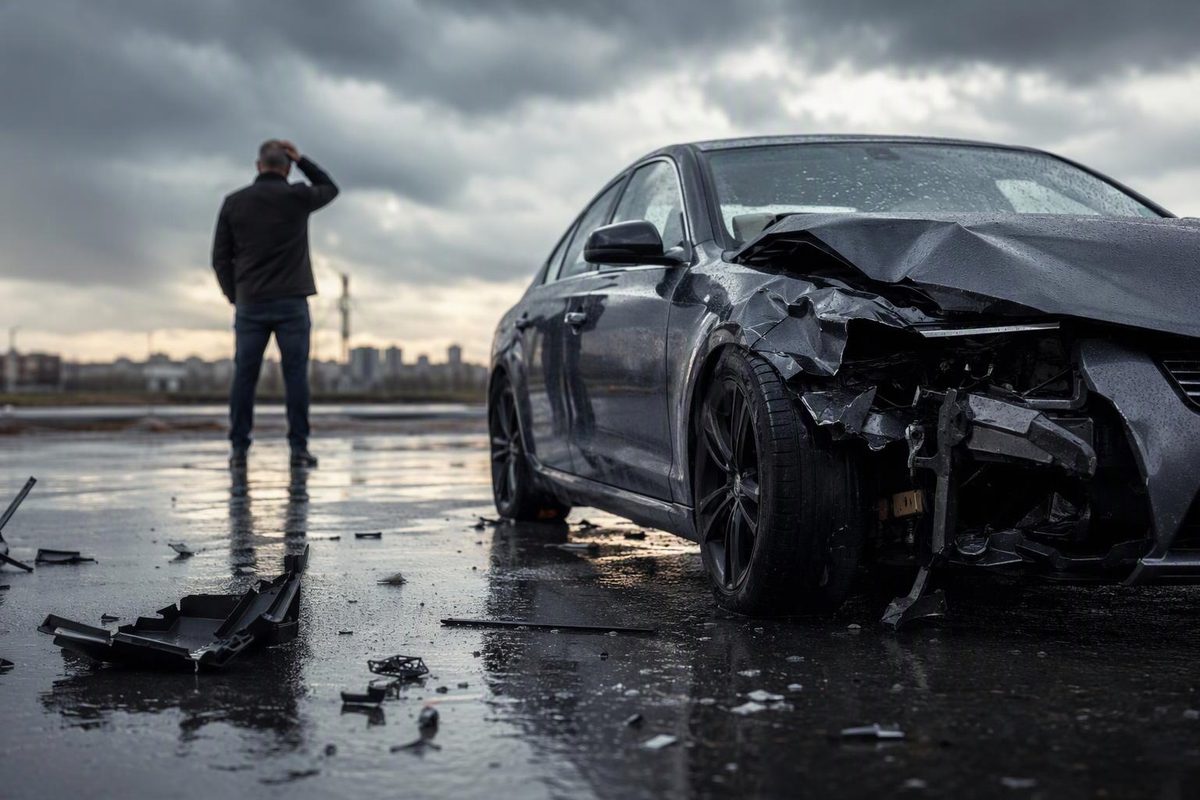
If you crash a leased car, you generally make an insurance claim and have the car repaired while the lease continues. If the insurer declares it a total loss, the claim instead moves toward paying the leasing company and closing the lease account. A crash does not automatically cancel what you owe.
You have two separate obligations: follow your insurance policy’s claim requirements and your lease’s damage-reporting and repair rules. The leasing company owns the vehicle, so it may require repairs rather than let you keep the insurance money. Progressive explains these leased-car claim basics.
This is a general U.S. overview; your policy, lease and state rules determine the specific outcome.
What to do immediately after the crash
- Check for injuries and get to safety. Call 911 for injuries or immediate danger, and follow applicable police-reporting requirements.
- Document the crash. Exchange driver and insurance information, photograph the damage and scene when safe, and collect witness contact details.
- Notify your insurer promptly. Give it the facts, vehicle location and any police-report information. Do not wait for a fault decision before reporting.
- Notify the leasing company. Check your lease’s reporting deadline and ask about repair requirements, claim-check endorsements and required paperwork. Contact the lessor named in your lease rather than assuming notice to the dealer is enough.
The Texas Department of Insurance’s claims guide recommends prompt insurer notice and preserving scene evidence. For the separate lease notice, Progressive advises checking the lease agreement.
Who pays for the damage?
The fact that the car is leased does not turn liability insurance into coverage for your own vehicle.
| Claim route | What it means for you |
|---|---|
| Your collision coverage | Can pay for covered crash damage to the leased car, less your collision deductible—even if you caused the crash. |
| The responsible driver’s liability insurance | May pay for damage they caused, subject to fault, coverage and available limits. You generally do not pay your own policy deductible on this claim route. |
| Your liability coverage | Pays covered injuries or property damage you cause to others, up to its limits; it does not repair your leased car. |
| No applicable vehicle-damage coverage | You may have to fund repairs yourself while still meeting your lease obligations. |
Progressive explains collision coverage for leased vehicles. If the other insurer disputes fault or cannot pay enough, using your collision coverage may be an alternative, but your deductible applies. The Texas insurance regulator explains these coverage distinctions and claim routes.
Example: deductible, rental limit and exclusion
Assume a covered crash causes $6,000 in approved repairs, your collision deductible is $500, and the car is repairable. Your insurer pays $5,500; your share is $500.
Also assume you bought rental reimbursement with a $40 daily limit and $1,200 total limit. A covered 10-day rental costing $55 a day would produce a $400 reimbursement, leaving you $150 to pay. Your combined repair-and-rental share is $650, before any additional taxes or fees.
These are illustrative policy terms, not standard limits. If the policy excludes the use involved—for example, paid deliveries without appropriate coverage—the crash payment could be denied. Rental reimbursement also has its own eligibility and time limits. TDI’s guide discusses deductibles, rental limits and common use exclusions.
If the car can be repaired
Do not assume you can cash the check and return the car unrepaired. Ask the lessor what repair documentation it needs and whether it must endorse the payment. For example, Ford Credit requires completed repairs and supporting paperwork before endorsing certain jointly payable repair checks. Ford Credit’s accident instructions describe that process.
Before authorizing work, compare the insurer’s approved estimate with the lease’s repair requirements. Ask about parts, repair quality and any inspection requirement. Keep the estimate, final invoice, photos and correspondence.
Insurance approval does not necessarily settle lease-return standards. Ford Credit specifically lists insufficient or poor-quality repairs as possible excess wear and use. Unresolved damage can therefore become a lease-end charge. Ford’s return guidelines recommend completing necessary repairs before return.
If the car is totaled
The insurer generally bases the settlement on the car’s actual cash value—its value accounting for age and wear—less any applicable deductible, not the amount needed to finish your lease. Payment typically goes to the leasing company. If the settlement falls short of the lease payoff, GAP insurance or a contractual GAP waiver may address an eligible shortfall—but deductibles, fees and other amounts depend on the agreement. Progressive explains total-loss payments and GAP for leased cars.
Keep making required payments until the lessor confirms the account is closed or gives you different instructions. Ford Credit expressly warns customers to continue payments while a total-loss claim is unresolved. See its total-loss payment instructions.
For that branch of the claim, see what happens if you total a leased car. Before treating the matter as finished, obtain the final settlement breakdown and written confirmation of any remaining balance.