
8 min read ·
How to Spot Possible Lightning Damage—and Know When to Get Out
Smoke, unusual heat, scorched outlets, partial power loss and several failed devices may be clues; know when to evacuate and who should inspect.
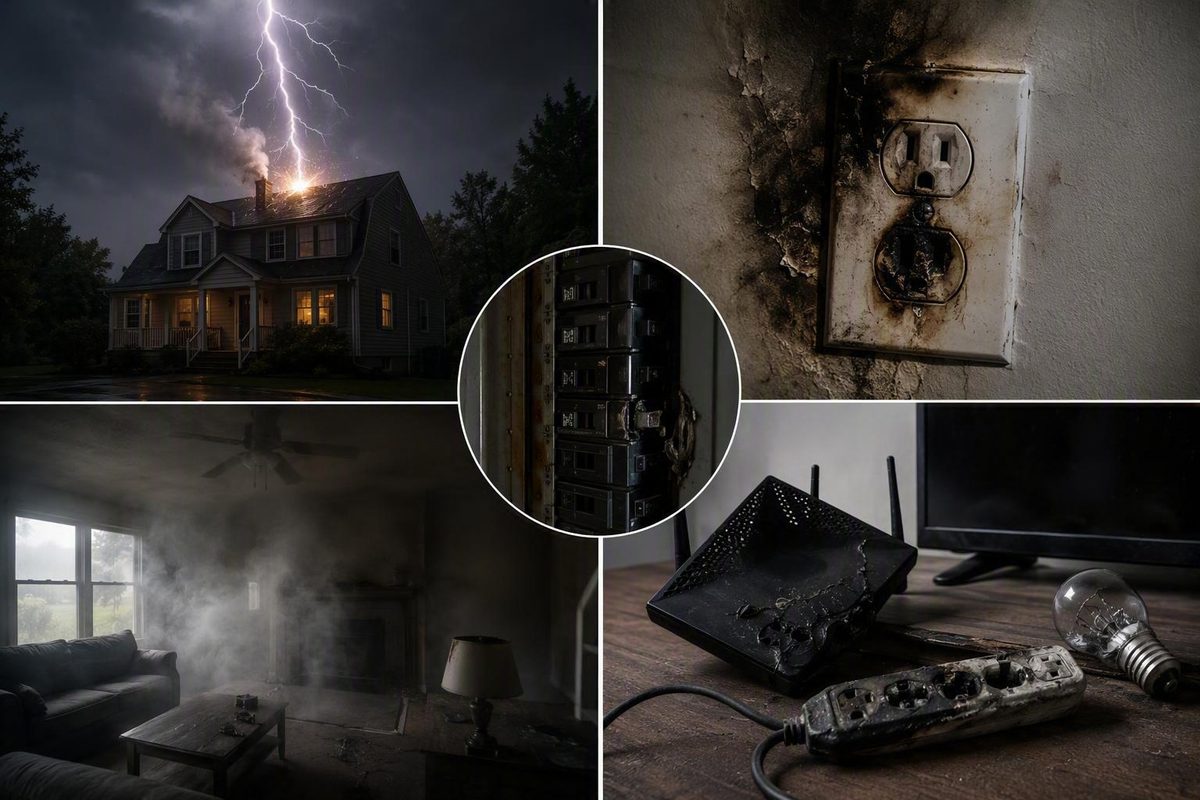
Smoke, sparks, unusual heat, charring, partial power loss, scorched outlets, several failed devices, and roof or chimney damage can indicate possible lightning-related damage. None proves that lightning directly struck the house: utility surges, electrical faults, fire, leaks, wind, and other storm damage can produce similar symptoms.
If there may be a fire or active electrical danger, leave and call for emergency help. Do not try to locate hidden damage yourself. Once the immediate hazards have been cleared, have the affected systems inspected by qualified professionals and document the loss for your insurer.
If You Smell Smoke or See Sparks, Leave First
Emergency answer: Evacuate and call 911 or the fire department if you see smoke, visible fire, sparks, or active charring—or notice a burning or melting-plastic odor or unusual heat in a wall or attic. Do not investigate the source yourself.
A fire can smolder inside an attic or wall even when no flames are visible. The National Weather Service advises occupants to leave and call 911 if they smell smoke after a suspected lightning strike. Firefighters may use thermal-imaging equipment to look for concealed hot spots (National Weather Service lightning guidance).
These actions can bring you closer to concealed heat, damaged electrical components, or unstable materials.
Stay well away from downed power lines and visibly damaged electrical-service equipment.
Lightning-Damage Signs at a Glance
Every sign below is suggestive, not conclusive. Similar conditions may result from utility surges, ordinary electrical failures, fire, plumbing problems, wind, hail, falling debris, or pre-existing damage.
| What you notice | What it may indicate | Immediate action | Appropriate responder |
|---|---|---|---|
| Smoke, a burning odor, or unusual wall or attic heat | Possible concealed fire | Leave and call 911; do not investigate | Fire department |
| Sparks or active charring | Possible active electrical fault or fire | Leave and call 911 | Fire department |
| Downed lines or visibly damaged service wiring | Possible energized equipment or utility damage | Stay well away and keep others back | Electric utility or emergency services |
| Exposed wiring or an unstable roof opening | Electrical or structural danger | Keep out of the affected area | Emergency services first; then a qualified professional |
| Breakers that trip again or partial outages | Possible circuit, wiring, panel, service, or surge damage | Do not keep resetting breakers or test damaged equipment | Licensed electrician; utility if service damage is suspected |
| Scorched outlets, buzzing, or popping | Possible heat, arcing, or wiring damage | Do not touch or test the outlet; leave if there is heat, smoke, or sparking | Fire department for active danger; otherwise a licensed electrician |
| Several failed appliances or electronics | Possible surge affecting connected equipment | Do not touch, retest, or reconnect damaged or unusual equipment | Licensed electrician and relevant repair professionals |
| Damaged shingles or chimney masonry | Possible direct-contact, wind, or impact damage | Observe only from a safe ground-level position | Qualified roofer or appropriate structural professional |
| New leaks or reduced water pressure | Possible pipe or joint damage | Avoid the affected area until emergency hazards are cleared | Plumber |
Smoke, charred outlets, rooms without power, failed appliances, roof damage, damaged trees, and downed lines have all been reported after suspected residential lightning strikes. Dangerous electrical, fire, and structural conditions should be left to responders and qualified professionals (Alliance Insurance’s post-strike checklist).
Exterior Signs: Roof, Chimney, Siding, and Attic Damage
Possible evidence at or near a strike point includes:
- A visible hole or opened area in the roof
- Missing or otherwise damaged shingles
- Scorching or charring on the roof, siding, or attic materials
- Melted siding or blistered exterior material
- Damage to a chimney cap, bricks, mortar, or other masonry
- Attic scorching that is already visible without entering or approaching the damaged area
Lightning can damage roofing, ignite roof or attic materials, and affect chimney masonry. These conditions are not unique to lightning, however. Wind, fallen branches, impact damage, fire, and deterioration may leave similar marks.
Inspect only from a safe position on the ground. Firefighters should address possible concealed fire; qualified roofing or structural professionals can inspect physical damage after emergency hazards have been cleared.
A split or damaged tree and downed lines can show that the immediate area experienced serious storm damage. They do not establish that the house itself received a direct strike. Likewise, not hearing a loud bang or seeing a flash does not rule out a lightning event. Occupants may have been asleep, away, or unable to tell where the lightning landed.
A clean-looking roof is not an all-clear. A nearby strike or surge may affect connected systems without leaving an obvious roof hole, while heat or wiring damage may be concealed inside the building.
Interior Signs: Electrical, Appliance, Plumbing, and HVAC Problems
Electrical problems that begin during or shortly after a thunderstorm deserve prompt attention. Possible warning signs include:
- Tripped breakers, especially if they trip again
- Partial power loss or several dead circuits
- Flickering lights
- Scorched outlets, switches, or electrical panels
- Melted or visibly damaged wiring
- Buzzing, humming, crackling, or popping sounds
- A burning or melting-plastic odor
If there is smoke, unusual heat, sparking, or active charring, leave and call 911. After emergency hazards have been addressed, a licensed electrician can assess suspected wiring, panel, outlet, or surge damage.
A lightning-related surge may also be consistent with sudden failure of televisions, computers, routers, landline phones, appliances, HVAC equipment, communication equipment, and other connected electronics. Several devices failing after the same storm may raise suspicion that a surge traveled through a connected system, but even simultaneous failures do not prove that lightning directly struck the building.
Arrange an electrical assessment, followed as appropriate by evaluation of the affected appliance, HVAC unit, or electronic device.
Possible plumbing symptoms include a new leak, a damaged pipe joint, or reduced water pressure. Those problems have many common causes, so their timing alone cannot identify lightning as the source. Once fire, electrical, gas, and structural hazards have been addressed, a plumber can inspect the affected area. Lightning may also travel through gas piping, but suspected damage to that system should be evaluated by the appropriate responder or qualified professional rather than tested by the homeowner.
A system that still appears to work should not be treated as proof that no damage occurred elsewhere.
A Nearby Strike Can Cause Damage Without Hitting the Roof
Lightning does not have to leave a visible contact point on the roof to affect a house. A direct strike can damage materials where it contacts the building, but electrical current or a surge may also enter through exterior utility connections or the ground.
Once inside, current may travel through connected conductive systems while seeking a path to earth. Possible pathways include:
- Electrical and telephone wiring
- Communication and reception systems
- Exterior-connected wires or pipes
- Plumbing
- Gas piping
- The ground
This helps explain why household wiring, appliances, internet equipment, HVAC controls, phones, or other electronics may fail even when there is no obvious roof mark.
The reverse is equally important: damaged electronics do not prove lightning directly hit the house. A utility event, ordinary equipment failure, or a different electrical fault can produce similar symptoms.
If several systems failed during or after the same storm, record that pattern and arrange an appropriate professional assessment of the likely cause.
Hidden or Later-Discovered Damage
A house may initially appear normal even though heat, damaged wiring, or another problem is concealed. Pay renewed attention if any of these symptoms appear after the storm:
- Breakers that trip repeatedly
- Intermittent or partial power
- A new burning or melting-plastic odor
- Buzzing, crackling, or popping
- Flickering lights
- New leaks or reduced water pressure
- Delayed failure of an appliance, router, HVAC control, or other device
There is no fixed number of hours or days after which a home can automatically be considered clear. Respond to symptoms when they appear rather than relying on a countdown. New smoke, heat, sparks, or charring calls for evacuation and emergency help. Electrical, roofing, appliance, or plumbing symptoms without active fire still warrant prompt assessment by the relevant qualified professional.
If nobody was home during the storm, note when the property was last known to be normal and when each problem was discovered. From a safe location, look for emergency warning signs and visible ground-level damage. Do not enter a questionable attic, climb onto the roof, or enter a damaged room merely to establish when the loss occurred.
The absence of a tripped breaker does not mean that no surge or wiring damage occurred. Similarly, the absence of a visible exterior mark does not conclusively exclude concealed fire or lightning-related damage to connected systems.
Document the Damage and Check Your Policy
After emergency hazards have been addressed, create a clear record before cleanup and nonurgent permanent repairs change the scene.
- Photograph visible damage safely. Take wide views and close-ups of affected rooms, outlets, appliances, and outdoor property. Photograph roof or chimney damage only from the ground or another safe location.
- Create a timeline. Note when the storm occurred, what occupants heard or saw, when each symptom appeared, and whether anyone was away. Include known outage information and the times you contacted emergency services, the utility, or a contractor.
- Make an itemized list. Record each affected device or part of the property. Where available, include its brand, model, approximate purchase date, and observed problem.
- Keep supporting records. Retain available receipts, estimates, invoices, photographs, videos, and written findings from firefighters, electricians, roofers, plumbers, utilities, or other professionals.
- Ask before discarding damaged property. When an item can be retained without creating a safety or access hazard, ask the insurer whether it needs photographs, inspection findings, estimates, or the physical item before disposal or nonurgent permanent repair.
- Prevent additional damage when it is safe to do so. Do not delay emergency response or reasonable protective measures solely while waiting for insurance authorization. Record what was done and keep the related paperwork.
Report the loss using the instructions supplied with your policy or by your insurer. Ask what information it wants, whether an inspection is required, and whether it has instructions concerning damaged property or permanent repairs.
Do not assume the loss is covered or that every related cost will be paid. Coverage, deductibles, exclusions, valuation methods, documentation requirements, and claim procedures depend on the specific policy, insurer, and jurisdiction.
The priority order is straightforward: leave and call for help when fire or active electrical danger is possible; avoid unsafe DIY inspection; have affected systems evaluated by qualified professionals; then document what happened and check the specific policy. The signs can justify urgent action and inspection, but they cannot by themselves prove that lightning directly struck the house.