
4 min read ·
Renters Insurance Hurricane Coverage: Wind vs. Flood
Renters insurance may cover hurricane wind damage, but usually excludes floods. Check rain-entry rules, deductibles, temporary housing and flood coverage.
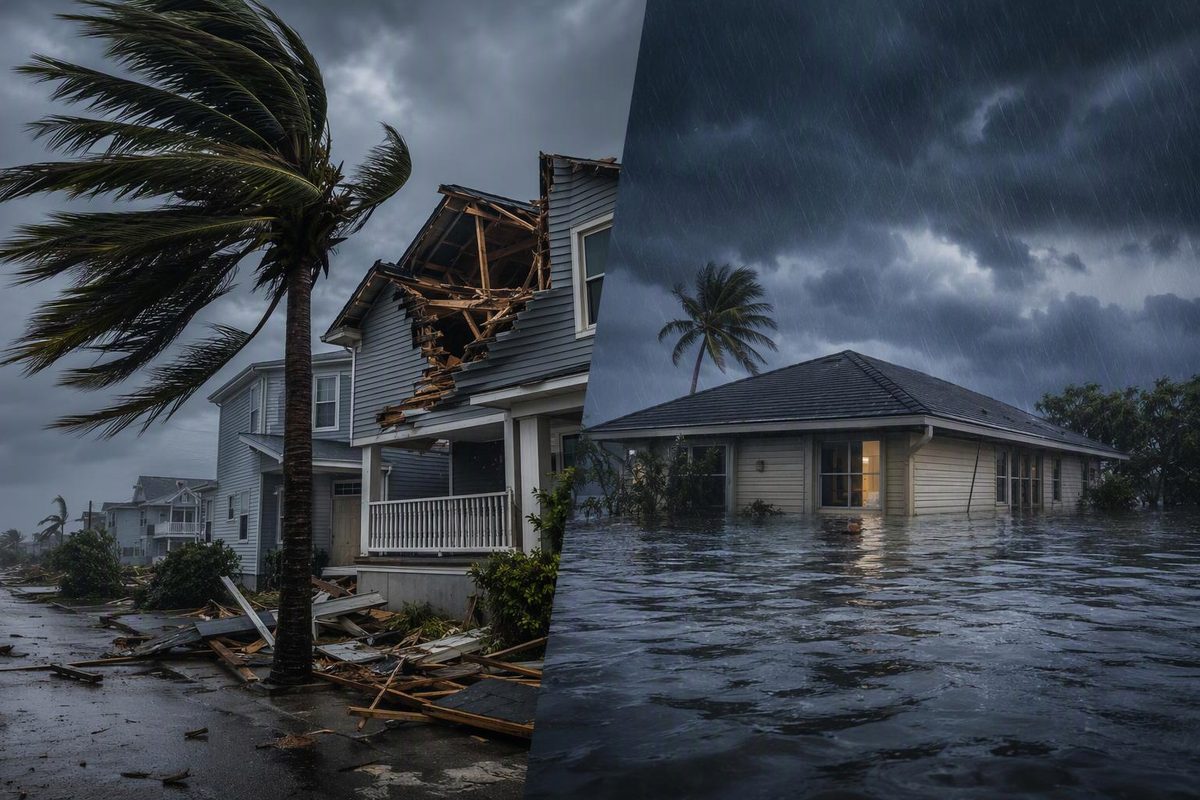
In the U.S., renters insurance usually covers hurricane wind damage to your belongings, but not damage from flooding or storm surge. The cause of each loss—not simply the fact that a hurricane occurred—determines which coverage may pay. Your policy’s exclusions, endorsements and deductible still apply. GEICO’s hurricane coverage guide explains that distinction.
Your landlord’s insurance does not ordinarily protect your furniture, clothing or electronics. Building damage is generally the landlord’s insurance issue, subject to their policy; you need your own protection for your possessions. North Carolina’s insurance regulator explains why tenants need their own coverage.
Which hurricane damage may be covered?
Three situations can produce different claim decisions:
- Wind damages your belongings: Windstorm is a commonly covered renters insurance peril, as North Carolina’s regulator lists. Check that your policy has not excluded it or changed it through an endorsement.
- Rain enters through storm damage: Coverage may apply when wind or hail damages a roof or window and rain enters through that opening. Do not assume every rain leak qualifies. Allstate’s renters guidance distinguishes sudden, accidental openings from damage caused by leaving a window open. See its rain-damage explanation.
- Floodwater or storm surge enters the rental: Standard renters insurance generally excludes this damage, even though the hurricane caused it. Separate flood coverage is needed for eligible flood losses. GEICO identifies both flooding and storm surge as gaps.
If wind-driven rain and rising water both enter your apartment, document both. Report what you observed rather than guessing which cause will produce coverage.
Example: How the deductible, limit and exclusion change payment
Illustrative claim—not a quote or promise of coverage: Assume your policy has a $30,000 personal property limit, a $1,000 deductible applicable to this loss, replacement-cost coverage and a flood exclusion. No special item limits apply.
Hurricane winds break a window, and rain through that opening destroys belongings costing $6,000 to replace. If the insurer accepts the loss as covered and all replacement-cost requirements are met, the final property payment would be $5,000: $6,000 minus the $1,000 deductible. The $30,000 limit is a ceiling, not an automatic payout.
If the policy instead uses actual cash value and the insurer values those belongings at $4,000 after depreciation, the payment would be $3,000 after the deductible. The NAIC’s renters insurance guide explains how depreciation changes payment compared with replacement-cost coverage.
If rising floodwater causes the same loss, the standard renters policy would pay nothing under the assumed flood exclusion. A higher limit or lower deductible cannot make an excluded loss covered.
For more on those calculations, see personal property coverage in renters insurance.
Will it pay for a hotel or evacuation?
Loss-of-use coverage may pay necessary extra living expenses when a covered loss makes your rental unlivable. That can include temporary housing and the increase in meal costs—not every dollar you spend while away. Dollar limits, time limits and policy conditions matter. North Carolina’s regulator explains that reimbursement is for expenses above your normal living costs and requires receipts.
Do not treat an evacuation order or power outage as an automatic hotel benefit. Ask whether your policy has civil-authority coverage, what triggers it, and how long it lasts. Texas’s regulator notes that leaving because of a power outage without damage to the home does not trigger ordinary additional-living-expense coverage. See its coverage guidance.
Flood displacement creates another gap: NFIP flood insurance does not pay for temporary housing or additional living expenses. Its coverage summary expressly excludes them. Our renters loss-of-use guide explains the expense calculation separately.
What to check before a storm
Review the declarations page and the policy forms and endorsements. Ask the insurer to identify:
- Wind coverage: Is windstorm included at your rental address, or is separate protection needed?
- The applicable deductible: Does a wind, hurricane or named-storm deductible replace the ordinary deductible? If it is a percentage, ask what amount it is calculated against and request the dollar figure.
- Property valuation and limits: Is coverage replacement cost or actual cash value? What special item limits and replacement requirements apply?
- Displacement benefits: What are the loss-of-use dollar and time limits, and are evacuation-related expenses covered?
GEICO’s preparation guidance recommends checking separate storm deductibles and coverage limits before a storm.
Check flood protection separately
Ask about contents-only flood insurance. The NFIP offers renters up to $100,000 of belongings coverage, but contents claims are paid at actual cash value, and basement coverage is limited. NFIP renters guidance and its coverage summary explain these limits.
NFIP coverage generally has a 30-day waiting period, with exceptions; private flood policy terms vary. Verify the effective date rather than assuming a policy bought before landfall is already active. FloodSmart lists the NFIP waiting-period rules.
Keep a digital inventory and policy copy somewhere accessible if you evacuate. After a loss, prioritize safety, photograph damage when safe, save receipts and notify the relevant insurers promptly. Coverage ultimately depends on your actual policy and applicable state rules.