
22 min read ·
Before Water Comes Up the Drain, Check These Policy Details
It may cover eligible cleanup and damaged finishes while excluding drain clearing, excavation, root removal, or lateral replacement. Six scenarios expose the gaps.
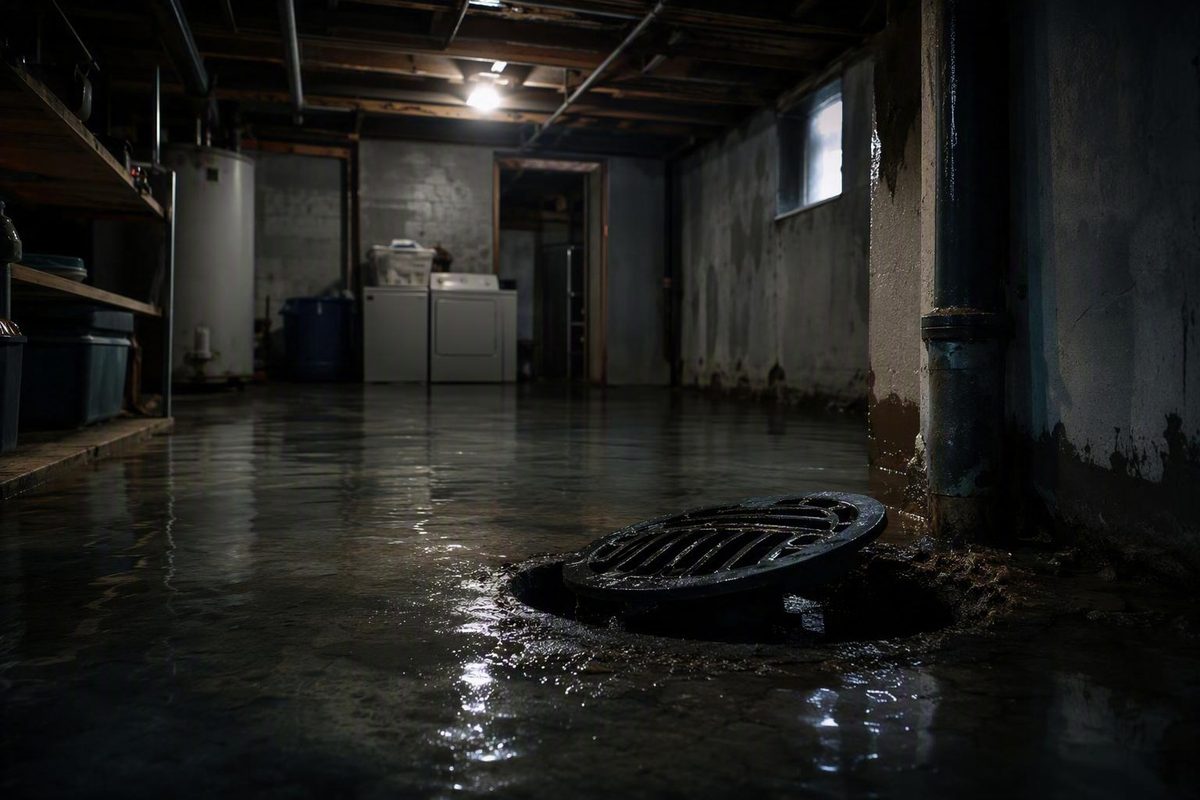
The short answer: what sewer backup insurance is
Before assuming a wet basement would be insured, confirm five points in writing: which entry points and systems qualify, which causes qualify, the coverage limit, the deductible, and the exclusions.
“Sewer backup insurance,” “water-backup coverage,” and “sewer-and-drain-backup coverage” commonly describe an endorsement added to a homeowners, condo, or renters policy. Depending on its wording, the endorsement may cover resulting damage when water or sewage reverses through a covered sewer, drain, toilet, sump pump, or related system.
This protection often is not automatic. Property policies frequently exclude sewer, drain, or sump backup unless an endorsement adds coverage, although that is not true of every policy form. Farmers, for example, describes water-backup protection as optional coverage that may apply to the home, personal property, cleanup, drying, and damaged finishes after a qualifying backup (Farmers’ water-backup coverage explanation).
A backup also differs from ordinary sudden and accidental water damage. If an interior supply pipe suddenly breaks, the base policy’s water-damage provisions may apply. If wastewater reverses through a basement floor drain, a separate backup endorsement may be required. The damage may look similar even though different policy provisions govern the loss.
The informal name used in a quote or conversation does not establish coverage. Look for the endorsement on the declarations page or policy schedule, then read the endorsement itself. Its definitions, exclusions, limit, deductible, and relationship to the base policy determine what was purchased.
For renters, an endorsement may protect eligible personal property rather than the building.
Insurance Roster explains insurance wording for general educational purposes, as described on its About page. It does not provide insurance, legal, or financial advice. Coverage and claim outcomes vary by policy and jurisdiction, so verify the details with your insurer, agent, policy documents, and applicable local rules (Insurance Roster’s content limitations).
Why the cause and route of the water matter
Analyze a water loss by asking two questions:
- What initiated the event?
- How did the water enter the property?
Those questions are more useful than asking only whether the basement was “flooded.”
A simplified decision path looks like this:
- Accidental interior pipe break: The base policy’s sudden-water provisions may apply.
- Water or sewage reversing through a sewer, floor drain, toilet, or covered sump system: A water-backup endorsement may be needed.
- Rising or accumulating surface water entering from outside: Separate flood insurance is the policy to examine.
Insurance guidance distinguishes these categories based on cause and route of entry: sewer backup concerns water overflowing or backing up from a sewer, drain, or sump; ordinary covered water damage is generally associated with a sudden and accidental event such as a burst pipe; and flood coverage addresses qualifying outside surface water (comparison of flood, ordinary water damage, and sewer backup).
The presence of sewage does not settle the issue. Neither does the everyday phrase “flooded basement.” Each initiating event can raise different definitions and exclusions.
A rainstorm does not automatically turn a drain backup into either a covered water-backup claim or a covered flood claim. Suppose a storm overwhelms a public sewer, water reverses through a floor drain, and surface water also accumulates around the foundation. The insurer may examine the sequence of events, direct cause, entry route, and applicable flood, sewer, sump, maintenance, and causation language.
Mixed-cause losses are therefore difficult to categorize. Heavy rain may be the background condition, while the immediate cause could be a blocked lateral, pump failure, overloaded public sewer, rising surface water, or several conditions together. Roots, deterioration, faulty plumbing, and unresolved maintenance may also affect the analysis.
If a loss occurs, document the facts rather than trying to diagnose the insurance category. When safe, record:
- Where the water first appeared
- Whether it came from a drain, toilet, sump basin, wall, window, or floor
- Whether outside water was accumulating against the building
- Which fixtures or pumps were operating
- Whether neighbors or the utility reported similar problems
- When rain, plumbing use, odors, noises, or pump alarms began
- What a plumber or remediation contractor observed
Give that information to the insurer and qualified professionals. Do not alter the account to fit a preferred coverage category. The insurer will make its initial claim decision under the policy, and any disputed decision remains subject to whatever review or dispute procedures apply.
What a water-backup endorsement may pay for
When the initiating event and entry route qualify, a water-backup endorsement may pay for resulting damage inside the property. Potential categories include:
- Water or sewage extraction
- Cleaning and sanitation
- Structural drying
- Removal of contaminated materials
- Tear-out needed to reach affected areas
- Debris removal
- Restoration of covered walls, flooring, or cabinets
- Repair or replacement of eligible personal property
These are possible categories, not guaranteed inclusions. Coverage remains subject to the endorsement’s definitions, exclusions, deductible, overall limit, category sublimits, and claim-review requirements. Insurer guidance identifies dwelling damage, personal property, cleanup, drying, and damaged finishes as possible benefits when a qualifying backup occurs (overview of potentially covered backup damage).
Building or dwelling damage
For an owner-occupied home or insured condo unit, eligible building damage might include drywall, insulation, flooring, carpeting, built-in cabinets, and permanent equipment. Whether those items qualify depends on which parts of the property the policy insures and whether the endorsement extends to building damage.
A finished basement can create a larger exposure than an unfinished storage area. Flooring, wall systems, cabinetry, utility equipment, and built-ins may require removal, sanitation, drying, and reconstruction. Even when those costs qualify, the endorsement limit—not the total dwelling limit shown elsewhere in the policy—may cap payment for the backup.
Personal-property damage
Contents coverage is a separate question. Furniture, portable appliances, electronics, clothing, rugs, and stored belongings may qualify if the endorsement covers personal property and the items are otherwise insured. Some property may be excluded, subject to a special limit, or valued differently from building finishes.
Renters may be able to add water-backup coverage for eligible belongings. The property owner’s policy generally addresses eligible building interests rather than the tenant’s furniture, electronics, clothing, and other possessions. Grange describes backup coverage as an endorsement available with homeowners, condo, or renters insurance and advises selecting a limit that reflects exposed finishes and belongings (Grange’s water-backup overview).
Professional remediation and related expenses
Professional extraction, sanitation, and drying may be covered when the event qualifies. Emergency work does not eliminate the deductible, limit, exclusions, or claim-review process.
Ask specifically how the endorsement treats:
- Mold remediation: It may be excluded, covered only when resulting from a qualifying event, or limited separately.
- Odor removal: It may be included within sanitation or remediation rather than named as a separate benefit.
- Debris removal: It may reduce the endorsement’s main limit instead of being paid in addition to it.
- Tear-out: Removal of walls or floors may be treated differently from repair of the failed pipe or equipment.
- Code-related work: Ask whether rebuilding upgrades are covered or require separate protection.
- Additional living expenses: Ask whether approved extra costs are covered when a qualifying backup makes the home uninhabitable, and whether dollar or time restrictions apply.
Some policies may include additional living expenses after a covered backup, while others may exclude the benefit or limit it. Mold, cleanup, tear-out, contents, and related expenses may also be separately capped or included within the main backup limit, so these categories require confirmation against the actual endorsement (water-backup limits and expense categories).
Do not assume that loss-of-use coverage applies merely because the base homeowners or renters policy includes it for other perils. Ask whether the backup endorsement activates that section, whether displacement expenses share the backup limit, and what documentation or advance approval is required.
What it usually does not cover
The central distinction is between resulting indoor damage and the defective component that caused the backup.
A water-backup endorsement may help pay to remove sewage, replace damaged drywall, and restore covered flooring. It generally does not pay to excavate a yard, remove roots, clear a deteriorated lateral, or replace a failed underground sewer pipe. Similarly, an endorsement may cover eligible drywall damage after a covered sump overflow while excluding the failed pump itself.
Potentially uncovered source repairs include:
- Sewer-line excavation
- Root cutting or replacement of root-damaged pipe
- Repair of a collapsed lateral
- Routine drain clearing
- Replacement of a worn-out sump pump
- Repair of septic tanks, pumps, fields, or related components
- Correction of defective or improperly installed plumbing
AAA’s general coverage discussion likewise separates resulting interior damage from sewer-line repair or root removal and identifies service-line coverage as a separate option for certain underground utility lines (AAA’s water and sewer backup overview).
Service-line coverage may apply to certain homeowner-responsible underground water, sewer, drainage, electrical, gas, or communications lines. It has its own covered-property definitions, causes of loss, exclusions, deductible, and limit. It is not a substitute for backup coverage: service-line coverage may address qualifying physical damage to an underground line, while a backup endorsement may address qualifying interior damage after water or sewage enters the building.
Responsibility for a sewer lateral must be verified locally. Do not assume that a homeowner is responsible for the entire line between the building and the municipal main. Ask the utility, municipality, insurer, or another qualified local professional where the responsibility boundary lies and whether any reporting procedures apply. A municipal assistance program, if available, is not the same as insurance.
Recurring exclusions and limitations may include:
- Rising or accumulating surface water
- Neglect or failure to protect property after a loss
- Unresolved maintenance problems
- Wear, corrosion, deterioration, or mechanical breakdown
- Gradual seepage or repeated leakage
- Faulty, inadequate, or defective plumbing
- Improperly flushed materials or grease accumulation
- Certain root-related, septic, or municipal-system events
- Mold or microorganisms
- Costs above the overall limit or a category sublimit
General endorsement guidance repeatedly identifies flooding, neglect, poor maintenance, wear and tear, gradual problems, faulty plumbing, and repair of the failed component as common limitations, while emphasizing that the policy’s wording controls the outcome.
An excluded cause can change the claim result even when the interior damage looks identical to damage from a covered backup. Two properties may both have ruined basement flooring, but a qualifying sudden drain reversal and years of unresolved seepage may be treated differently.
Sewer backup, flood, service-line, and ordinary water coverage compared
This matrix identifies which coverage may warrant review. It is not a claim determination.
| Initiating event | Route of entry | Potentially applicable coverage | Resulting interior damage | Failed-component repair |
|---|---|---|---|---|
| Accidental burst interior supply pipe | Water escapes from plumbing inside the building | Ordinary sudden and accidental water-damage provisions in the base property policy | May be covered, subject to the base policy | The pipe itself may be treated differently from resulting damage |
| Private sewer or drain clog | Water or sewage reverses through a drain, toilet, or covered opening | Water-backup or sewer-and-drain-backup endorsement | May cover eligible extraction, sanitation, finishes, and contents | Clearing or replacing the clogged or deteriorated line may be excluded |
| Sump pump fails or overflows | Water enters through a sump basin or related system | Water-backup endorsement, if the covered-system definition includes it | Resulting damage may be covered within the endorsement’s terms | The failed pump may remain uncovered |
| Rising river, storm runoff, or accumulating surface water | Water moves over the ground and enters from outside | Separate flood insurance | Potentially covered if the event meets the flood policy’s definition | Unrelated plumbing or equipment repair is not automatically covered |
| Covered flood directly causes a sewer backup | Water or sewage is forced through a sewer or drain because of the flood | Flood policy, subject to its direct-causation terms | May be covered if the backup directly resulted from the covered flood | A failed or deteriorated sewer line remains a separate issue |
| Homeowner-responsible underground lateral collapses | Line damage causes a blockage and interior reversal | Service-line coverage may address eligible underground damage; a backup endorsement may address eligible interior damage | Review the backup endorsement separately | Service-line coverage may apply if the line and cause qualify |
| Accidental indoor toilet clog or fixture failure | Water overflows directly from the fixture | Ordinary water-damage provisions may apply | Policy-dependent; maintenance exclusions may affect the result | Fixture or plumbing repair may be handled separately |
Under the National Flood Insurance Program, sewer-backup damage is covered only when the backup directly results from a covered flood. A backup caused by another problem is not covered merely because a storm occurred. NFIP building and contents protection are purchased separately and have separate deductibles (official NFIP coverage guidance).
A mixed event may require review of the homeowners or renters policy, water-backup endorsement, flood policy, service-line endorsement, and any applicable equipment coverage. The matrix cannot override a contract’s definitions, causation provisions, exclusions, limits, or deductibles.
Six scenarios that reveal the coverage gaps
Each outcome below is illustrative. The insurer makes its initial claim determination by applying the actual policy to the documented facts; disputed outcomes may be reviewed through applicable claim, regulatory, contractual, or legal processes.
1. A private drain clog sends sewage into a finished basement
The endorsement may cover eligible extraction, sanitation, damaged flooring, drywall, and personal property. It may not cover clearing the clog, excavating the yard, or replacing a deteriorated pipe.
Exact policy question: Does the endorsement cover a backup through this drain from this cause, and does it cover both building and personal-property damage?
2. A sump pump fails and damages drywall and stored furniture
Coverage for the resulting damage depends first on whether the endorsement includes sump pumps, sump basins, or systems designed to remove subsurface water. If it does, damaged drywall and eligible furniture may qualify. The worn-out or mechanically failed pump may remain the owner’s expense.
Mold treatment and temporary housing should not be assumed. Either may be excluded, separately capped, or available only under specified conditions.
Exact policy question: Is this sump system within the endorsement’s definition, and is mechanical failure an accepted initiating cause?
3. Tree roots damage a sewer lateral and sewage enters the home
The interior backup damage and damaged lateral present two separate insurance questions. A backup endorsement may apply to eligible interior cleanup and restoration, while root removal, excavation, and lateral replacement may require service-line coverage or remain uninsured.
Responsibility for the pipe must also be established locally rather than assumed.
Exact policy question: Does the endorsement cover resulting damage from a root-related blockage, and does separate service-line coverage apply to the portion of pipe for which the homeowner is responsible?
4. Rising river or surface water forces sewage through a drain
This is not automatically a water-backup endorsement claim merely because water emerged from a drain. It is also not automatically an NFIP claim merely because a river was rising.
NFIP coverage requires the sewer backup to result directly from a covered flood. The insurer will examine whether the event meets the policy’s flood definition and whether that flood directly caused the reversal. A private flood policy may use different terms.
Exact policy question: Did a covered flood directly cause the backup, and how do the flood and property policies address the documented sequence of causes?
5. A toilet overflows after an accidental indoor clog
An isolated toilet overflow caused by an accidental indoor clog or fixture problem may be evaluated under ordinary sudden-water provisions rather than a sewer-backup endorsement. The analysis may change if poor maintenance, repeated leakage, or a larger sewer obstruction caused the overflow.
The insurer may also distinguish damage to surrounding flooring from the cost of repairing the toilet or pipe.
Exact policy question: Was this a sudden fixture overflow governed by the base policy, or a sewer or drain reversal governed by the backup endorsement?
6. A renter’s belongings are damaged by a drain backup
The landlord’s insurance generally protects the insured building interests, not the renter’s possessions. A renter should check whether the renters policy includes or can add water-backup protection for eligible furniture, electronics, clothing, and other belongings.
Building repairs and the personal-property claim may proceed under separate policies with different deductibles, limits, valuation terms, and adjusters.
Exact policy question: Does the renters endorsement cover personal property damaged through this entry point and from this cause, and how will the belongings be valued?
How to choose a limit and understand the deductible
There is no universal correct limit. Insurers and agencies publish different starting limits and tiers, which demonstrates carrier variation—not that any quoted amount is sufficient for a particular property.
Choose a limit by estimating the property and work exposed to a backup rather than selecting whichever option has the lowest premium.
Limit-estimation worksheet
Walk through the basement, lower level, or other vulnerable area and estimate the potential cost of:
- Flooring, carpet, underlayment, and baseboards
- Drywall, plaster, paneling, and insulation
- Built-in cabinets, counters, and shelving
- Furnaces, air handlers, water heaters, and other permanent equipment
- Laundry and other appliances
- Furniture and rugs
- Electronics
- Clothing, tools, recreational equipment, and stored belongings
- Water or sewage extraction
- Sanitation and deodorization
- Fans, dehumidification, and structural drying
- Demolition and tear-out
- Debris hauling and disposal
- Replacement materials and labor
- Electrical or plumbing work connected to reconstruction
- Possible code-compliance work
- Hotel, meal, pet-boarding, transportation, and other displacement costs
Estimate the full exposed value rather than only the items most likely to be damaged. Contaminated materials may need removal rather than simple drying, and access work can expand the restoration scope.
Then ask:
- Is the limit per occurrence, or is it an aggregate for the policy term?
- Do cleanup, sanitation, mold, tear-out, debris removal, or contents have separate sublimits?
- Are those sublimits included within the main limit or available in addition to it?
- Do additional living expenses share the backup limit?
- Are there special restrictions for below-grade property?
- Can the endorsement limit be increased at renewal?
Available limits, separate deductibles, per-occurrence or aggregate structures, sublimits, and actual-cash-value or replacement-cost settlement methods vary by insurer and endorsement. Treat each as a policy question rather than assuming the most favorable structure.
How the deductible changes payment
A water-backup claim may have a deductible different from the main homeowners, condo, or renters deductible. Never assume the most prominent deductible on the declarations page applies to every loss.
Arithmetic illustration: Assume a covered loss is valued at $20,000, the water-backup limit is $25,000, and the applicable deductible is $1,000:
$20,000 covered loss − $1,000 deductible = $19,000 preliminary payment
This example follows a published water-and-sewer-backup illustration and shows only the basic subtraction (Higginbotham’s water-and-sewer-backup guide). Actual-cash-value adjustments, category sublimits, exclusions, prior payments, salvage, and other terms could reduce the result. If the loss exceeds the limit, the contract determines how the limit and deductible interact.
For the general mechanics, see Insurance Roster’s guide to how insurance deductibles work. A backup endorsement may still have its own deductible rules.
Actual cash value versus replacement cost
The settlement method can materially affect payment. Replacement-cost coverage generally measures the cost to repair or replace covered property subject to policy conditions. Actual cash value generally reflects depreciation or the item’s age and condition.
Ask separately about building finishes and personal property. One category may be valued differently from another. Also ask whether the policy requires completed repair or replacement before all available replacement-cost benefits are paid.
The usable protection is therefore not simply the number beside the endorsement. It is that limit after accounting for the deductible, sublimits, valuation method, exclusions, and categories of property actually insured.
A policy-review checklist before you buy or renew
Copy this checklist into an email to your insurer or agent. Request answers tied to the proposed policy form and endorsement rather than relying only on a verbal summary.
Confirm that coverage exists
- [ ] Does my current policy already include water-backup, sewer-and-drain-backup, or sump-overflow coverage?
- [ ] What is the endorsement’s exact name and form number?
- [ ] Where does it appear in the declarations, schedule, or policy documents?
- [ ] Can you send me the complete endorsement and related exclusions?
Identify covered entry points and systems
- [ ] Does it cover backups through public or private sewers?
- [ ] Does it cover floor drains, sinks, tubs, and toilets?
- [ ] Does it cover septic systems?
- [ ] Does it cover sump pumps, sump basins, and related equipment?
- [ ] Does it cover systems designed to remove subsurface water from the foundation?
- [ ] Must water physically reverse through a listed opening?
Identify covered and excluded causes
- [ ] Are private clogs covered?
- [ ] Is sump-pump mechanical failure covered?
- [ ] How are tree roots treated?
- [ ] How are collapsed or deteriorated pipes treated?
- [ ] How are heavy rain and municipal-system overload treated?
- [ ] Are septic backups covered only when caused by specified events?
- [ ] What maintenance, neglect, wear-and-tear, seepage, and faulty-plumbing exclusions apply?
- [ ] How does the policy handle a loss involving both outside flooding and a plumbing backup?
Check the financial terms
- [ ] What limit applies?
- [ ] Is it per occurrence or an annual policy-term aggregate?
- [ ] Do building damage and personal property share one limit?
- [ ] Are cleanup, sanitation, mold, tear-out, debris removal, or odor treatment separately capped?
- [ ] Do those sublimits reduce the main endorsement limit?
- [ ] Which deductible applies?
- [ ] Is it different from the main homeowners, condo, or renters deductible?
- [ ] Are building finishes settled at replacement cost or actual cash value?
- [ ] How are belongings valued?
- [ ] Are there conditions for receiving replacement-cost benefits?
Ask about displacement and claim handling
- [ ] Are additional living expenses included when a covered backup makes the home uninhabitable?
- [ ] What dollar and time limits apply?
- [ ] Do those expenses reduce the water-backup limit?
- [ ] What emergency mitigation may begin before an adjuster arrives?
- [ ] Is advance approval required for any remediation work?
- [ ] What photographs, reports, inventories, receipts, or damaged items should be retained?
Check purchase and maintenance conditions
- [ ] Are inspections, plumbing repairs, pump tests, or maintenance records required?
- [ ] Are there effective-date restrictions or circumstances in which the endorsement is unavailable?
- [ ] Does a prior backup affect eligibility, limits, or required repairs?
- [ ] Are preventive devices required?
- [ ] Does a backwater valve or sump backup power affect underwriting or premium?
Address flood and underground-line gaps
- [ ] Should I review separate flood insurance?
- [ ] What does the available service-line endorsement cover?
- [ ] Does it include excavation, root removal, and repair of an eligible sewer lateral?
- [ ] Where does homeowner responsibility end and utility responsibility begin locally?
- [ ] Does the service-line deductible differ from the backup deductible?
Compare actual wording and usable limits, not premium alone. A less expensive endorsement may have a lower limit, narrower sump definition, larger deductible, annual aggregate, restrictive valuation method, or significant sublimits.
What to do after a backup—and how to reduce the next one
Treat a sewage backup first as a safety and mitigation problem, then as a coverage question.
Avoid contact with contaminated water. Do not enter a wet area if electrical equipment, outlets, wiring, or appliances may be energized. Insurance guidance recommends avoiding contaminated water, documenting the damage, notifying the insurer, and using professional cleanup services (post-backup safety and claim guidance).
When appropriate, stop unnecessary household water use so toilets, sinks, washing machines, and other fixtures do not send more wastewater into the affected system. Do not attempt plumbing or cleanup work that could expose you to sewage, electricity, confined spaces, or unstable materials.
Notify the insurer promptly and ask:
- Which policy or endorsement is being reviewed?
- What emergency work can begin immediately?
- Must the insurer inspect before damaged materials are removed?
- Should any failed component be retained?
- May I choose the remediation contractor?
- What documentation is required?
- Is temporary lodging potentially covered?
When safe, photograph or record:
- The apparent entry point
- The highest visible water line
- Every affected room
- Damaged walls, flooring, cabinets, and equipment
- Individual damaged belongings
- The sump pump, drain, toilet, or other implicated system
- Outside water conditions
- Contractor findings and moisture readings
Create a room-by-room inventory. Include each item’s description, approximate age, condition, purchase information if available, and estimated replacement cost. Preserve damaged property when it is safe and the insurer requests it, but do not retain contaminated items in a way that endangers occupants.
Keep remediation, plumbing, repair, replacement, hotel, meal, transportation, and pet-care receipts. Policies commonly require reasonable steps to prevent additional damage, but that does not guarantee reimbursement for every emergency expense. Follow the insurer’s instructions whenever circumstances safely allow.
Reducing the chance or severity of another backup
Practical measures include:
- Keep grease and cooking oils out of drains.
- Do not flush wipes or other non-toilet-paper products, even if marketed as flushable.
- Have recurring slow drains or backups evaluated instead of repeatedly treating the symptom.
- Ask qualified professionals to inspect older plumbing and vulnerable sewer lines.
- Manage roots near underground lines.
- Test and maintain sump pumps.
- Consider appropriate backup power for a sump pump.
- Keep accessible drains and drainage systems in working order.
- Ask a qualified plumber whether a backwater valve is suitable and locally permitted.
- Retain inspection, maintenance, and repair records.
Prevention can reduce the chance or severity of a backup, but it does not establish coverage for a future claim. A preventive device also does not guarantee a premium discount.
A practical buying decision comes down to three steps:
- Identify how water could enter the property. Consider drains, toilets, sump systems, exterior surface water, septic equipment, and underground lines.
- Estimate the value exposed to a backup. Include finishes, belongings, equipment, professional cleanup, reconstruction, and possible displacement.
- Compare the actual endorsement with flood and service-line coverage. Look for gaps between resulting indoor damage, outside flooding, and repair of the failed component.
The most important details are the covered systems and causes, resulting-damage limit, deductible, sublimits, valuation method, loss-of-use terms, and exclusions. Obtain written answers from the insurer or agent and retain the applicable endorsement with your policy records.
Frequently asked questions
Is sewer backup insurance included in standard homeowners insurance?
Often it is not. Many homeowners policies exclude sewer, drain, or sump backup unless an endorsement adds coverage, although policy forms vary. Review the declarations and endorsements instead of assuming the base policy includes it.
Sudden damage from a burst interior pipe may be covered under different provisions even when sewer backup is excluded.
Does sewer backup insurance cover repair of the sewer line itself?
Generally, a water-backup endorsement focuses on resulting indoor damage rather than repair of the failed line. It may cover eligible cleanup and damaged finishes while excluding drain clearing, excavation, root removal, or lateral replacement.
Separate service-line coverage may apply to certain homeowner-responsible underground lines. Verify both endorsements and confirm the local boundary between homeowner and utility responsibility.
Does flood insurance cover a sewer backup caused by heavy rain?
Not automatically. Heavy rain can contribute to surface flooding, a municipal overload, private clog, or sump failure, and those causes are not interchangeable.
NFIP flood insurance covers sewer-backup damage only when the backup directly results from a covered flood. A backup caused by another problem is not covered merely because it occurred during heavy rain. The documented cause and policy definition control.
Are sump-pump failures and septic backups covered?
Sometimes, but not under every endorsement. Some water-backup forms include sump-pump failure or overflow, while others define eligible systems more narrowly. Treatment of septic backups can also depend on the initiating cause and endorsement wording.
Even when resulting damage is covered, replacement of the failed pump or septic component may be excluded. Ask specifically about the equipment, covered causes, maintenance exclusions, deductible, and sublimits.
Can renters buy sewer-backup coverage for their belongings?
They may be able to add water-backup coverage to a renters policy for eligible personal property. Coverage depends on the insurer, endorsement, entry point, cause, limit, deductible, and valuation method.
The landlord’s policy generally addresses eligible building damage rather than replacing the renter’s possessions. Renters should confirm their personal-property protection before a loss and maintain a current inventory.