
4 min read ·
Home Invasion Damage: What Insurance Pays and How to Claim
See which coverage pays for break-in damage, how deductibles and limits affect payment, and what to document before repairs.
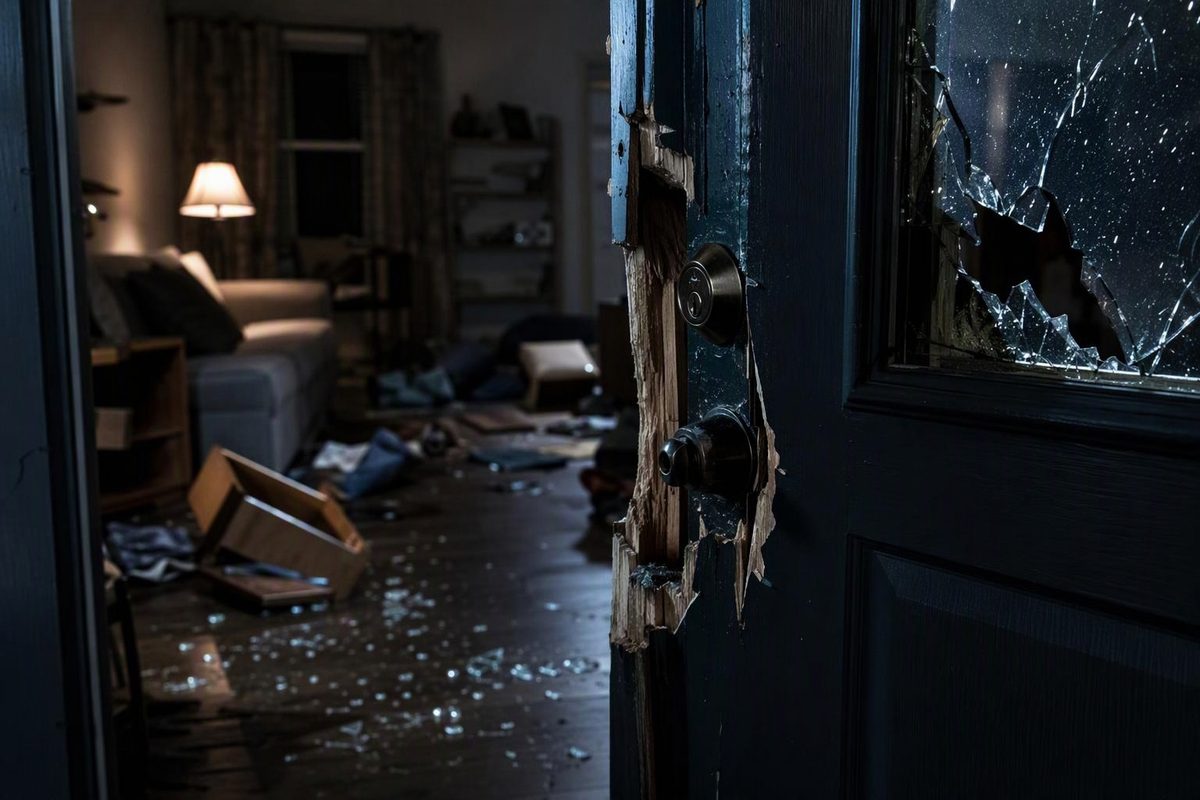
In the U.S., homeowners insurance can cover home invasion property damage through its protections for break-in damage, theft or vandalism. Damage to the house and damage to your belongings fall under different coverages, even when they happen during the same incident. Payment depends on the policy’s deductible, limits, exclusions and valuation terms—not simply the repair bill. Allstate’s break-in coverage guide explains this split.
If an intruder may still be present or someone is injured, get to safety and call 911 before documenting damage.
Which coverage handles each loss?
| What was damaged or stolen? | Coverage to check |
|---|---|
| Exterior doors, window frames, walls or an attached garage | Dwelling coverage, often labeled Coverage A |
| A detached garage or shed | Other structures coverage, often Coverage B |
| Furniture, electronics, clothing or other belongings | Personal property coverage, often Coverage C |
| Necessary extra living costs while covered damage makes the home unfit to live in | Loss-of-use/additional living expense coverage, often Coverage D |
Allstate identifies dwelling, other structures and personal property coverage as the relevant protections for break-ins. Nothing necessarily has to be stolen: vandalism is also a commonly covered cause of damage, according to the Texas Department of Insurance’s home insurance guide.
Additional living expense coverage is not an automatic hotel allowance after every invasion. The sample HO-3 policy hosted by Nevada’s insurance regulator requires covered damage to make the residence unfit to live in and pays necessary increases in living expenses, subject to its terms. Ask the insurer whether your situation qualifies before booking an extended stay.
If you rent: renters insurance generally handles your covered belongings, not repairs to the landlord’s building. Notify both your insurer and landlord. The Texas insurance guide makes this distinction.
What to do before permanent repairs
- Report the incident to police and promptly notify your insurer. Keep the police report or case number. A police report supports the claim but does not itself establish insurance coverage.
- Photograph the damage when it is safe and police permit access. Record entry points, broken locks, damaged rooms and belongings before cleanup. Save relevant security footage.
- Secure the home against further damage. Arrange necessary temporary work, such as boarding a window or securing a damaged door. Photograph the condition first when possible and keep itemized receipts.
- Create separate repair and contents lists. For belongings, include descriptions, quantities, age, purchase information and available receipts or serial numbers. Obtain itemized estimates for building repairs.
- Arrange inspection before permanent restoration. Ask the adjuster what evidence must be preserved and what work can proceed. Meet requests for records or a signed proof of loss within the applicable deadlines.
These steps reflect Allstate’s burglary-claim guidance and the duties in the sample HO-3 form. The latter requires prompt notice, police notification for theft, protection against further damage and cooperation with the investigation. Your policy and state rules control the deadlines.
Example: how the deductible, limits and exclusion change payment
Illustrative replacement-cost claim: Assume the insurer accepts $6,000 to repair doors, windows and walls, plus $3,000 to replace damaged ordinary belongings. The policy has a $300,000 dwelling limit, a $50,000 personal property limit and one $1,000 deductible for this loss. Assume replacement-cost coverage applies to both the building and contents, all insurance-to-value requirements are met, and both limits are sufficient.
The contractor also identifies $500 of unrelated, pre-existing deterioration, which is excluded under this example’s policy.
- Total repair and replacement costs: $9,500
- Excluded deterioration: −$500
- Accepted covered loss: $9,000
- Deductible: −$1,000
- Final insurance payment, assuming all replacement-cost conditions are met: $8,000
You pay $1,500: the deductible plus the excluded work. This is not a universal payout formula. The sample HO-3 form applies a deductible to the total payable loss and excludes wear and deterioration. Its unendorsed contents coverage pays actual cash value, not replacement cost; endorsements can change those terms. If the payable covered loss does not exceed the applicable deductible, there may be no insurance payment.
Why the first check may be lower
Actual cash value means replacement cost minus depreciation. With replacement-cost coverage, an insurer may initially deduct depreciation and release the recoverable amount after qualifying repairs or replacement. Ask what receipts and completion deadlines apply. The Texas insurance guide explains this staged payment process.
Also check:
- Special limits: jewelry theft, cash and other categories may have much lower limits than the overall contents coverage. Some limits apply only to theft; others apply regardless of the cause of loss. Check the categories in your policy’s personal property section, illustrated in the sample HO-3 form.
- Vacancy or construction exclusions: that sample form restricts certain building vandalism losses after more than 60 consecutive days of vacancy and excludes specified theft during construction. Other policies differ.
- Mortgage involvement: a structural repair check may name both you and your mortgage lender, as explained in the Texas insurance guide.
Ask for a written breakdown showing accepted repairs, contents values, depreciation, limits, exclusions and the deductible. If the estimate misses incident-related damage, submit photographs and an itemized contractor estimate. If coverage is denied, identify the cited policy clause before choosing your next step after a home insurance denial.