
20 min read ·
The Leak May Be Covered Even When the Mold Is Not
A qualifying failed appliance component may be repaired or replaced, while mold cleanup and damage to drywall, flooring or cabinets may be excluded.
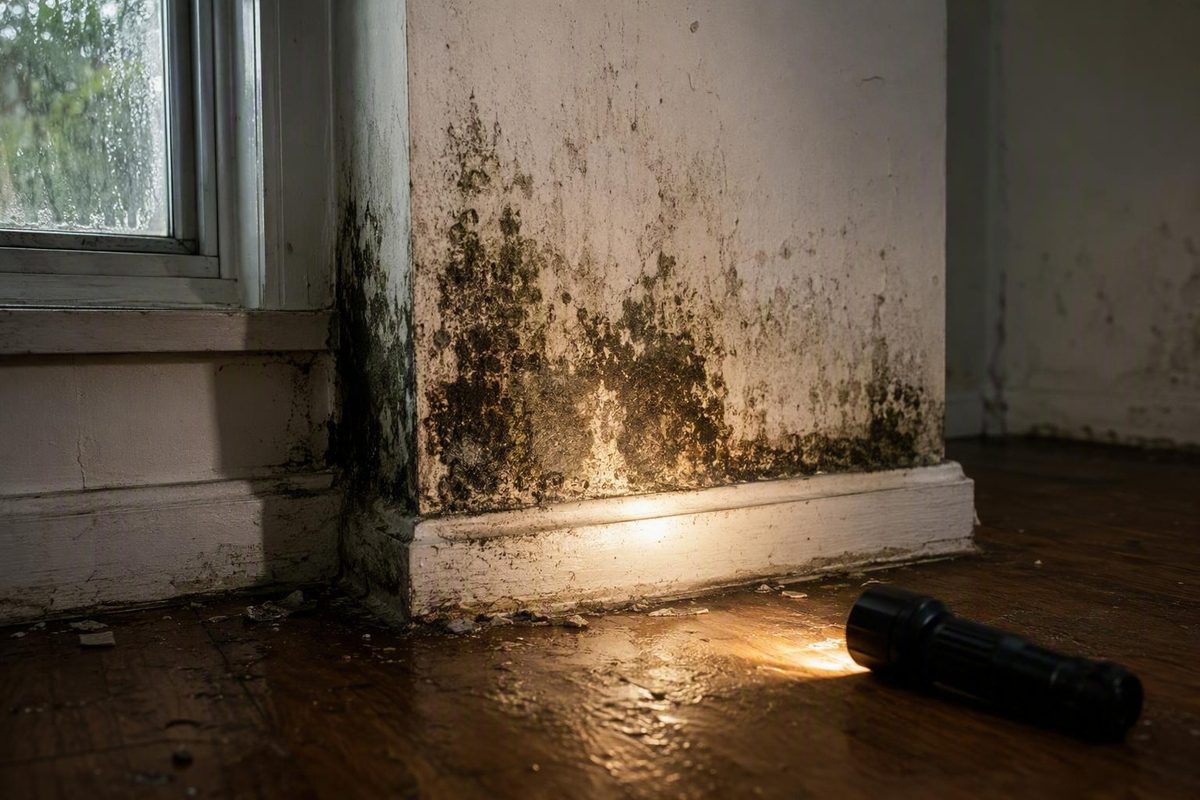
The short answer: mold itself is usually not covered
A standard home warranty generally does not pay for mold inspection, cleanup, removal, or remediation. It may, however, repair or replace a covered system or appliance that produced the moisture—if the item and its failure qualify under the service contract. NerdWallet’s home-warranty mold overview describes this common division between the underlying breakdown and the resulting mold.
Air testing and containment are also typically outside a standard plan, even when the moisture came from a potentially covered component. The plan documents determine whether any unusual mold-related benefit applies.
That distinction answers “does home warranty cover mold?” more accurately than a simple yes or no:
- Mold is the resulting condition.
- The leak or mechanical breakdown is the possible warranty event.
- Testing, cleanup, and reconstruction are separate expenses.
A home warranty is a service contract for qualifying breakdowns of the systems and appliances listed in the agreement. Plans commonly focus on failures caused by normal wear and tear. Homeowners insurance is different: it may respond to property damage caused by an event covered under the policy, subject to its exclusions, limits, and other terms.
Potential moisture sources include plumbing components, water heaters, dishwasher connections, refrigerator lines, washing-machine hoses, HVAC components, and sump pumps. The appearance of one of these items in a plan does not settle the claim. The particular component must be covered, and the cause of failure must satisfy the agreement.
For example, suppose a covered water heater fails through qualifying normal use. The warranty company might approve repair or replacement of the unit. That approval does not automatically extend to:
- Mold inspection or testing
- Containment and remediation
- Damaged drywall or insulation
- Wet flooring or cabinets
- Painting and finish work
- Duct cleaning or treatment
“Usually not covered” is more accurate than “never covered.” An unusual plan or limited optional benefit might provide narrow mold-related protection. But the word mold on a sales page is not enough. The current service agreement and endorsements determine the trigger, exclusions, cap, fees, waiting period, and claim procedure.
This article provides general education, not a determination about an individual claim. Coverage varies by contract, provider, jurisdiction, and the facts of the loss. Insurance Roster’s description of its educational role advises readers to treat general guides as a starting point and confirm the applicable documents before purchasing coverage or filing a claim. Its Terms & Conditions likewise explain that the site does not provide individualized insurance, legal, or financial advice.
Split the problem into six separate costs
A moisture-and-mold incident may feel like one problem, but it can generate six different bills. Each may receive a different coverage decision.
-
Diagnosing or locating the moisture source This may include a service visit, diagnostic testing, leak detection, or investigative work needed to determine where water is coming from.
-
Repairing the failed component This is the expense most closely aligned with the core purpose of a home warranty, provided the component is listed and the failure qualifies.
-
Opening a wall, floor, ceiling, cabinet, or other surface for access A technician may need to cut into finished material to reach a pipe, drain, or mechanical part.
-
Mold inspection or testing This may include visual inspection, sampling, laboratory analysis, or air testing.
-
Containment and remediation This is work directed at the mold condition rather than the failed component.
-
Reconstruction or restoration This includes replacing drywall, flooring, insulation, cabinets, paint, trim, or other materials after access, water damage, or remediation.
Available evidence supports a broad distinction: component repair may qualify, while direct mold work and secondary property damage are commonly excluded. It does not establish a universal rule for diagnostic work, leak detection, access, or restoration after access. Those details must be checked in the individual agreement.
Water-heater example
Assume a water heater develops a leak because a covered part failed from a qualifying cause. The warranty may repair or replace the water heater, subject to its limits. Mold treatment and replacement of the utility-room wall may remain the homeowner’s responsibility. ConsumerAffairs uses a similar water-heater example to illustrate the separation between equipment repair and resulting mold or structural damage (ConsumerAffairs’ mold-coverage discussion).
Even this example cannot be reduced to “water heaters are covered.” The result can change if the problem involves an excluded part, corrosion, improper installation, inadequate maintenance, a pre-existing leak, or another excluded cause.
HVAC example
Suppose an eligible HVAC condensate component malfunctions and water collects around the equipment. The warranty might approve repair of that component while issuing separate decisions—or providing no coverage—for:
- Locating the moisture source
- Opening a ceiling or equipment enclosure
- Air testing
- Containment
- Mold treatment
- Duct-related work
- Replacing insulation, drywall, or finishes
An HVAC or condensate problem may be evaluated as the underlying failure, while testing, containment, remediation, and surrounding restoration remain separate expenses under the contract (Empire Home Protect’s mold-removal coverage explanation).
Plumbing example
A worn covered plumbing component may qualify if it failed in a way recognized by the contract. A leak that existed before coverage, developed gradually, involved an excluded component, or continued because of inadequate maintenance may face significant obstacles.
Dates and technician observations matter. “Pipe leaking behind kitchen wall” does not reveal whether the event was sudden, gradual, caused by wear, caused by installation, or visible before the plan began. Those facts may affect whether the component repair qualifies.
Request an itemized answer
Do not frame the entire incident as one all-or-nothing “mold claim.” Ask the warranty company for a written decision on each relevant category:
- Diagnosis or leak location
- Failed component
- Access
- Restoration after access
- Mold inspection or testing
- Containment
- Remediation
- Reconstruction
An approval for one line item does not approve all the others. Conversely, denial of mold remediation does not necessarily resolve whether the covered component, diagnostic work, or access qualifies.
A cause-based decision tree for possible coverage
Start with the apparent source of moisture, not merely the presence of mold. The following four branches identify the contracts worth checking.
1. Did a listed appliance or system suffer a qualifying mechanical failure?
If yes: Submit a service request for the failed item. The home warranty may address that component, subject to covered-item definitions, failure requirements, exclusions, limits, maintenance duties, and authorization procedures.
Likely split: The component repair may qualify; mold testing, cleanup, and resulting property damage commonly do not.
Example: A covered water heater fails through qualifying normal wear and tear. The warranty evaluates the water heater. Mold remediation and replacement of the surrounding wall are separate issues.
Another example: An HVAC component malfunctions and releases or fails to drain water. The plan evaluates that component, but testing, treatment, duct-related work, and reconstruction require separate coverage analysis.
First American similarly distinguishes mold from an eligible appliance or system that caused the moisture, while emphasizing that the particular plan controls (First American’s guide to mold and home warranties).
2. Did mold follow a sudden accidental water event?
If possibly yes: Check the homeowners policy as well as the warranty agreement. Homeowners insurance may consider resulting damage when it stems from a sudden event covered by the policy. This is conditional, not an automatic fallback after a warranty denial.
Example: A plumbing component suddenly fails. The warranty company may evaluate repair of the component, while the homeowners insurer separately evaluates damage to walls, flooring, or other property.
The two providers are not deciding the same question. A warranty claim asks whether a listed item suffered a qualifying breakdown. An insurance claim asks whether a covered cause of loss produced covered damage. One provider’s decision does not prove or defeat the other claim.
3. Is the moisture gradual, recurring, or related to property conditions?
If yes or possibly: Expect substantial coverage obstacles. Examples include:
- A pipe leaking slowly for months
- Long-running humidity
- Poor ventilation
- Deferred maintenance
- Neglect
- A pre-existing condition
- Repeated condensation that was not addressed
These facts can undermine a warranty claim because the component or failure may not qualify. They can also create insurance problems because homeowners policies commonly distinguish sudden covered events from ongoing moisture or maintenance conditions. MarketWatch Guides describes homeowners coverage as potentially available for mold following a sudden covered event, while ongoing leaks and maintenance-related moisture generally present obstacles (MarketWatch Guides’ warranty and insurance comparison).
Do not guess whether a condition is “long term.” Record when you first noticed it and ask the technician to document objective observations.
4. Did flooding or weather intrusion introduce the water?
If yes or possibly: A home warranty is generally not designed to cover the event or its resulting mold. Flood-related mold may require evaluation under separate flood insurance. Weather intrusion may raise different questions under a homeowners policy, roof endorsement, or other coverage.
Example: Floodwater enters a basement, and mold later appears. A standard home warranty is unlikely to be the central coverage document. The homeowner should review any flood policy and other potentially applicable insurance without assuming payment.
A roof-leak benefit does not necessarily change this analysis. Even if a warranty includes limited roof-leak protection, that establishes neither coverage for every kind of weather intrusion nor coverage for resulting mold. Some plans include roof-leak coverage or offer it as an option, but the plan language still controls (NerdWallet’s discussion of roof leaks and mold coverage).
More than one claim can exist
The same incident may produce:
- A home-warranty service request for a failed component
- A homeowners claim for potentially covered resulting damage
- A flood claim if flooding caused the loss
- Out-of-pocket expenses that no contract covers
Notify each potentially applicable provider according to its own instructions. Filing with one does not establish coverage under another, and a denial from one is not a universal finding about the event.
Home warranty vs. homeowners insurance vs. flood insurance
The right question is not simply, “Which product covers mold?” It is, “Which contract might respond to this cause and this specific expense?”
| Question | Home warranty | Homeowners insurance | Flood insurance |
|---|---|---|---|
| Primary purpose | Service contract for qualifying breakdowns of listed systems and appliances | Insurance for covered causes of loss and resulting property damage | Separate insurance evaluated when flooding causes loss |
| Likely trigger | A listed component suffers a qualifying failure | A covered event causes covered damage | Flooding causes damage within the policy’s terms |
| Mold remediation | Commonly excluded under standard plans | May be considered if mold resulted from a covered event; exclusions and limits still apply | Requires policy-specific evaluation of the flood cause and mold-related loss |
| Underlying component repair | May qualify if the item and failure are covered | Coverage depends on the event and policy; insurance is not a general substitute for wear-and-tear service coverage | Any damage to mechanical equipment must be evaluated under the flood policy rather than assumed covered |
| Gradual moisture | Common obstacle under qualifying-failure, maintenance, or pre-existing-condition provisions | Common obstacle where damage results from ongoing leaks, humidity, or poor maintenance | The flood cause and policy wording control |
| Flood-related mold | Generally outside the product’s core purpose | Standard homeowners coverage should not be assumed | Evaluate under a separate flood policy without assuming payment |
| Controlling document | Current service agreement and endorsements | Current policy, declarations, and endorsements | Current flood policy and endorsements |
The comparison is necessarily general. Home warranties focus on qualifying mechanical breakdowns, while homeowners insurance may consider mold linked to a covered peril but commonly presents obstacles when the cause is neglect, poor ventilation, or inadequate maintenance (Dwellness’ warranty and homeowners insurance comparison).
A home warranty, homeowners policy, flood policy, builder warranty, and manufacturer warranty are different products:
- A home warranty may address a qualifying breakdown in a listed household system or appliance.
- Homeowners insurance may respond to covered property damage caused by a covered event.
-
Flood insurance is separate coverage for flood-related losses, subject to its own wording.
-
A manufacturer warranty applies to a product under the manufacturer’s conditions.
These products should not be conflated merely because one incident touches several of them.
Consider a dishwasher leak. The home warranty might assess the failed pump, seal, hose, or other listed component. The homeowners insurer might assess resulting damage if the event fits the policy. Each provider can reach a different decision because each evaluates a different contract, trigger, expense, exclusion, and limit.
Promptly notify potentially applicable providers while following each contract’s claim instructions. Do not wait for the warranty company’s final decision if doing so could conflict with a separate insurance reporting requirement.
Read the service agreement before relying on a sales summary
A provider FAQ or marketing page may explain the general concept, but it cannot substitute for the current service agreement. Obtain the complete contract for the correct plan, property, and coverage period, along with every endorsement or optional add-on.
Contract-review checklist
Look for the following sections and terms:
- Schedule of covered systems and appliances: Is the equipment listed? Are only certain components covered?
- Breakdown: How does the contract define a covered failure?
- Normal wear and tear: Must the failure arise from ordinary use, and what conditions fall outside that definition?
- Mold, fungi, microbial growth, or hazardous materials: Does the agreement expressly exclude inspection, testing, treatment, or removal?
- Secondary or consequential damage: Does the plan distinguish the failed item from damage caused by that item?
- Water damage: Are there separate restrictions for water discharge, leakage, or resulting damage?
- Pre-existing conditions: How does the agreement treat conditions that began or were detectable before coverage?
- Maintenance obligations: What records or proof may be required?
- Coverage caps: Is there a maximum payment for the system, component, access work, or optional benefit?
Mold and hazardous-material provisions may be grounds for denying mold-related work even where a separate plumbing or appliance issue is being evaluated. First American, for example, directs customers to their particular plan terms and exclusions when discussing mold-related denials (First American’s explanation of claim denials).
Terms to verify rather than assume
These items vary enough that there is no reliable universal rule:
- Leak detection or source location
- Opening a wall, ceiling, floor, or cabinet for access
- Restoring surfaces after access
- Roof-leak protection
- Optional mold-related benefits
- Service fees
- Waiting periods
- Notice or reporting deadlines
- Prior authorization
- Required photographs or reports
- Use of approved contractors
- Reimbursement for independently arranged work
- Emergency-service procedures
A plan may include some roof-leak protection or sell it as an add-on. That does not establish coverage for interior water damage, mold testing, remediation, or reconstruction. Read both the benefit description and the exclusions.
Limited mold-related riders or add-ons may exist, but broad availability and current provider-specific terms should not be assumed. Provider guidance describing such options also warns that they may have restrictive conditions, exclusions, or limits (Liberty Home Guard’s discussion of mold-related options).
How to judge a mold add-on
Do not evaluate an add-on by its name alone. Ask:
- What event triggers the benefit?
- Does it cover testing, remediation, or both?
- Must the moisture source be a covered warranty failure?
- Does it exclude gradual leaks, humidity, ventilation issues, flooding, or pre-existing conditions?
- What is the payment cap?
- Does a service fee or deductible apply?
- Is there a waiting period?
- How quickly must the problem be reported?
- Must the provider authorize the inspection or contractor?
- Does the benefit cover reconstruction afterward?
A narrow benefit can have limited practical value if its trigger is restrictive, its cap is low relative to the required work, or it excludes the causes of greatest concern.
Questions to ask before work begins
Request clear, written answers to these questions:
- Is the failed component listed in my plan?
- Is this specific failure mode covered?
- Is diagnosis or leak detection included?
- Is opening the wall, floor, or ceiling for access covered?
- Is restoration after access covered?
- Is mold inspection or testing covered?
- Are containment and remediation covered?
- Is reconstruction covered?
- What coverage limit applies to each category?
- What service fee or deductible applies?
- Is authorization required before work begins?
- Must I use an approved contractor?
- What documents and deadlines apply?
Do not accept a general sales-page statement as the final answer. Ask the provider to identify the applicable contract section, exclusion, limit, or endorsement.
What to do after finding moisture or suspected mold
The immediate goals are to address active moisture when safe, preserve evidence, and avoid procedural mistakes. Do not make unsupported claims about the cause; document what you can observe.
1. Address active moisture promptly when safe
Take reasonable steps to stop or limit an active water source if this can be done safely. Depending on the circumstances, that might involve shutting off an appliance or water supply. Do not leave active moisture unaddressed solely to wait for a coverage decision. Empire Home Protect similarly recommends stopping the moisture source when safe and documenting the condition before requesting service (its mold-claim guidance).
At the same time, check the contracts for emergency procedures and prior-authorization requirements. Emergency action and coverage authorization are separate issues: necessary action may protect the property, but reimbursement still depends on the applicable wording.
2. Record the discovery
Write down:
- The date and time you first noticed moisture, staining, odor, equipment trouble, or suspected mold
- Where each condition appeared
- Whether water was actively flowing
- What the appliance or system was doing
- Any steps taken to stop the water
- Whether the area had shown prior warning signs
Use neutral descriptions. “Water is visible below the water heater” is more reliable than “the tank suddenly burst” unless a technician confirms that conclusion.
3. Photograph the source and affected areas
Take clear photographs or video of:
- The suspected appliance or system
- Model and serial information where accessible
- Water paths, staining, and affected surfaces
- The wider room and close-up details
- Any removed material, if work must begin
- Conditions before and after emergency measures
Photographs do not prove coverage, but they can help establish what was visible and when.
4. Preserve maintenance and service records
Collect invoices, maintenance logs, prior inspection reports, repair records, and communications involving the affected system. These may help answer questions about maintenance, previous problems, or whether the condition predated coverage.
Some claims may call for photographs, maintenance records, or professional reports, but requirements vary. The individual contract and provider instructions control.
5. Review every potentially applicable document
Check:
- Home-warranty service agreement
- Optional warranty endorsements
- Homeowners policy
- Flood policy, if applicable
- Builder warranty
- Manufacturer warranty
- Recent repair guarantees
Look for notice rules, authorization requirements, covered-item schedules, exclusions, limits, and contractor provisions.
6. Notify potentially applicable providers promptly
Open a warranty service request for the suspected failed component rather than presenting only a broad request for “mold removal.” Separately notify an insurer if the facts may involve a covered water event or flood.
Describe observable facts without overstating the cause:
Water was found below the HVAC equipment on August 20. The condensate area appears wet, and staining is visible on the adjacent wall. The cause has not yet been confirmed.
That description preserves uncertainty while giving the provider useful information.
7. Obtain detailed technician findings
Ask the technician to identify, where possible:
- The failed part
- The apparent failure mode
- The moisture source
- Whether the component was functioning
- Signs relevant to whether the issue was sudden, gradual, or pre-existing
- Observed maintenance or installation conditions
- Work needed to access and repair the component
- Damage outside the component itself
A report that simply says “leak and mold present” may not answer the relevant contract questions.
8. Keep a claim log
Maintain one file containing:
- Discovery date
- Names and contact details
- Claim or service-request numbers
- Dates and summaries of calls
- Provider instructions
- Authorizations
- Technician reports
- Estimates
- Photographs
- Maintenance records
- Invoices and receipts
- Written coverage decisions
After a phone conversation, ask for written confirmation or send a concise summary through the provider’s documented communication channel.
9. Check authorization before nonemergency work
Before arranging nonemergency repair, testing, or remediation, ask whether prior approval is required and whether a particular contractor must be used. If immediate work is necessary to address active moisture, document the conditions, actions taken, and reason for proceeding.
This is claim-preservation guidance, not mold-cleanup or health advice. The appropriate evaluation and remediation approach depends on the conditions in the home and should not be inferred from a warranty article.
If the mold-related claim is denied
A denial can be broad in wording but narrow in effect. “Mold is excluded” may answer the remediation question without resolving the failed component, leak detection, access, or another separately itemized expense.
Request the decision in writing
Ask the provider to identify:
- The item or expense being denied
- The facts it relied on
- The exact definition, exclusion, limit, or procedural provision
- Whether the underlying component received a separate decision
- Whether access and restoration were separately evaluated
- What review or appeal process applies
Do not rely only on a statement such as “mold isn’t covered.” Determine whether the provider denied only mold work or the entire service request.
Compare the explanation with the record
Review the cited wording against:
- The original service request
- Technician findings
- Maintenance history
- Discovery and reporting dates
- Photographs
- The plan’s list of covered components
- Any authorization given
- Estimates separating component repair from remediation and reconstruction
A denial based on a pre-existing condition raises different factual questions from one based on an excluded component, missed authorization, or mold exclusion.
Use the contract’s review process
If relevant facts or provisions appear to have been overlooked, follow the review or appeal procedure stated in the agreement. Submit material that directly addresses the stated reason, such as a technician’s identification of the failed part, maintenance records, dated photographs, or a corrected itemized estimate.
An appeal is not guaranteed to succeed. Its purpose is to obtain reconsideration under the contract using a clearer factual and documentary record.
Consider other coverage independently
If a sudden water event may have caused resulting property damage, notify the homeowners insurer rather than assuming the warranty denial decides that claim. If flooding was involved, evaluate any separate flood policy. Each provider applies its own contract.
Do not describe the warranty denial as proof that insurance must pay. Likewise, an insurance denial does not establish that a service-contract failure qualifies.
Purchasing implication
If your main reason for buying a home warranty is protection against mold testing, removal, remediation, and reconstruction, a standard plan is generally a poor primary solution. Its central function is repairing qualifying breakdowns of listed systems and appliances—not providing comprehensive protection against resulting mold.
Conclusion
A standard home warranty usually will not pay for mold itself, but it may pay for an eligible system or appliance failure that caused the moisture. Separate the event into component repair, detection, access, testing, remediation, and reconstruction. Identify the contract that might apply to each expense, document the facts, and obtain written decisions based on the current warranty and insurance language.
If mold protection is your main purchasing goal, do not treat a standard home warranty as comprehensive mold coverage.
Frequently asked questions
Will a home warranty repair the leak that caused mold?
It may. Coverage depends on whether the leaking item or component is listed and whether it failed from a qualifying cause. An eligible plumbing component, water-heater part, appliance component, HVAC part, or sump pump may qualify, but exclusions, maintenance history, limits, and authorization rules still apply. Repairing the leak does not automatically include mold remediation (First American’s mold-coverage explanation).
Does coverage for a leaking appliance include mold cleanup and damaged drywall?
Usually not under a standard home warranty. The plan may repair or replace a qualifying failed appliance component while excluding mold cleanup and secondary damage such as drywall, flooring, cabinets, or insulation. Ask for separate written decisions on the component, access, remediation, and reconstruction (Dwellness’ explanation of warranty and mold exclusions).
Can homeowners insurance cover mold when a home warranty does not?
Possibly. Homeowners insurance may consider mold and resulting property damage when they follow a sudden event covered by the policy. Mold associated with ongoing leakage, high humidity, poor maintenance, neglect, flooding excluded by the policy, or another excluded cause commonly faces coverage obstacles. A warranty denial neither guarantees nor prevents an insurance payment (MarketWatch Guides’ mold-coverage overview).
Can I buy a home-warranty add-on that covers mold?
Limited mold-related options may exist in some markets or plans, but broad availability and provider-specific terms should not be assumed. Review the actual endorsement for its trigger, exclusions, payment cap, service fee or deductible, waiting period, reporting deadline, authorization rules, and whether it covers testing, remediation, and reconstruction. A benefit labeled “mold coverage” may still be narrow (Liberty Home Guard’s discussion of mold-related riders).
What documents should I collect for a mold-related service request?
Collect the service agreement and endorsements, photographs or video, the discovery timeline, maintenance and prior repair records, technician reports, estimates, receipts, claim numbers, authorizations, and written coverage decisions. Ask the technician to identify the failed component, apparent failure mode, moisture source, and observations relevant to whether the condition was sudden, gradual, or pre-existing. Documentation requirements vary, so verify them in the current contract (ConsumerAffairs’ discussion of mold-related claim documentation).