
19 min read ·
How to Organize and Document a Wardrobe for Insurance
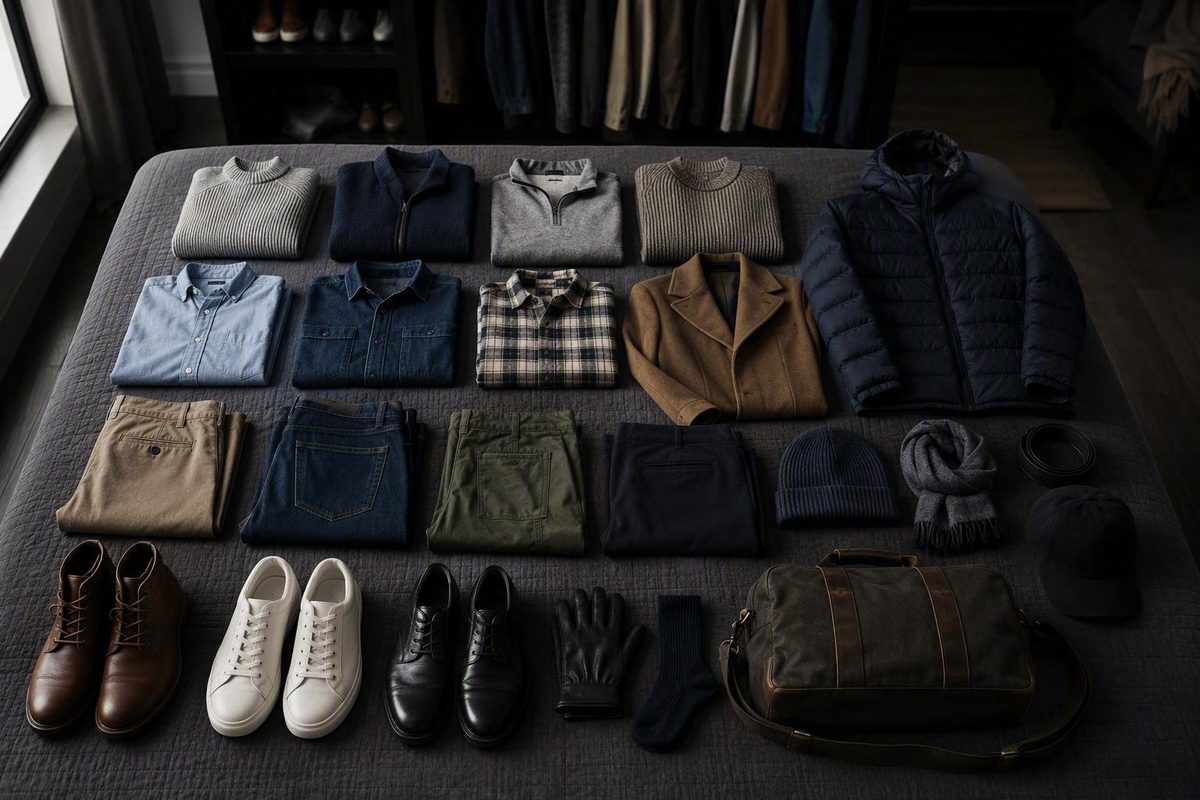
Choosing practical clothing categories for insurance appraisal or inventory work helps prevent a wardrobe from disappearing inside a general household-contents estimate. Ordinary purchases accumulate across closets, drawers, seasonal storage, and family members, while a few expensive pieces may be overlooked among everyday clothing. Chubb reports that wardrobes are commonly undervalued and notes that multiple non-designer items can become significant when combined (Chubb’s wardrobe valuation guide).
A workable system uses six top-level groups:
- Everyday garments
- Footwear
- Handbags and small leather goods
- Non-jewelry accessories
- Luggage and travel goods
- Specialty or collectible clothing
Within those groups, use two levels of detail: group routine items, but create individual records for valuable, rare, bespoke, authenticated, collectible, discontinued, or difficult-to-replace pieces.
These are organizational suggestions, not official categories used by every insurer or appraiser. Insurance Roster provides general insurance education, as explained on its About page, rather than individualized insurance, legal, financial, or appraisal advice.
Coverage, claims, and deductible terms vary by policy and jurisdiction. Review the site’s terms and limitations, then confirm your policy wording and insurer requirements before relying on an inventory for coverage or claim decisions.
Related: Insurance Deductibles Shape What You Pay on a Claim.
Start by distinguishing an inventory, an appraisal, and a claim valuation
A home inventory is a record of what you own. It commonly includes descriptions, quantities, estimated values, identifying details, purchase information, and supporting evidence. It can help you estimate personal-property coverage needs and reconstruct what was damaged, destroyed, or stolen. Insurer guidance recommends recording descriptions, estimated values, purchase dates, available identifiers, photographs, and related documents (Kin’s home inventory guide).
It should do more than state that a garment is “worth” a certain amount: the report should identify the property, explain the relevant valuation basis, and support the conclusion. An appraisal prepared for insurance replacement purposes may therefore reach a different conclusion from one prepared for an estate, donation, or anticipated sale.
A post-loss contents claim is different again. After damage, destruction, or theft, the policyholder may need to identify affected property and support ownership, age, condition, and value. The process may also require current replacement research, proof that replacement occurred, or other documentation, depending on the policy. United Policyholders recommends listing and valuing damaged or destroyed contents and producing available receipts, photographs, and other evidence (United Policyholders’ contents-claim guidance).
The distinction controls the appropriate level of detail:
- A household coverage estimate may group routine garments.
- A pre-loss inventory should capture enough quantity and quality information to avoid understating the wardrobe.
- An appraisal of couture, bespoke tailoring, or collectible fashion may require item-level cataloging and market analysis.
- A detailed post-loss claim may require each affected item to be identified, even if the pre-loss inventory used broader groups.
The categories below are therefore a practical, non-exhaustive framework. They do not establish a universal insurance or appraisal taxonomy.
A practical checklist of clothing and wardrobe categories
For a household with several people, organize the inventory first by household member and then by category.
1. Everyday garments
Useful subgroups include:
- Tops, shirts, blouses, and T-shirts
- Knitwear, cardigans, pullovers, and sweaters
- Trousers, jeans, and shorts
- Skirts
- Dresses
- Suits, blazers, and other tailoring
- Jackets, rainwear, and coats
- Activewear and sportswear
- Sleepwear and robes
- Undergarments, hosiery, and base layers
- Children’s and infants’ clothing, where applicable
- Other everyday garments
These are filing suggestions, not formal insurance classifications. The purpose is to make counting and replacement-price research manageable.
Separate garments by season, location, or use when that produces a more accurate record. For example, “winter outerwear in off-site storage” may be easier to verify than a single broad entry for all jackets and coats.
2. Footwear
Divide footwear into workable counting groups:
- Casual shoes
- Formal or dress shoes
- Trainers or sneakers
- Boots
- Sandals
- Work or occupational footwear
- Sports-specific footwear
- Designer, limited-edition, or collectible pairs
- Other footwear
These divisions help with counting pairs and selecting representative prices, but they may not match the categories in your policy. Document a pair separately when its value depends materially on authenticity, limited availability, unusual materials, collaboration status, provenance, or collectible condition.
3. Handbags and small leather goods
Include:
- Purses and handbags
- Shoulder and crossbody bags
- Totes
- Clutches and evening bags
- Wallets and cardholders
- Briefcases and work bags
- Small cases and pouches
- Other comparable goods
Give this group its own subtotal, especially when several moderately priced bags have accumulated or individual pieces are valuable.
4. Non-jewelry accessories
Include:
- Belts
- Scarves and wraps
- Hats and caps
- Gloves
- Ties and bow ties
- Sunglasses
- Hair accessories
- Detachable collars, cuffs, or garment accessories
- Other non-jewelry accessories
Flag jewelry and watches for separate insurer review rather than quietly combining them with belts and scarves. They may be convenient to store or inventory together, but the policy may classify them differently or apply separate limits and scheduling rules.
5. Luggage and travel goods
Create a distinct group for:
- Suitcases
- Carry-ons
- Garment bags
- Duffel and weekend bags
- Travel organizers
- Trunks and specialty travel cases
- Other luggage
6. Specialty or collectible clothing
Use this group for garments that cannot be described adequately by a routine category entry. Examples include:
- Designer ready-to-wear
- Bespoke tailoring
- Haute couture
- Wedding gowns and formalwear
- Vintage clothing
- Limited-edition streetwear
- Furs and valuable outerwear
- Uniforms
- Costumes
- Performance wear
- Curated or coordinated fashion collections
Copyable spreadsheet checklist
Household member:
[ ] Everyday garments
    [ ] Tops and shirts
    [ ] Knitwear
    [ ] Trousers and jeans
    [ ] Skirts
    [ ] Dresses
    [ ] Suits and tailoring
    [ ] Jackets and coats
    [ ] Activewear
    [ ] Sleepwear
    [ ] Undergarments
    [ ] Children's clothing
    [ ] Other:
[ ] Footwear
    [ ] Casual shoes
    [ ] Formal shoes
    [ ] Trainers
    [ ] Boots
    [ ] Sandals
    [ ] Designer or collectible pairs
    [ ] Other:
[ ] Handbags and small leather goods
    [ ] Purses/handbags
    [ ] Clutches
    [ ] Wallets/cardholders
    [ ] Briefcases/work bags
    [ ] Other:
[ ] Non-jewelry accessories
    [ ] Belts
    [ ] Scarves
    [ ] Hats
    [ ] Gloves
    [ ] Ties
    [ ] Sunglasses
    [ ] Other:
[ ] Luggage and travel goods
    [ ] Suitcases
    [ ] Carry-ons
    [ ] Garment bags
    [ ] Duffels/travel cases
    [ ] Other:
[ ] Specialty or collectible clothing
    [ ] Designer ready-to-wear
    [ ] Bespoke tailoring
    [ ] Couture
    [ ] Wedding/formalwear
    [ ] Vintage
    [ ] Limited-edition streetwear
    [ ] Furs/valuable outerwear
    [ ] Uniforms/costumes/performance wear
    [ ] Other:
Specialty garments and collections that deserve separate attention
Commercial clothing-appraisal guidance identifies designer ready-to-wear, haute couture, wedding and formalwear, vintage clothing, limited-edition streetwear, furs, uniforms, costumes, and performance wear as appraisal-relevant groups. It also identifies brand, age, condition, provenance, scarcity, era, and materials as potentially important value factors (AppraiseItNow’s clothing-appraisal overview).
Brand name alone does not determine whether a garment needs professional appraisal. A mass-produced branded piece with readily available replacements may be easier to document than an unbranded but historically significant costume with strong provenance.
Relevant attributes may include:
- Maker, atelier, designer, or tailor
- Materials and construction
- Age, date, or era
- Condition
- Provenance and ownership history
- Authenticity
- Scarcity
- Current availability
- Replacement difficulty
- Whether the piece belongs to a coordinated set or collection
Bespoke, discontinued, vintage, and couture pieces create a particular valuation problem because an identical new replacement may not exist. Depending on the policy and purpose of the assignment, the appropriate comparison could be a new equivalent, comparable property, a secondary-market example, or another defined basis. Professional apparel-appraisal guidance notes that insurance replacement may involve new or comparable property according to the applicable policy (Deborah Miller Appraisals’ explanation of clothing-appraisal purposes).
Handbags, exclusive footwear, and coordinated collections can also be significant fashion property. That does not mean every luxury item appreciates, retains its original retail price, or requires separate coverage. Condition, authenticity, demand, materials, scarcity, and replacement availability may all affect the relevant value.
For each distinctive item, record factual condition information:
- Alterations and tailoring details
- Repairs or restoration
- Stains, tears, fading, pilling, or abrasion
- Cleaning and preservation history
- Missing belts, buttons, dust bags, boxes, or other components
- Replacement hardware or non-original parts
- Storage conditions where relevant
Professional appraisal may be worth discussing when value depends materially on authenticity, provenance, scarcity, materials, condition, or limited replacement availability. Historical prices in insurer, broker, or appraiser articles should not be treated as current benchmarks because they are tied to particular dates, currencies, sellers, locations, and markets.
When to group clothing and when to list an item separately
A two-tier system balances completeness with practicality.
Tier 1: Group routine garments
For an ordinary clothing group, record:
- Owner
- Garment type
- Quantity
- General brand or quality tier
- Approximate age range
- Condition range
- Current replacement estimate
- Price-research date and source
Grange Insurance illustrates this approach by grouping clothing as several pairs of jeans or high heels while identifying an especially valuable purse separately. Those quantities are examples, not prescribed inventory rules (Grange Insurance’s home-inventory guide).
Sample grouped entries:
| Owner | Entry | Quantity | Description | Age and condition | Estimate method |
|---|---|---|---|---|---|
| Owner A | Jeans | 8 pairs | Mid-range brands; mixed cuts | 1–6 years; good to worn | Representative current price × quantity |
| Owner B | Sweaters | 12 | Wool and cotton; average quality | 1–8 years; mixed condition | Current comparable retail research |
Multiplying quantity by a representative current price can be a practical household-estimating shortcut when receipts are missing. It is not a formal professional appraisal method. Choose a price that reflects the group’s actual quality instead of applying the cost of one premium item to a group of mostly basic garments.
Tier 2: Record distinctive pieces individually
Create separate entries for pieces that are:
- Unusually valuable
- Bespoke or made to measure
- Rare or scarce
- Authenticated
- Collectible
- Discontinued
- Highly sensitive to condition
- Difficult to replace
- Part of a significant matched set or collection
Sample individual records might include:
- Bespoke suit: tailor, fabric, commission and fitting dates, alterations, receipt, condition photographs, and current comparable replacement quote.
- Designer handbag: model, material, product or date code, authentication record, included accessories, receipt, condition, and replacement source.
- Wedding gown: designer, style, size, alterations, included veil or accessories, purchase record, cleaning history, storage, and selected value basis.
- Vintage couture dress: era, atelier label, materials, provenance, repairs, condition details, comparables, and prior appraisal information.
A collection does not always have to be treated as a rigid line-by-line list. An assessment may consider brand preferences, types of pieces, and overall wardrobe composition. Whether that approach is acceptable depends on the insurer, appraiser, assignment, and claim requirements.
Do not assume there is a universal dollar threshold for separate listing or scheduling. Instead, use this decision sequence:
- Can the item be replaced routinely with a readily available equivalent?
- Is its value unusually high relative to the rest of the wardrobe?
- Do authenticity or provenance materially affect its value?
- Is it bespoke, scarce, collectible, or discontinued?
- Would condition substantially change the valuation?
- Does the policy impose a relevant sublimit or require scheduling?
- If uncertainty remains, will the insurer accept grouped documentation, or does it require an individual record or appraisal?
What information and evidence to record
A useful spreadsheet should contain enough information to identify the property, explain the estimate, and locate supporting evidence.
Core fields for every entry
- Household member or owner
- Top-level category
- Garment subtype
- Quantity
- Brand, maker, or tailor
- Item description
- Materials
- Size, where useful
- Approximate purchase date or age
- Condition
- Purchase price
- Estimated current replacement cost
- Valuation basis
- Evidence available
- Storage location
- Date last reviewed
For individually documented pieces, add:
- Model or style name
- Product, style, serial, or date code where applicable
- Provenance
- Authentication details
- Alterations
- Repairs or restoration
- Cleaning history
- Included accessories or components
- Prior appraisal information
- Current comparable sources
Clothing often has no serial number and may not have a formal model name. Record identifiers when they exist, but do not leave the rest of the item undocumented because one field is inapplicable.
Photographs
Take:
- A full front view
- A full back view
- Close-ups of labels and maker marks
- Material and construction details
- Product, date, or style codes
- Distinctive embroidery, hardware, or pattern placement
- Included accessories
- Existing stains, repairs, wear, or damage
Wide closet photographs and narrated video can preserve context and help reconstruct the volume of clothing. They should supplement, rather than replace, detailed photographs of valuable or distinctive pieces.
Supporting records
Useful evidence may include:
- Receipts and invoices
- Purchase orders
- Retailer account or order histories
- Card or bank statements
- Photographs and videos
- Emails or purchase correspondence
- Authentication documents
- Provenance records
- Prior appraisals
- Tailor or alteration records
- Dated replacement-price research
If receipts are unavailable, begin with retailer and payment records. Then combine dated photographs, labels, correspondence, authentication documents, previous appraisals, and current comparable-item research.
A combination of records can make the inventory more useful, but it does not prove that a cause of loss is covered or guarantee that the insurer will accept a particular estimate.
Keep a backup away from the home or in secure cloud storage so the inventory is less likely to be lost in the same event as the wardrobe.
Choose the value basis before calculating the wardrobe total
Original purchase price is useful evidence, but it is not automatically the value required by a policy, appraisal, or claim. The relevant question may be what a new equivalent costs, what the used item was worth immediately before a loss, or what the item would produce in a defined sale.
Professional appraisal guidance distinguishes replacement value, fair market value, and marketable cash value according to the assignment’s intended use. It defines marketable cash value as anticipated net sale proceeds after sale-related costs, not merely an online asking price (Deborah Miller Appraisals’ valuation overview).
| Value term | Practical meaning | Common context | Policy- or assignment-dependent cautions |
|---|---|---|---|
| Original purchase price | What you paid when acquiring the item | Ownership evidence and historical reference | May be outdated and may not equal insured, replacement, or sale value |
| Replacement cost | Current cost associated with repairing or replacing property | Coverage estimates and some insurance claims or appraisals | Subject to policy limits, deductibles, conditions, proof requirements, and any requirement to complete replacement |
| Actual cash value (ACV) | A settlement basis that may reflect depreciation for age, wear, and condition | Some claims or initial claim payments | The definition and depreciation approach depend on the policy and applicable law |
| Fair market value | A market-based value involving a willing buyer and seller under the assignment’s definition | Estate and donation appraisals | Not interchangeable with replacement cost |
| Marketable cash value | Anticipated net proceeds after sale-related costs | Sale planning | Selling costs and the selected market affect the result |
| Comparable replacement | A new or comparable substitute when an identical replacement is unavailable | Bespoke, vintage, discontinued, or unique pieces | The policy or appraisal assignment must determine what qualifies as comparable |
Replacement cost concerns the current expense of repairing or replacing property, subject to the policy’s limits, conditions, deductible, and replacement requirements. Clothing and shoes may depreciate relatively quickly under an ACV approach, but policyholders should not assume that every insurer, item, or jurisdiction uses one standard depreciation schedule (United Policyholders’ explanation of ACV and replacement cost).
Fair market value and marketable cash value answer different questions from replacement cost. A vintage garment’s expected sale proceeds should not automatically be inserted into a replacement-cost inventory. Likewise, the cost of a new designer equivalent should not automatically be used in an estate or donation appraisal.
An insurance appraisal should identify:
- Intended use
- Intended users
- Property being appraised
- Type and definition of value
- The date at which the conclusion applies
- Important assumptions and limitations
Before commissioning the work, ask the appraiser and insurer to confirm which of these elements the report must include.
For a hard-to-replace item, the answer may be neither the original retail price nor an online resale listing. Depending on the policy and assignment, replacement could involve a new equivalent or comparable property. Obtain the applicable definition from the policy or insurer before calculating totals, particularly for designer, vintage, bespoke, or collectible fashion.
How appraisal, scheduling, limits, and deductibles fit together
An inventory documents property. An appraisal provides a defined opinion of value. Scheduling is a policy mechanism for identifying particular property or coverage.
High-value designer clothing, luxury accessories, or textiles may be candidates for individual appraisal or scheduled coverage, but eligibility and documentation requirements depend on the insurer and policy. A brokerage guide describes arrangements in which selected pieces are scheduled individually while other qualifying property is insured under a broader blanket limit; this is an example of a possible structure, not a promise that either option is available under a particular policy (Grit Insurance’s fashion and couture overview).
Review:
- Overall personal-property limit
- Category-specific sublimits
- Scheduled-property provisions
- Deductible or deductibles
- Valuation basis
- Proof-of-ownership and proof-of-value requirements
- Whether full replacement-cost payment requires actual replacement
- Deadlines and other claim conditions
- Coverage away from home or in storage
Ask how the insurer classifies handbags, luggage, furs, jewelry, watches, wearable technology, and other borderline items. The label used in your spreadsheet does not control the policy’s classification.
Before paying for an appraisal, ask the insurer:
- Which appraiser qualifications will you accept?
- Is a particular report format required?
- How recent must the appraisal be?
- What effective date should the report use?
- Is remote review acceptable, or is physical inspection required?
- How should an appraiser handle an item with no exact replacement?
- Are secondary-market comparables acceptable?
- How are newly acquired items handled?
- What coverage, if any, applies away from home or in storage?
- How are coordinated sets or collections treated after a partial loss?
- Are travel, transit, water damage, moth damage, accidental damage, or ordinary wear covered, limited, or excluded?
- Do handbags, luggage, furs, jewelry, watches, or wearable devices have separate limits?
- Must I replace an item and submit proof to recover the full replacement-cost amount?
Insurance Roster’s deductible guide explains why a deductible should be considered alongside limits, exclusions, sublimits, and valuation provisions.
An appraisal, receipt, photograph, inventory, or schedule cannot guarantee coverage or reimbursement. Exclusions, limits, deductibles, valuation provisions, proof requirements, and claim conditions still govern.
Build and maintain the wardrobe record
Use this repeatable workflow:
- Create a folder for each household member. Add a shared folder for communal property such as luggage.
- List the six top-level groups. Use everyday garments, footwear, bags and small leather goods, non-jewelry accessories, luggage, and specialty clothing.
- Work one contained area at a time. Complete one closet, dresser, storage container, or person rather than attempting the entire home at once.
- Count ordinary garments. Group them by useful subtype and quality tier.
- Flag valuable or unusual pieces. Move them to individual records.
- Photograph everything. Begin with wide closet images or video, then take item-level photographs of distinctive property.
- Attach supporting records. Connect receipts, statements, authentication documents, appraisals, and other evidence to the relevant entries.
- Research current replacement prices. Date the research and use comparables that match the type and quality of the property.
- Confirm the value basis. Do not mix replacement cost, ACV, fair market value, and sale-oriented estimates in one unlabeled total.
- Total each category and owner. Calculate a household total only from figures prepared on a comparable basis.
- Check policy treatment. Compare the inventory with limits, sublimits, deductibles, classifications, and available scheduling options.
- Back up the completed file. Keep a secure copy away from the home.
Refresh an estimate when replacement cost, condition, availability, or the relevant market has changed. Do not assume one update interval is appropriate for every policy or wardrobe.
Final quality-control checklist
- [ ] Every household member is included
- [ ] Ordinary garments are counted
- [ ] Footwear is counted by useful subtype
- [ ] Handbags and small leather goods are separated
- [ ] Luggage is not buried in the clothing total
- [ ] Non-jewelry accessories are captured
- [ ] Jewelry and watches are flagged for classification review
- [ ] Valuable or unusual items have individual records
- [ ] Alterations, repairs, cleaning, and condition issues are noted
- [ ] Every estimate labels its value basis
- [ ] Photographs and supporting records are attached
- [ ] Policy categories, limits, and sublimits are checked
- [ ] Deductibles and replacement requirements are understood
- [ ] An off-site or secure cloud backup is complete
Before commissioning an appraisal: Ask the insurer to confirm whether your categories and grouping method are acceptable, whether the proposed appraiser and report format will be recognized, and which valuation basis the assignment must use.
Frequently asked questions
Do I have to list every piece of clothing separately for insurance?
Not necessarily for a pre-loss household estimate. Routine garments can often be grouped by owner, type, quantity, quality tier, approximate age, and condition. Valuable or unusual pieces should receive individual records.
A post-loss insurer may require more detailed itemization. Ask what level of detail is required for your coverage estimate, appraisal, or claim rather than assuming one format works for all three.
Which wardrobe items may warrant a professional appraisal or separate scheduling?
Consider discussing appraisal or scheduling when an item’s value depends materially on authenticity, provenance, scarcity, unusual materials, condition, or limited replacement availability. Possible examples include couture, bespoke tailoring, significant vintage garments, rare handbags, exclusive footwear, furs, wedding gowns, costumes, and coordinated collections.
Brand name or purchase price alone does not create a universal appraisal or scheduling requirement. The insurer determines eligibility, acceptable evidence, and available coverage under the policy.
How can I document clothing if I no longer have the receipts?
Start with retailer order histories, loyalty accounts, card statements, and bank records. Add dated photographs or videos, labels, emails, tailor records, authentication documents, provenance records, prior appraisals, and current comparable-price research.
No single substitute necessarily proves everything. A combination of records can help establish ownership, identity, age, quality, condition, and value, but it does not guarantee coverage or acceptance.
Should clothing be valued at replacement cost or actual cash value?
Use the basis required by the policy or appraisal assignment. Replacement cost generally concerns the current cost of repair or replacement, subject to policy terms. Actual cash value may reflect depreciation for age, wear, and condition.
Do not choose whichever figure is higher or mix both in one total. Ask the insurer for the applicable definition and whether full replacement-cost recovery requires actual replacement and proof of purchase.
Are handbags, luggage, jewelry, and watches part of the clothing category?
They can be organized near clothing in a household inventory, but that does not determine how the policy classifies them. For clearer totals, separate handbags and small leather goods, luggage, and non-jewelry accessories. Flag jewelry and watches for specific review.
Ask the insurer how it classifies handbags, luggage, furs, jewelry, watches, and wearable technology, and whether separate limits, deductibles, appraisal rules, or scheduling provisions apply.
The project ultimately comes down to three decisions: choose practical wardrobe categories, decide what can be grouped and what needs an individual record, and apply only the value basis required by the policy or appraisal assignment. Save photographs and supporting records away from the home, update the inventory after meaningful changes, and confirm limits, sublimits, deductibles, scheduling rules, appraisal requirements, and item classifications directly with the insurer.