
7 min read ·
Why Florida’s Coastal Rate Relief Remains Uneven
Florida says premiums fell in 51 counties, but coastal results vary. Check Citizens cuts, county evidence, and Florida’s $3,400 annual national gap.
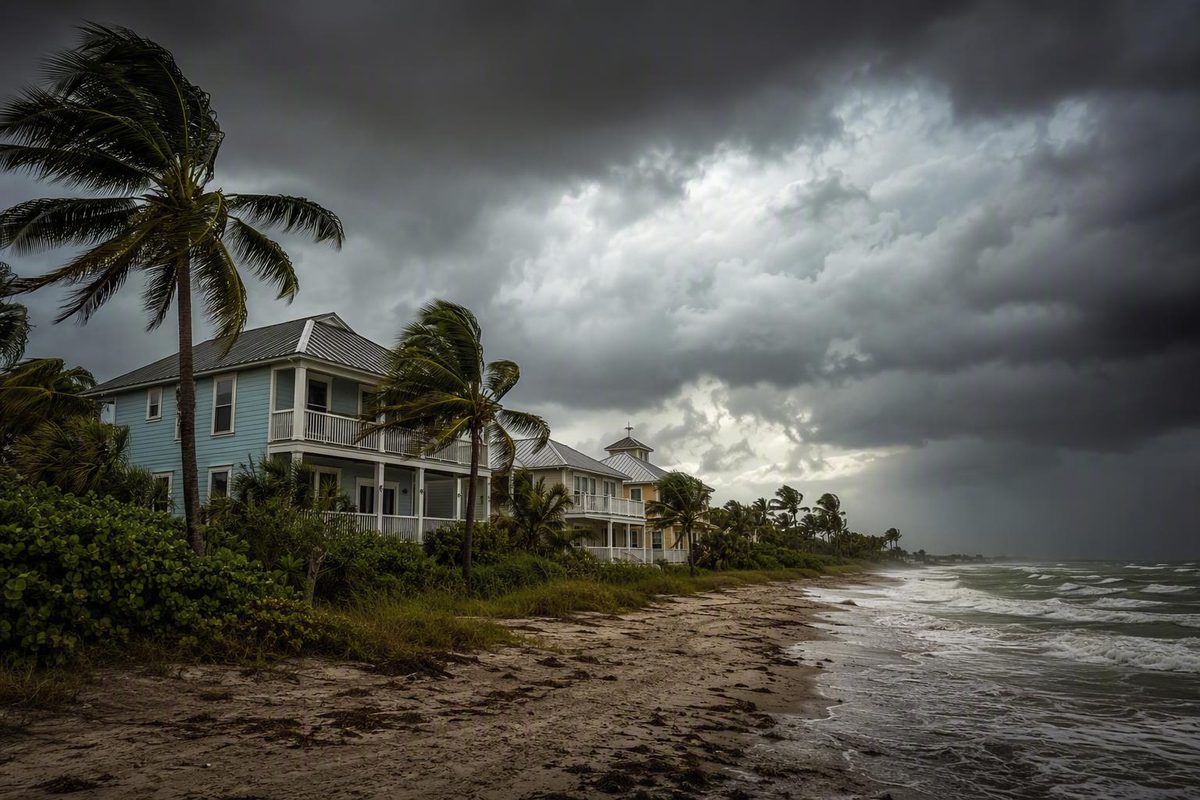
Florida homeowners still pay 181% more for home insurance than the national average—about $3,400 extra each year—even after regulators reported decreases in 51 of 67 counties. The relief is real for some policyholders, including large average Citizens cuts in four coastal counties, but the statewide headline does not establish that most high-risk coastal homes became cheaper. Palm Beach County illustrates the split: Citizens announced an 11.9% average reduction for an identified group while other county homeowners reported continuing increases (Insurance Business, April 10, 2026; Yahoo Finance, May 17, 2026; The Cool Down).
Choose your county and insurer; the checker separates documented Citizens cuts from county results the state report did not disclose.
The state reported decreases in 51 counties but did not publish their names in the supplied report. This checker shows what can—and cannot—be verified, then estimates documented Citizens averages for four coastal counties.
Select a county to see whether the supplied evidence documents a Citizens reduction, reports a mixed result, or leaves the county’s 51-county status undisclosed.
| County | Available 2026 evidence | Citizens average | County-wide verdict |
|---|---|---|---|
| Alachua | Not named in supplied 51-county report | — | Undisclosed |
| Baker | Not named in supplied 51-county report | — | Undisclosed |
| Bay | Not named in supplied 51-county report | — | Undisclosed |
| Bradford | Not named in supplied 51-county report | — | Undisclosed |
| Brevard | Not named in supplied 51-county report | — | Undisclosed |
| Broward | Approved average for ~27,000 Citizens homes | 14.1% decrease | Citizens cut only |
| Calhoun | Not named in supplied 51-county report | — | Undisclosed |
| Charlotte | Not named in supplied 51-county report | — | Undisclosed |
| Citrus | Not named in supplied 51-county report | — | Undisclosed |
| Clay | Not named in supplied 51-county report | — | Undisclosed |
| Collier | Not named in supplied 51-county report | — | Undisclosed |
| Columbia | Not named in supplied 51-county report | — | Undisclosed |
| DeSoto | Not named in supplied 51-county report | — | Undisclosed |
| Dixie | Not named in supplied 51-county report | — | Undisclosed |
| Duval | Not named in supplied 51-county report | — | Undisclosed |
| Escambia | Not named in supplied 51-county report | — | Undisclosed |
| Flagler | Not named in supplied 51-county report | — | Undisclosed |
| Franklin | Not named in supplied 51-county report | — | Undisclosed |
| Gadsden | Not named in supplied 51-county report | — | Undisclosed |
| Gilchrist | Not named in supplied 51-county report | — | Undisclosed |
| Glades | Not named in supplied 51-county report | — | Undisclosed |
| Gulf | Not named in supplied 51-county report | — | Undisclosed |
| Hamilton | Not named in supplied 51-county report | — | Undisclosed |
| Hardee | Not named in supplied 51-county report | — | Undisclosed |
| Hendry | Not named in supplied 51-county report | — | Undisclosed |
| Hernando | Not named in supplied 51-county report | — | Undisclosed |
| Highlands | Not named in supplied 51-county report | — | Undisclosed |
| Hillsborough | Not named in supplied 51-county report | — | Undisclosed |
| Holmes | Not named in supplied 51-county report | — | Undisclosed |
| Indian River | Not named in supplied 51-county report | — | Undisclosed |
| Jackson | Not named in supplied 51-county report | — | Undisclosed |
| Jefferson | Not named in supplied 51-county report | — | Undisclosed |
| Lafayette | Not named in supplied 51-county report | — | Undisclosed |
| Lake | Not named in supplied 51-county report | — | Undisclosed |
| Lee | Not named in supplied 51-county report | — | Undisclosed |
| Leon | Not named in supplied 51-county report | — | Undisclosed |
| Levy | Not named in supplied 51-county report | — | Undisclosed |
| Liberty | Not named in supplied 51-county report | — | Undisclosed |
| Madison | Not named in supplied 51-county report | — | Undisclosed |
| Manatee | Not named in supplied 51-county report | — | Undisclosed |
| Marion | Not named in supplied 51-county report | — | Undisclosed |
| Martin | Not named in supplied 51-county report | — | Undisclosed |
| Miami-Dade | Approved average for ~42,000 Citizens homes | 14.0% decrease | Citizens cut only |
| Monroe | Approved average for 1,000+ Citizens homeowners; 8,000+ wind-only policies receive a cut or no increase | 11.3% decrease | Citizens groups only |
| Nassau | Not named in supplied 51-county report | — | Undisclosed |
| Okaloosa | Not named in supplied 51-county report | — | Undisclosed |
| Okeechobee | Not named in supplied 51-county report | — | Undisclosed |
| Orange | Not named in supplied 51-county report | — | Undisclosed |
| Osceola | Not named in supplied 51-county report | — | Undisclosed |
| Palm Beach | Approved average for ~26,000 Citizens homes; other homeowners reported continuing increases | 11.9% decrease | Mixed evidence |
| Pasco | Not named in supplied 51-county report | — | Undisclosed |
| Pinellas | Not named in supplied 51-county report | — | Undisclosed |
| Polk | Not named in supplied 51-county report | — | Undisclosed |
| Putnam | Not named in supplied 51-county report | — | Undisclosed |
| Santa Rosa | Not named in supplied 51-county report | — | Undisclosed |
| Sarasota | Not named in supplied 51-county report | — | Undisclosed |
| Seminole | Not named in supplied 51-county report | — | Undisclosed |
| St. Johns | Not named in supplied 51-county report | — | Undisclosed |
| St. Lucie | Not named in supplied 51-county report | — | Undisclosed |
| Sumter | Not named in supplied 51-county report | — | Undisclosed |
| Suwannee | Not named in supplied 51-county report | — | Undisclosed |
| Taylor | Not named in supplied 51-county report | — | Undisclosed |
| Union | Not named in supplied 51-county report | — | Undisclosed |
| Volusia | Not named in supplied 51-county report | — | Undisclosed |
| Wakulla | Not named in supplied 51-county report | — | Undisclosed |
| Walton | Not named in supplied 51-county report | — | Undisclosed |
| Washington | Not named in supplied 51-county report | — | Undisclosed |
Sources: Florida governor’s office Citizens announcement; Florida OIR 51-county statement reported by Spectrum News; Insurance Business; Yahoo Finance; The Cool Down. County percentages are averages, not policy-level guarantees. — means the supplied sources provide no figure.
The Case For Calling This Real Relief
The consensus case is stronger than a slogan. Florida’s Office of Insurance Regulation said home-insurance rates decreased in 51 counties in 2026. Citizens Property Insurance Corporation received approval for an 8.7% statewide average reduction, expected to lower premiums for more than 330,000 policyholders across all 67 counties. More than 150,000 were expected to receive reductions of at least 10%, beginning with applicable spring 2026 renewals. The governor’s office published the approved Citizens figures and timing.
USAA also returned nearly $1 billion to Florida members, with payments of up to $1,000. Its chief executive described the refunds as “really about tort reform.” The rollout ran through August 21, 2026 (CNBC, June 8, 2026; FinanceBuzz, August 21, 2026).
Those are tangible benefits. An approved Citizens decrease can lower a qualifying renewal, and a refund puts money directly back into a member’s household budget. The evidence supports the narrower conclusion that reforms and improving market conditions have produced meaningful relief for many Floridians.
The evidence does not support converting that conclusion into “Florida coastal insurance is now broadly affordable.” A refund is not a permanent reduction in the price of coverage. A Citizens average does not describe private insurers. Most importantly, the regulator’s 51-county report did not name the counties or publish their percentages. Spectrum News reported the 51-county claim and the limits of the available county data.
The 51-County Headline Does Not Reveal The Coastal Split
Florida has 67 counties, so the regulator’s statement implies that 16 were not in the reported decreasing group. The supplied report does not identify either group. It therefore cannot verify that any particular county, coastal ZIP code, insurer or policy form received a decrease.
That missing county list matters because statewide and county averages combine unlike risks. Coastal proximity, construction, building age, dwelling value, mitigation features and deductibles can all affect premiums. Insurers also have different geographic concentrations and loss experience.
Palm Beach County shows why the unit of comparison must be explicit. The state announced an 11.9% average Citizens reduction for approximately 26,000 homes there. Separately, The Cool Down reported Palm Beach homeowners whose rates were still climbing. Those findings can coexist: one concerns an identified Citizens population and the other describes homeowners experiencing individual or broader-market increases.
The proper verdict for Palm Beach is therefore mixed, not simply “down” or “up.” The Citizens action is documented relief, but it is not proof that the county’s private market—or every Citizens renewal—fell.
For the other counties not detailed in the announcement, the available evidence is thinner. The regulator reported the 51-county total without publishing a county-by-county table. The absence of a named result is not evidence that a county’s premiums rose; it means the supplied evidence cannot classify it.
Four Coastal Counties Have Documented Citizens Reductions
The strongest county-level figures concern Citizens policy populations in Broward, Miami-Dade, Palm Beach and Monroe. Each announced average exceeded Citizens’ 8.7% statewide average.
| County | Citizens Average Cut | Affected Homes | Qualification |
|---|---|---|---|
| Broward | 14.1% | Approximately 27,000 | Citizens population only |
| Miami-Dade | 14.0% | Approximately 42,000 | Citizens population only |
| Palm Beach | 11.9% | Approximately 26,000 | Mixed broader evidence |
| Monroe | 11.3% | More than 1,000 | Homeowners group |
These are approved average rate results, not guaranteed reductions on individual invoices. They begin with applicable spring 2026 renewals rather than taking effect for every policy on the announcement date.
Monroe requires an additional distinction. The state said more than 8,000 Citizens wind-only policies would receive either a reduction or no increase. That group includes flat renewals, so it cannot be described as more than 8,000 wind-only customers receiving cuts.
A private-policy customer does not receive Broward’s 14.1% or Miami-Dade’s 14.0% average merely by living there. Conversely, a qualifying Citizens customer may benefit even though Florida’s overall cost remains far above the national average.
A Lower Rate Can Produce A Smaller Bill Reduction
An approved rate is one input into premium. The final renewal can also reflect a changed dwelling limit, deductible, mitigation credit, endorsement, policy form, fee or assessment. Florida OIR identifies location, construction type, dwelling value, mitigation features and deductible amounts as pricing variables. Its CHOICES comparison tool uses standardized examples rather than individualized quotes.
Consider the draft’s arithmetic example. If a $6,000 base premium falls by 14%, the result is $5,160. If a subsequent 10% insured-value or exposure adjustment applies, the result becomes $5,676. The household saves $324, or approximately 5.4%, rather than the headline 14%.
That example does not reproduce an insurer’s rating formula. It shows why a falling rate and a falling total premium are not interchangeable claims.
The same distinction applies to USAA’s refund. A member receiving as much as $1,000 has received real household relief, but the payment alone does not establish the member’s future base premium, renewal terms or long-term savings.
Coastal Owners Still Carry Separate Wind And Flood Costs
A homeowners-rate reduction does not erase catastrophe exposure. Two homes in the same county can receive sharply different results because of their distance from open water, construction, roof, opening protection, insured value, deductible and available carriers.
Wind coverage also must be identified rather than assumed. A quote may include wind, exclude it or operate alongside a separate wind-only policy. Monroe’s separate homeowners and wind-only figures demonstrate why those categories cannot be combined.
Flood insurance is another distinct cost. Standard homeowners policies generally exclude flood damage, so a reduction in homeowners rates ordinarily does not reduce a separate flood premium. A household evaluating coastal affordability must total the homeowners premium, any separate wind premium, flood premium and the loss amount retained through deductibles.
Percentage hurricane deductibles should be converted to dollars. A 5% deductible applied to a $400,000 insured dwelling amount equals $20,000. The policy wording determines the actual calculation, trigger and application. The site’s deductible explainer explains why the retained dollar amount belongs beside the premium in any comparison.
Verify Relief On The Renewal, Not The Headline
Start with the company named on the declarations page. The four coastal percentages apply to identified Citizens business, not every homeowner in those counties. Then identify whether the contract is a homeowners, condominium-unit, dwelling or wind-only policy.
Compare the expiring and renewal declarations side by side. Record the total premium, dwelling limit, hurricane and all-other-perils deductibles, mitigation credits, roof settlement terms, endorsements, exclusions, sublimits, fees and assessments. If the premium changed by less than the publicized average—or moved in the opposite direction—ask the insurer or licensed agent to identify each rating and coverage change.
Check whether a wind-mitigation inspection is current and whether documented roof-to-wall connections, roof-deck attachment, qualifying roof covering, secondary water resistance, opening protection and garage-door protection received the applicable credits. Eligibility and savings remain specific to the insurer, property and supporting records.
Florida also describes a limited sales-tax refund for qualifying impact-resistant doors, garage doors and windows purchased from July 1, 2026, through June 30, 2029. The provision allows one refund of up to $500 for qualifying products installed in a homesteaded, site-built dwelling valued at no more than $700,000. The Office of the Insurance Consumer Advocate summarizes the eligibility rules. Funding, documentation and project requirements should be verified before work begins.
CHOICES can provide a starting comparison using three standardized examples: a $150,000 pre-2001 home without wind mitigation, a $150,000 pre-2001 home with mitigation and a $300,000 newly constructed home. Its displayed averages include participating private insurers and Citizens, but exclude companies that submitted data as trade secrets. The figures do not guarantee that a carrier will insure an exact address.
The defensible measure of Florida home-insurance relief is the applicable renewal with equivalent coverage. The 51-county result signals statewide improvement, while the 181% national premium gap, undisclosed county list and mixed Palm Beach evidence show why the highest-risk homeowners cannot assume the statewide story is their own.