
24 min read ·
How to Document Your Car’s Lost Value After a Virginia Accident
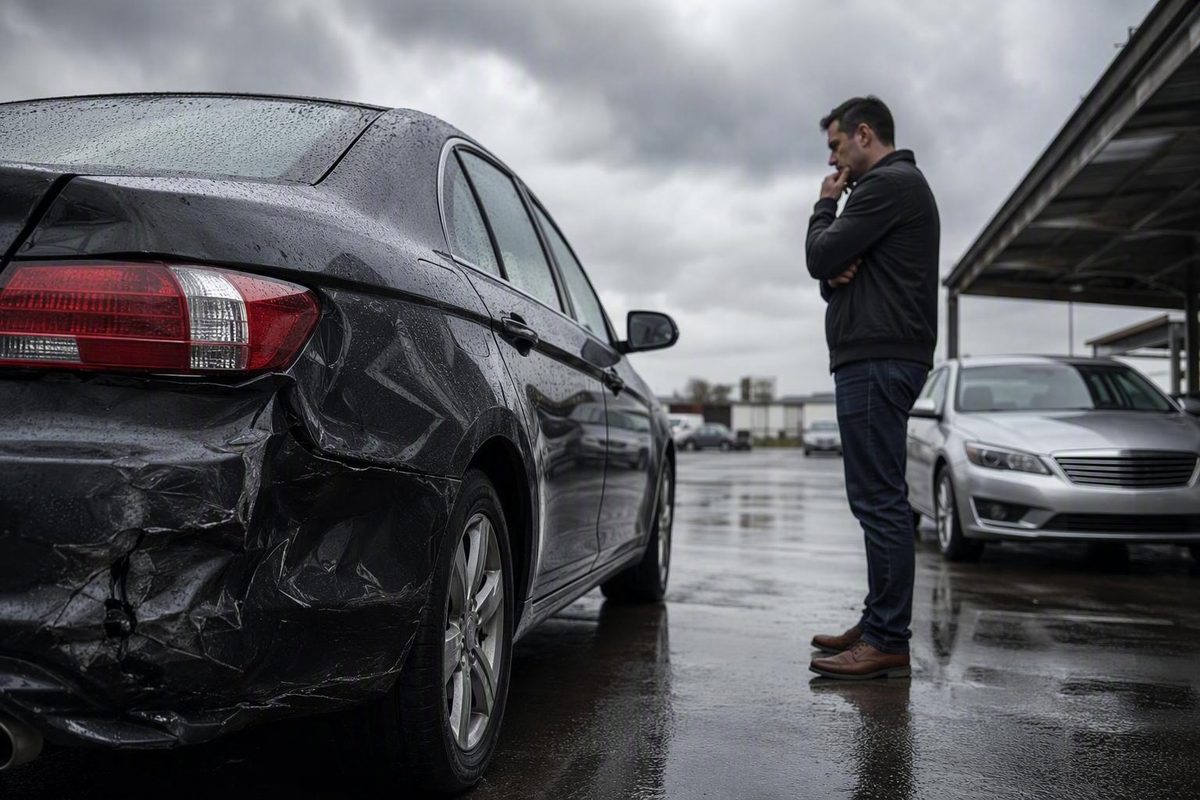
Repairing a vehicle does not always restore its market value. A buyer or dealer may discount a properly repaired car because its accident history appears in a vehicle-history report, raises questions about structural work, or makes an accident-free alternative more attractive.
That remaining loss is the subject of a diminished value claim in Virginia. It is separate from the physical repair bill and is not paid automatically. A viable claim usually depends on who caused the collision, who owns the vehicle, whether it was repaired rather than totaled, what the applicable insurance policy says, and whether vehicle-specific evidence demonstrates a real post-repair loss.
The basic comparison is:
Supported pre-accident market value − supported post-repair market value = estimated diminished value
The subtraction is simple. Establishing credible values—and deciding whether the potential recovery justifies the expense—is the harder part.
What a Virginia diminished value claim covers
Diminished value is the reduction in a particular vehicle’s market value attributable to accident damage or accident history. It can remain even after satisfactory repairs restore the vehicle’s appearance and operation.
For example, two otherwise comparable vehicles may command different prices if one has a reported collision and significant repair history. The difference attributable to that history—not ordinary age, mileage, wear, or depreciation—is the loss the owner is trying to measure.
A diminished-value demand should be distinguished from reimbursement for:
- Body, mechanical, structural, paint, and calibration work
- Towing and storage
- A rental vehicle or other loss-of-use expenses
- Personal property damaged in the collision
- Bodily injury
- Unrelated preexisting damage or mechanical problems
Payment of the repair bill does not necessarily prove that no market loss remains. Conversely, a claimant should not recover twice for the same physical damage. The demand should isolate the vehicle’s residual post-repair loss instead of treating repair costs as diminished value.
Three categories are commonly discussed:
- Inherent diminished value: Market loss that remains after complete, satisfactory repairs because the vehicle now has an accident or damage history.
- Repair-related diminished value: Loss associated with incomplete, visibly poor, defective, or inappropriate repairs.
- Immediate diminished value: The difference between the vehicle’s value immediately before the accident and its damaged, unrepaired value immediately afterward.
Inherent diminished value is usually the focus of a post-repair insurance demand. Kelley Blue Book similarly distinguishes inherent, repair-related, and immediate diminished value while describing the broader concept as value lost because of an accident history, including loss that may remain after satisfactory repairs in its diminished-value overview.
Repair-related loss requires separate attention. If paint does not match, a panel remains misaligned, a warning light stays on, or required calibration was not completed, part of the apparent loss may result from unfinished or defective work. Correcting or documenting those defects helps distinguish repair-quality problems from the market stigma that remains after proper repairs.
A total loss presents a different valuation issue. If the insurer declares the vehicle a total loss, the dispute generally concerns the vehicle’s pre-loss actual cash value. It is not the same as valuing a repaired vehicle that remains in service, and commercial appraisal sources distinguish post-repair diminished-value work from total-loss valuation disputes on that basis.
Finally, an accident does not automatically produce measurable diminished value. A repaired vehicle may show little or no supportable residual loss, especially if it was already old, had high mileage or previous damage, sustained only minor damage, or had a relatively low pre-accident value.
What Virginia law establishes—and what it does not
Virginia law expressly defines diminished value compensation, but the definition must be read in its statutory context.
Virginia Code § 46.2-1600 defines “diminished value compensation” as compensation an insurance company pays to a third-party vehicle owner, in addition to repair costs, for the vehicle’s reduced value due to damage. The same section defines actual cash value as the vehicle’s pre-damage retail cash value determined through recognized evaluation sources in the official Code of Virginia.
That distinction matters: repair expense and reduced market value are not necessarily the same loss. But § 46.2-1600 is a definitions provision in Chapter 16, which concerns salvage, nonrepairable, and rebuilt vehicles. Standing alone, it does not provide:
- A complete diminished-value claim procedure
- Guaranteed payment to every owner of a damaged vehicle
- A mandatory valuation formula
- A universal list of required documents
- A standard insurer response deadline
- A rule resolving every first-party coverage dispute
- A substitute for proving responsibility, ownership, causation, and amount
Several Virginia-focused secondary sources cite Averett v. Shircliff for the proposition that damage to a repairable vehicle may be measured through reasonable repair costs plus any diminution in value remaining after repairs. One commercial claim guide identifies the decision as Averett v. Shircliff, 218 Va. 202, 206–207, 237 S.E.2d 92 (1977), and reproduces that general damages principle in its Virginia case summary.
That secondary-source summary helps explain why repair expense and residual value loss can be distinct. It should not be expanded into unsupported conclusions about what evidence an insurer must accept, whether a particular appraisal controls, or whom a claimant may sue. Anyone relying on the case for litigation should review the full opinion and any later relevant Virginia authority.
The official statute does not prescribe the method commonly called 17c—or any other diminished-value formula. The claimed amount still needs to be connected to the individual vehicle and relevant market evidence.
This article provides general information, not legal advice. Rights may depend on current statutes and cases, accident facts, ownership documents, policy language, settlement communications, and procedural rules.
A practical eligibility screen before spending money on the claim
Before paying an appraiser or preparing a lengthy demand, decide whether the claim is plausible and economically sensible.
A stronger candidate will usually satisfy most of this checklist:
- Another party appears responsible. The available evidence supports the position that someone else caused the collision.
- You have a documented ownership interest. The title, registration, lease, or financing documents identify the relevant owners and interested parties.
- The vehicle was repairable. It was repaired or will be repaired rather than handled as a total loss.
- The repair scope is known. Repairs are complete, or the estimate and supplements are settled enough to show what work was required.
- No broad release has already resolved the issue. Prior checks, settlement agreements, and releases have been reviewed for language covering all property damage or diminished value.
- Vehicle-specific evidence suggests a residual loss. Comparable vehicles, dealer feedback, history reports, or a preliminary appraisal review point to a loss beyond ordinary depreciation.
- The likely recovery justifies the expense. The realistic disputed amount exceeds the likely appraisal, expert, filing, and legal costs by a meaningful margin.
The path most commonly described by Virginia-focused sources is a third-party claim arising from another driver’s fault, ordinarily presented to that driver’s liability insurer. That route does not guarantee payment; the claimant must still establish responsibility, ownership, causation, and the amount of the loss.
Fault is therefore an important threshold issue. Virginia fault rules may affect or defeat a third-party recovery, depending on the claim and facts. Preserve the crash report, photographs, video, witness information, driver statements, citations, and insurer correspondence. Do not assume that approval of repairs conclusively resolves fault for every other property-damage issue.
A claim against your own insurer requires a different analysis. Collision coverage and uninsured- or underinsured-motorist property coverage may operate differently, and available recovery depends on current law, the accident circumstances, and the actual policy. Virginia-focused sources describe third-party liability as the primary route while cautioning that possible first-party or uninsured-motorist recovery is coverage-dependent in their discussion of Virginia claims.
Review the relevant:
- Declarations
- Definitions
- Insuring agreements
- Exclusions
- Deductible provisions
- Coverage limits
- Notice and proof-of-loss terms
- Cooperation and inspection requirements
- Dispute or appraisal procedures
The fact that your insurer paid for repairs does not, by itself, establish that the policy also covers inherent diminished value.
Vehicle characteristics affect the economics of the claim. A newer, low-mileage, high-demand, specialty, luxury, or collectible vehicle may experience a larger dollar loss because its pre-accident value is higher and buyers may be more sensitive to its history. No category qualifies automatically.
Factors that can reduce or weaken a claim include:
- Advanced age
- High mileage
- Previous accidents or title problems
- Existing cosmetic or mechanical defects
- Poor maintenance history
- Minor current damage
- Limited local demand
- Low pre-accident market value
- Weak evidence separating accident loss from ordinary depreciation
Consider two vehicles with similar repair bills. A two-year-old, low-mileage vehicle that required structural work may show a meaningful market discount. A ten-year-old, high-mileage vehicle with previous accidents and minor bumper damage may show little additional loss from the latest collision. The repair invoice alone does not establish either result.
Ownership also requires careful review:
- Leased vehicle: The leasing company may be the titled owner and may control the claim, settlement, or proceeds. Review the lease and ask the lessor how it handles diminished-value claims before buying an appraisal.
- Jointly titled vehicle: Check whether all owners must participate in the demand, settlement, endorsement, or release.
- Financed vehicle: Review the loan documents and lienholder instructions to determine whether they regulate repairs or insurance proceeds.
- Vehicle used but not owned by the claimant: Regular use, payment of expenses, or being listed as a driver does not by itself establish ownership of the property claim.
Commercial legal guidance commonly directs lessees and borrowers to begin with the title and governing contract rather than assuming that the regular driver owns or controls the claim in its discussion of leased and financed vehicles. The effect of those documents must be evaluated under their actual language.
When to measure the loss and what records to preserve
Inherent diminished value is usually easier to measure after repairs are complete. At that point:
- The final invoice identifies the work actually performed.
- Supplements reveal changes from the initial estimate.
- The repaired vehicle can be inspected.
- Any unresolved defects can be documented.
- The vehicle-history report can be checked for accident or damage entries.
- Dealers or appraisers can evaluate the vehicle in its post-repair condition.
Waiting for repairs does not mean ignoring the claim in the meantime. Review the applicable policy and insurer instructions for notice, inspection, proof-of-loss, document-submission, and cooperation requirements. If any deadline is unclear, ask for the requirement and its policy or legal basis in writing.
If repairs remain incomplete or defective, separate two questions:
- What work is necessary to complete or correct the repair?
- After proper repair, what market loss remains because of the accident history?
For example, a dealer may reduce an offer partly because a quarter panel has visible defects and partly because the car has a reported structural-damage history. Corrective repair addresses the first component. Inherent diminished value concerns the second.
Preserve records as the claim develops rather than attempting to reconstruct them months later.
Ownership and vehicle records
- Title and current registration
- Purchase agreement
- Lease or financing documents
- Payoff and lienholder information, if relevant
- VIN, model year, trim, options, packages, and original equipment
- Odometer readings before the accident and after repairs
Fault and accident records
- Police or crash report
- Scene photographs and video
- Dashcam or surveillance footage
- Witness names and contact details
- Driver statements
- Citations or other available fault evidence
- Insurer correspondence accepting, disputing, or reserving a liability decision
Pre-accident condition evidence
- Photographs taken before the collision
- Maintenance and service records
- Inspection records
- Receipts for tires, upgrades, or major maintenance
- Previous valuations or dealer offers
- Records of previous damage and repairs
- Any pre-accident vehicle-history report already obtained
Do not conceal prior damage. Prior records help distinguish the effect of the current collision from earlier accidents, wear, or unrepaired defects. An appraisal that ignores known prior damage is easier to challenge.
Damage and repair evidence
- Photographs from several angles before repairs
- Initial repair estimate
- Every supplemental estimate
- Final itemized invoice
- Parts descriptions
- Frame or structural measurements
- Alignment records
- Scan, programming, and calibration records
- Airbag and restraint-system documentation
- Paint, refinishing, and blending details
- Repair warranty
- Post-repair photographs
- Records of unresolved defects or return visits
Market and history evidence
- Current vehicle-history report
- Documentation showing how the collision is described
- Closely matched local listings
- Dealer purchase or trade-in offers
- Written dealer explanations of accident-history deductions, when available
- An appraisal and its supporting exhibits, if obtained
- The date each market item was collected
Settlement records
- Repair checks and check stubs
- Letters accompanying payments
- Emails and claim-portal messages
- Settlement proposals
- Releases
- Documents presented for electronic signature
- Notes of telephone calls, including the date, representative, and substance
Keep original electronic files when possible. Screenshots can be useful, but a full listing, report, invoice, email, or portal message generally preserves more context than a cropped image.
How to estimate diminished value without treating a formula as law
Begin with the fundamental comparison:
Supported pre-accident market value − supported post-repair market value = estimated diminished value
Both values are estimates. A credible analysis explains where each number came from, why the comparison is appropriate, and how unrelated depreciation or previous damage was excluded.
Estimating pre-accident value
Look for vehicles that closely match the subject vehicle immediately before the collision. Relevant characteristics include:
- Model year
- Make and model
- Trim
- Engine and drivetrain
- Factory options
- Mileage
- Condition
- Geographic market
- Previous ownership and accident history
- Seller type
- Certified-pre-owned status, where relevant
A national guide value can provide context, but it may not reflect local inventory, unusual options, precise condition, or the relevant transaction market. Use multiple data points where possible.
Estimating post-repair value
The more difficult question is how the market treats the same vehicle after proper repairs and disclosure of its history. Potential evidence includes:
- Similar repaired vehicles with reported accidents
- Dealer purchase bids
- Dealer trade-in offers
- Auction information available to a qualified appraiser
- Market surveys
- Appraiser interviews with dealers or buyers
- Adjusted comparisons between clean-history and accident-history vehicles
Listing prices are asking prices, not proof of completed transactions. A listing can support an analysis, but it should not be presented as conclusive evidence of what a buyer paid. It may also require adjustments for mileage, options, location, condition, history, or seller type.
Dealer offers can be particularly useful when the dealer identifies a specific deduction attributable to accident history. But one offer may reflect inventory needs, expected profit, negotiating strategy, or reluctance to acquire that model. Several explained offers are more informative than one unexplained low bid.
A credible appraisal should make its reasoning understandable and reproducible. Look for:
- Clear identification of the vehicle and valuation date
- Transparent data sources
- Closely matched comparables
- Explicit adjustments for mileage, trim, equipment, condition, and history
- Local or otherwise relevant market evidence
- Review of the final repair invoice and supplements
- Consideration of previous accidents and pre-loss condition
- Inspection findings where an inspection is relevant
- Separation of defective repairs from inherent market stigma
- An explanation of assumptions and limitations
- Supporting exhibits rather than a single unexplained figure
An independent appraisal may strengthen a substantial or disputed claim. The supplied authority does not establish that every claimant must obtain one, that a particular certification is mandatory, or that an insurer must accept the appraiser’s conclusion. For a modest claim, careful self-documentation may be more economical.
What 17c does
The method commonly called 17c starts with a pre-accident vehicle value and applies:
- A maximum-value factor of 10%
- A damage-severity multiplier
- A mileage multiplier
In simplified form:
Pre-accident value × 10% × damage multiplier × mileage multiplier
Kelley Blue Book describes those components as a way to produce a rough estimate, while also noting that actual insurer calculations and offers can differ in its explanation of the 17c method.
The formula originated outside Virginia and includes assumptions that may not reflect the real market for a particular vehicle. Virginia Code § 46.2-1600 does not prescribe 17c, and the supplied sources do not establish that Virginia courts require it. It should be treated as a negotiating reference, not as Virginia law or a conclusive valuation.
Consider this entirely hypothetical comparison:
- Supported pre-accident value: $32,000
- Ten-percent starting figure: $3,200
- Hypothetical damage multiplier: 0.50
- Hypothetical mileage multiplier: 0.60
- Resulting 17c estimate: $960
Now suppose adjusted local evidence indicates:
- Comparable clean-history value: $31,000
- Supported value of the repaired accident-history vehicle: $28,900
- Market-evidence difference: $2,100
These numbers do not predict a settlement. They merely show how a formula’s cap and multipliers can produce a different result from a market comparison. The larger figure does not automatically control; the important question is which analysis uses more reliable, vehicle-specific evidence.
Do not use the original purchase price as the pre-accident value merely because it is easy to document. A vehicle may have depreciated between purchase and collision. The relevant comparison is its supported market value immediately before the accident against its supported value after repairs.
How to assemble and submit the demand
A diminished-value demand is a practical way to present the claim. It is not a special statutory form created by § 46.2-1600.
Start by confirming:
- The correct claim number
- The insurer and adjuster handling property damage
- The insurer’s preferred submission channel
- File-size and document-format restrictions
- Whether the insurer uses a questionnaire
- Whether repair supplements remain open
- Whether any previous settlement document addressed diminished value
The demand letter itself should be concise. Detailed evidence belongs in organized exhibits.
A useful structure is:
- Identify the claimant and claim. Include the claimant’s name, vehicle, VIN, collision date, claim number, and contact information.
- Summarize responsibility. Briefly explain why the other party appears responsible and identify the supporting evidence.
- Describe the damage and repairs. State when repairs were completed, identify the repair facility, and summarize significant structural, safety-system, or component work.
- Explain the residual loss. Distinguish post-repair market loss from the repair expense.
- State the requested amount. Identify the valuation date and explain the calculation.
- Reference the exhibits. Connect each important factual assertion to a document.
- Request a written response. Ask the insurer to identify the method, inputs, and comparable vehicles used for any contrary valuation.
The demand package may include:
- Proof of title or other ownership interest
- Accident report and other fault evidence
- Pre-accident photographs and maintenance records
- Damage photographs
- Initial estimate and supplements
- Final repair invoice
- Structural, alignment, scan, and calibration records
- Post-repair photographs
- Vehicle-history report
- Previous-damage records
- Adjusted comparable vehicles
- Dealer purchase or trade-in evidence
- Independent appraisal, if obtained
- A specific requested amount
- Relevant prior correspondence
Include a short evidence index:
- Exhibit 1: Title—supports ownership
- Exhibit 2: Crash report—supports accident date and circumstances
- Exhibit 3: Final invoice—supports repair scope
- Exhibit 4: History report—shows the reported accident entry
- Exhibit 5: Comparable analysis—supports pre-accident value
- Exhibit 6: Dealer statements—supports the asserted market deduction
- Exhibit 7: Appraisal—explains the requested amount
An index makes the package easier to evaluate and forces the claimant to connect each assertion to evidence.
Avoid combining losses carelessly. If repairs cost $12,000 and the alleged residual market loss is $2,500, explain the $2,500 independently. Do not treat the repair total as proof that the vehicle lost the same amount in market value.
Submit the package through the insurer’s confirmed channel and retain proof of delivery. Save uploaded files, confirmation screens, emails, certified-mail records, or fax receipts. If using a claim portal, preserve the message and attachment list.
Do not assume that a universal response or payment deadline applies. Follow up in writing, keep a communication log, and ask what additional information the insurer says it needs.
How to respond to a denial or low valuation
A denial or low offer should trigger an evidence review. It does not prove that either side’s number is correct.
Request the insurer’s position in writing and ask for:
- The valuation method or formula
- The pre-accident value
- Mileage and trim assumptions
- Option and condition adjustments
- Damage classification
- Any mileage or damage multiplier
- Comparable vehicles
- Treatment of previous accidents
- Treatment of structural work
- The estimated post-repair value
- Any policy provision or exclusion relied upon
- The factual basis for disputing ownership, fault, or causation
Then determine whether the disagreement concerns eligibility, coverage, repair quality, or amount. Each problem requires a different response.
Incorrect mileage, trim, or equipment
Provide a VIN decode, window sticker, purchase documents, service records, photographs, or current odometer reading. A valuation based on the wrong trim or missing equipment may be unreliable.
Disputed pre-accident condition
Submit dated photographs, maintenance records, inspection reports, tire receipts, detailing records, or previous dealer offers. Do not merely call the vehicle “excellent”; show why that description is justified.
Previous accidents
Acknowledge them and distinguish their repair scope from the current collision. Previous invoices, history reports, and photographs may show which panels or systems were involved. Seek only the incremental loss attributable to the present accident.
Weak or distant comparables
Replace them with closer matches. Explain adjustments for mileage, equipment, condition, history, location, and seller type. Remove examples that cannot be verified or differ too substantially from the subject vehicle.
Damage characterized as minor
Use the final invoice, supplements, structural measurements, replacement-parts list, airbag records, and calibration documentation to show the actual repair scope. Repair cost is not diminished value, but detailed repair records can rebut an inaccurate damage description.
Formula-driven offer
Do not object only because the number is low. Identify the assumptions that do not fit the vehicle or market. If a generic cap, mileage multiplier, or damage classification suppresses the result, respond with adjusted market evidence.
Defective repairs
Seek correction or document the unresolved conditions before attributing the entire loss to inherent diminished value. Obtain photographs, measurements, diagnostic results, or a repair-quality inspection. Reassess the accident-history discount after the work is corrected.
Negotiation may include a revised demand. A stronger second submission might narrow the requested amount, remove weak comparables, add dealer explanations, correct inaccurate inputs, or include an appraisal. Better-organized evidence is generally more useful than simply repeating that the offer is unfair.
If the dispute remains, possible escalation options include:
- Obtaining an independent appraisal
- Asking an appraiser to address the insurer’s methodology
- Consulting an attorney about fault, ownership, coverage, or release language
- Considering litigation against the legally proper party
Compare those costs with the amount genuinely in dispute. A modest difference may not justify substantial appraisal, expert, and attorney expenses. A larger, well-documented dispute involving a valuable vehicle may warrant more formal review.
Before filing suit, confirm the current limitations period, proper defendant, venue, court jurisdiction, filing procedure, service requirements, evidence rules, and appeal process through official Virginia materials or qualified counsel. Presenting a claim to an insurer does not establish that the insurer is necessarily the proper defendant.
A regulatory complaint and a valuation dispute are not necessarily the same issue. Before pursuing a complaint, determine what the relevant agency can review and whether the disagreement instead requires negotiation, contractual dispute procedures, or adjudication.
Deadlines, releases, and a final cost-benefit check
Multiple Virginia-focused secondary sources report a five-year period for a lawsuit involving vehicle property damage. One Virginia diminished-value guide states that general period in its discussion of filing deadlines.
Do not rely on that figure without verifying current Virginia law. The official statute defining diminished value compensation does not establish the five-year period, and the applicable deadline may depend on the legal claim, accrual date, parties, tolling rules, and exceptions.
A lawsuit limitation period is also not the same as every other deadline that may apply. Earlier requirements may arise from:
- Policy notice provisions
- Proof-of-loss requirements
- Inspection or cooperation provisions
- Contractual deadlines
- Uninsured- or underinsured-motorist procedures
- Lease or financing documents
- Evidence-preservation needs
- Court filing and service rules
Do not wait years simply because a secondary source reports a longer period to sue. Listings disappear, dealer personnel change, repair records become harder to retrieve, and memories fade.
Releases create a separate risk. A property-damage release, settlement agreement, check endorsement, or electronic acceptance may cover more than the repair amount. Its effect depends on its exact wording and the circumstances; not every release necessarily resolves diminished value. Virginia legal guidance therefore recommends checking whether a proposed property settlement also addresses or waives the residual value claim before acceptance.
Before signing or depositing anything containing release language, confirm in writing whether diminished value is:
- Included in the settlement
- Excluded from the settlement
- Expressly reserved for later evaluation
- Already denied
- Subject to additional documentation
If the language is unclear or the amount is significant, consider legal advice before accepting it. The objective is not automatically to reject undisputed repair money, but to understand whether acceptance also resolves another property-damage issue.
Use a cost-benefit worksheet before escalating:
| Consideration | Practical question |
|---|---|
| Realistic disputed amount | What is the difference between the supported claim and the current offer? |
| Fault evidence | Is responsibility clear, disputed, or uncertain? |
| Ownership | Can you document the right to pursue and settle the claim? |
| Valuation evidence | Are the comparables and adjustments credible? |
| Appraisal cost | Is a report likely to add more value than it costs? |
| Court expenses | What filing, service, document, and travel costs may apply? |
| Expert expense | Would an appraiser need to explain or defend the report? |
| Attorney expense | Is representation economically proportionate? |
| Time | How much time will negotiation or litigation require? |
| Collection uncertainty | If successful, is payment or collection likely to be straightforward? |
| Release risk | Has any document arguably resolved the property claim? |
A proportional approach usually makes sense:
- For a modest, straightforward claim: Preserve records, build adjusted comparables, obtain dealer evidence, and negotiate directly.
- For a material valuation dispute: Consider an independent appraisal with transparent, vehicle-specific reasoning.
- For complex fault, coverage, ownership, or release issues: Seek legal advice before taking an expensive or irreversible step.
- For potential litigation: Verify current deadlines and procedures, then compare the likely net recovery with all anticipated costs.
Frequently asked questions
Can I file a Virginia diminished value claim against my own insurer?
Possibly, but do not assume standard collision coverage includes the loss. The route most commonly discussed by Virginia-focused sources is a third-party claim related to another driver’s fault. A first-party claim may depend on the wording of collision, uninsured-motorist, underinsured-motorist, or other applicable coverage.
Review the actual policy for definitions, exclusions, deductibles, limits, notice requirements, proof-of-loss terms, and dispute procedures. The fact that your insurer paid for repairs does not by itself establish that it must also pay inherent diminished value.
Ask the insurer to identify the exact policy language supporting its position. If the issue involves an uninsured or underinsured driver, verify the applicable coverage and current Virginia law rather than relying on a general statement that recovery always—or never—applies.
Do I need a professional appraisal for a diminished value claim?
Not universally. The available authority does not establish that every Virginia claimant must obtain a professional, certified, local, physical, or in-person appraisal.
You may be able to support a modest claim with:
- Adjusted local comparables
- Dealer purchase or trade-in offers
- A vehicle-history report
- Repair documents
- Evidence of pre-accident condition
- A transparent calculation
An appraisal may be worthwhile when the disputed amount is substantial, the vehicle is unusual, the insurer challenges causation, or the market evidence requires technical adjustments.
Evaluate the methodology rather than relying only on a credential or report title. The analysis should disclose its data sources, account for previous damage and final repairs, use relevant comparables, and explain how the conclusion was reached. No appraisal guarantees insurer acceptance or payment.
Can I claim diminished value if my car was declared a total loss?
A conventional post-repair diminished-value claim concerns a repaired vehicle that remains worth less after the work is complete. If the vehicle is declared a total loss, the dispute instead concerns the pre-loss actual cash value used to calculate the total-loss settlement.
In that situation, review the insurer’s comparable vehicles, mileage, options, condition adjustments, prior-damage deductions, and applicable policy valuation provisions. Do not add a separate post-repair diminished-value demand for the same vehicle when it was not returned to service through the repair process.
Who may pursue the claim if the vehicle is leased or financed?
Start with the title and governing contract. The regular driver, lessee, borrower, titled owner, co-owner, and lienholder may have different interests.
For a leased vehicle, the lessor may be the titled owner and may control the claim, settlement, or proceeds. Contact the leasing company before paying for an appraisal.
For a financed vehicle, review the loan agreement and lienholder instructions for provisions governing repairs, insurance proceeds, and endorsements. Jointly titled vehicles may require participation from more than one owner.
Do not assume that possession of the vehicle or responsibility for monthly payments determines who owns or controls the diminished-value claim. Confirm the title, lease, financing documents, and relevant owner or lienholder instructions.
How long do I have to pursue a diminished value claim in Virginia?
Multiple secondary sources report a five-year period for a Virginia lawsuit involving vehicle property damage, but that figure should not be relied upon without checking current law against the reported deadline. The official statute defining diminished value compensation does not itself provide that limitation period, and accrual, tolling, exceptions, parties, and the type of claim may affect the analysis.
A possible lawsuit period also does not override earlier policy or procedural requirements. Notice, proof-of-loss, cooperation, contractual, uninsured-motorist, evidence-preservation, filing, and service deadlines may arise sooner.
Act promptly, preserve proof of submission, and confirm the applicable timeline through current official Virginia statutes and court materials or qualified counsel.
Preserve ownership, fault, damage, and repair records; finish or document the repairs; estimate the residual loss with vehicle-specific market evidence; submit a separate written demand; request the insurer’s reasoning if the offer is low; and review every release before signing.
Virginia recognizes the concept of diminished value, but the route and amount remain dependent on the facts, evidence, policy terms, and current law. Insurance Roster provides general insurance information, not legal, insurance, or financial advice, and its content terms emphasize that claims and coverage vary by policy and jurisdiction. Verify current Virginia deadlines, court procedures, and policy requirements through official sources or qualified counsel before taking legal action.