
23 min read ·
A Practical Roadmap for Protecting and Documenting Your Bike-Crash Claim
Prioritize health, create a reliable record, preserve evidence, identify relevant policies, and document crash-related losses.
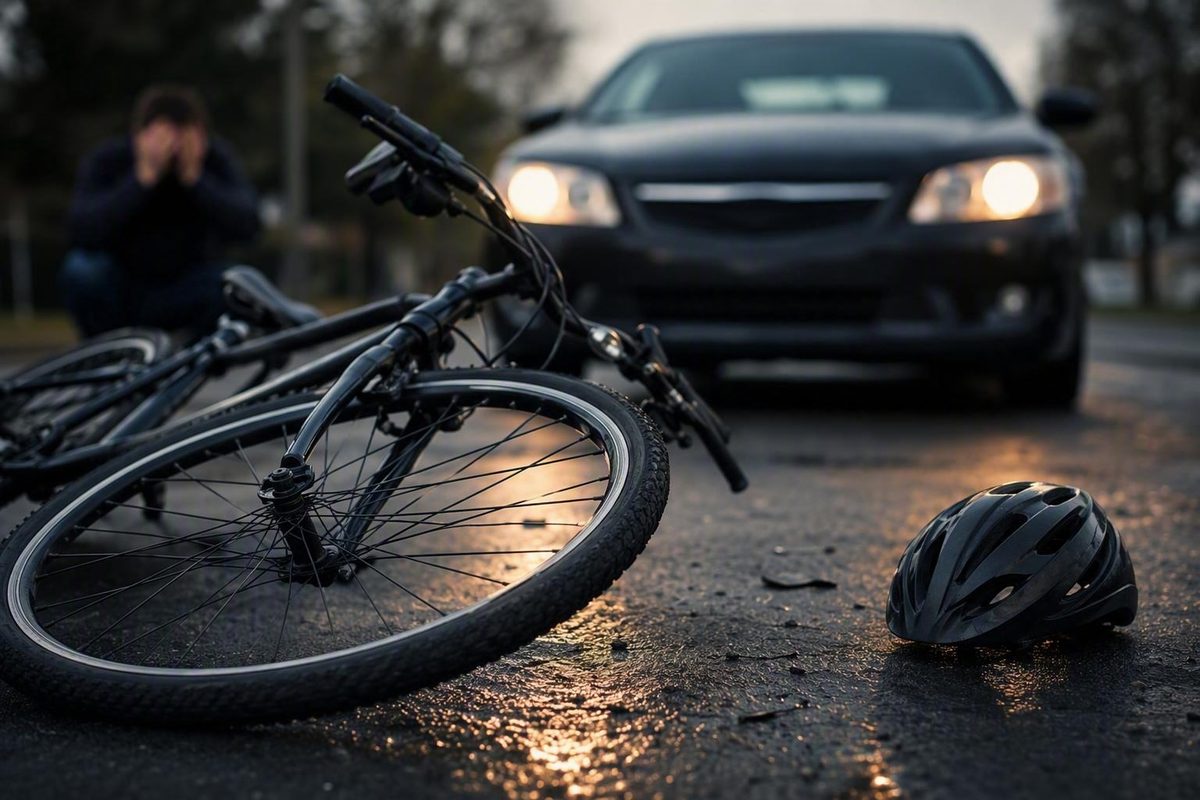
A bicycle accident claim rarely follows one universal insurance path. The policy that may respond depends on what happened, who may be responsible, where the crash occurred, and which coverages were purchased. A collision with a driver, a hit-and-run, a crash caused by another cyclist, and a fall attributed to a road defect can involve different insurers, evidence, and deadlines. Progressive’s general overview of bicycle accidents and insurance illustrates how coverage possibilities change with the crash scenario.
The practical priorities are more consistent: address your health, create a reliable record, preserve evidence, identify every potentially relevant policy, and document how the crash caused your losses.
Important: This article provides general education, not legal, insurance, financial, or medical advice. Duties, coverage, procedures, and deadlines vary by jurisdiction, policy, and claim type. Verify them promptly using the full policy, current insurer instructions, official government guidance, and an appropriately licensed professional when needed.
Start Here: Protect Your Health and Create a Reliable Crash Record
Put immediate safety and appropriate medical evaluation ahead of insurance paperwork. Move out of traffic if you can do so safely. Call emergency services when injuries, traffic danger, a fleeing driver, or the circumstances warrant it. Some crash-related conditions may not be immediately apparent, so the appropriate medical response should reflect the circumstances and the person’s condition. General post-crash guidance also emphasizes medical attention, scene documentation, witness information, and police reporting when appropriate (Justia).
Report the collision to police when appropriate. Ask for:
- The incident or report number
- The responding agency’s name
- The officer’s name or identifying information
- Instructions for obtaining the completed report
A police report may preserve officer observations, participant statements, witness details, and scene information.
If you are physically able and can act without entering traffic or creating another hazard, photograph or record:
- Every involved vehicle and its position
- The bicycle and any detached or broken parts
- Visible injuries and damaged clothing
- Debris, skid or tire marks, and fluid
- The road surface, shoulder, bike lane, and nearby hazards
- Signs, traffic lights, lane markings, and sight lines
- Weather, lighting, shadows, and visibility
- The wider scene from several directions
- Any obstruction that may have blocked a road user’s view
Collect the driver’s name, contact details, driver’s-license information, vehicle description, license plate, and insurance information. Obtain witness names and reliable contact details. If another cyclist, pedestrian, property owner, or commercial operator was involved, collect comparable identifying and insurance information.
Write down the date, time, exact location, direction of travel, route, lane position, weather, and what you directly observed. Keep the description factual. Distinguish what you know from what you inferred. Do not guess about speeds, distances, fault, diagnoses, or the eventual seriousness of an injury.
If you could not collect evidence at the scene
An ambulance trip, injury, shock, traffic conditions, or a hit-and-run may make scene documentation impossible. That does not mean there is nothing left to do. As soon as reasonably possible:
- Obtain the police incident number and request the report.
- Write a detailed account based on your present memory.
- Revisit and photograph the location only if it is safe.
- Look for nearby homes, businesses, traffic systems, buses, or parked vehicles that may have cameras.
- Ask the investigating agency whether witnesses were identified.
- Preserve damaged equipment, digital recordings, and ride data.
- Note who first saw or spoke with you after the crash.
Video may be overwritten, physical conditions can change, and memories can fade. Prompt, careful follow-up is useful even when the initial scene record is incomplete.
Preserve the Evidence Before It Changes or Disappears
Good documentation should answer three different questions:
- What happened?
- What harm followed?
- What did that harm cost?
Organize records by category rather than placing everything in one unsorted folder.
Scene evidence
Keep:
- Original photographs and videos
- Bicycle- or helmet-camera footage
- Dashcam or surveillance footage
- Police agency details, incident number, and report
- Witness names, contact details, and statements
- Diagrams, measurements, and location notes
- Relevant ride-app or GPS data
- Weather, lighting, and traffic-control details
- Images showing the wider approach to the collision point
Preserve original digital files when possible. Back up the originals and avoid saving edits over them.
People and communication records
Create a contact sheet for drivers, passengers, witnesses, officers, medical providers, insurers, employers, repair shops, and anyone else involved. Maintain a dated claim log showing:
- Claim and policy numbers
- Adjuster names and contact details
- Date, time, and method of each conversation
- What was requested or discussed
- Documents sent and how they were delivered
- Deadlines stated by the insurer
- Promised follow-up and actual responses
After a significant phone call, send a short, factual written confirmation when appropriate.
Medical records
Track:
- Evaluation and treatment dates
- Providers and facilities
- Diagnoses and test results
- Prescriptions, therapy, and recommended follow-up
- Medical bills and health-plan explanations of benefits
- Pharmacy and medical-device costs
- Travel or parking expenses for care
- Symptoms and changes over time
- Activities, work, sleep, or household tasks affected
A symptom log should be accurate rather than dramatic. Note what you could and could not do, how long limitations lasted, and whether a provider imposed restrictions. Accurate histories are particularly important if similar symptoms existed before the collision or appeared later.
Income and work records
Gather pay stubs, schedules, employer confirmation of missed time, leave records, and documentation of bonuses or other compensation affected by the crash. Self-employed claimants may need invoices, contracts, calendars, tax records, business records, or other materials showing normal earnings and disrupted work.
A claim for reduced future earning capacity differs from a claim for wages already missed.
Property evidence
When practical, preserve the bicycle, helmet, clothing, lights, computer, phone, bags, shoes, and other damaged gear in their post-crash condition until they have been photographed and any necessary inspection is complete. Guidance on bicycle claims commonly recommends preserving the bicycle and other physical evidence before repair or disposal (Williams & Caputo).
Do not clean, modify, repair, sell, or discard potentially important items before documenting them and asking whether an insurer or another party wants an inspection. This is practical evidence guidance, not an absolute rule for every case.
For the bicycle, record:
- Manufacturer, model, frame material, and size
- Serial number
- Age and purchase date
- Pre-crash condition and maintenance history
- Groupset, wheels, cockpit, saddle, and other components
- Upgrades and accessories
- Purchase receipts or account records
- Pre-crash photographs
- Repair estimates and replacement comparisons
- The shop’s explanation of visible and suspected damage
There is no single valuation formula that fits every bicycle. A stock commuter, custom build, older racing bicycle, and collectible frame may require different proof. Do not assume that the original purchase price, replacement cost, or a repair quote will automatically control.
Insurance and expense records
Retain:
- Declarations pages
- Policy forms and endorsements
- Renewal notices and insurance cards
- Denial or reservation-of-rights letters
- Insurer correspondence
- Transportation receipts
- Medical-supply receipts
- Replacement-service expenses
- Records for damaged personal property
- Other documented crash-related spending
Delayed treatment, a missing police report, or late notice can create disputes about what happened or what caused an injury. Those issues may complicate proof, but they do not automatically defeat every bicycle accident claim.
Match the Crash Scenario to the Policies That Might Respond
Opening a claim is not the same as establishing coverage. The declarations, insuring agreement, definitions, endorsements, exclusions, conditions, limits, and deductibles all matter. A scenario-based review is more useful than searching for one generic form of “bike accident insurance.”
| Crash scenario | Policies worth checking | Important qualifications |
|---|---|---|
| Driver allegedly caused the crash | Driver’s auto liability coverage; possibly the cyclist’s first-party auto coverages; health insurance | Fault, causation, insured status, exclusions, limits, and state law matter |
| Hit-and-run or uninsured driver | Cyclist’s and household members’ UM coverage; PIP or medical payments where applicable; health insurance | Definitions, proof requirements, physical-contact rules, notice duties, and insured status vary |
| Driver has insufficient liability limits | Potential UIM coverage under the cyclist’s or household policies | Limits, offsets, consent requirements, and policy conditions must be checked |
| Another cyclist or pedestrian caused the crash | That person’s homeowners or renters personal-liability coverage may be relevant | Coverage is not automatic, and exclusions may apply |
| Cyclist allegedly injured someone else | Cyclist’s homeowners or renters personal-liability coverage may respond | Policy definitions, exclusions, limits, and facts control |
| Bicycle was damaged or stolen in connection with the event | Homeowners, renters, bicycle-specific, or separately scheduled property coverage | Deductibles, sublimits, valuation terms, exclusions, and scheduling may affect payment |
| Work-related ride | Workers’ compensation and possibly a claim against a responsible third party | Employment status, work purpose, jurisdiction, and coordination rules matter |
| Commercial driver caused the crash | Commercial auto liability coverage and possibly an employer-related claim | Employment scope and other liability facts must be established |
| Defective bicycle or component | Product-related coverage involving a manufacturer or seller may be investigated | Product preservation, defect proof, causation, and governing law are critical |
Driver liability coverage
If a motorist is legally responsible, the driver’s auto liability coverage may pay supported injury and bicycle-damage losses. Payment remains subject to proof of liability and causation, available limits, policy terms, and governing law. An apparent traffic error does not by itself establish the amount payable.
Health insurance, PIP, and medical payments
Health insurance may pay covered medical expenses while fault remains unresolved, subject to the plan’s network, cost-sharing, authorization, and reimbursement provisions.
PIP and medical-payments coverage can also be relevant, but they are not nationwide defaults. Eligibility may depend on the crash location, the vehicle involved, policy language, state law, and deadlines. State-specific examples show why one jurisdiction’s no-fault process should not be generalized nationally; for example, New York guidance describes motor-vehicle PIP as a potential payment source for an injured cyclist in circumstances governed by that state’s system (Finz & Finz).
Hit-and-run, UM, and UIM coverage
After a hit-and-run or a collision with an uninsured or underinsured driver, review your own auto policies and policies held by household members. Potential UM or UIM coverage may depend on:
- Whether you qualify as an insured
- How the policy defines an uninsured or underinsured vehicle
- Whether the facts meet proof-of-involvement requirements
- Whether reporting, notice, or consent conditions were satisfied
- Applicable exclusions, offsets, and limits
Do not assume that auto coverage follows every cyclist in every jurisdiction. Ask the insurer to identify the exact policy provision supporting its position.
Homeowners, renters, and bicycle coverage
Homeowners or renters personal-liability coverage may be relevant when another cyclist or pedestrian is legally responsible—or when a claim is made against you. Property coverage may also address bicycle damage. Coverage remains policy-dependent, and a separate schedule, rider, sublimit, valuation provision, or exclusion may materially change the result.
A deductible is generally the policyholder’s share of a covered loss before the insurer pays, but whether and how it applies depends on the particular coverage. Insurance Roster’s deductible explainer provides general background; it does not establish that a deductible applies to a particular bicycle claim.
Request the full policy, not only the declarations page.
Understand What the Claim Must Establish
In general terms, a negligence-based liability claim requires a connected chain of proof:
- Another person or organization owed an applicable duty of reasonable care.
- Their conduct allegedly fell short of that duty.
- That conduct caused or contributed to the collision or injury.
- The claimant sustained an actual, documented loss.
This duty-breach-causation-damages framework is a general legal model, not a substitute for the governing jurisdiction’s law. A gap in one part can affect the entire claim. Evidence that a driver violated a traffic signal does not establish the cost of future treatment; extensive medical bills do not, by themselves, establish who caused the crash.
An adjuster or fact-finder may review participant statements, police records, photographs, video, witness accounts, medical records, ride data, and vehicle or bicycle damage. Contemporaneous evidence can be particularly useful because it records conditions before the scene changes and memories fade.
Liability and coverage are separate questions
Another party may appear responsible, but payment can still be affected by a policy limit, exclusion, insured-status dispute, notice issue, or another condition. Conversely, a policy may potentially apply while the insurer continues to dispute who caused the crash.
Ask which issue is being evaluated:
- Is fault disputed?
- Is the connection between the crash and an injury disputed?
- Is the amount of loss disputed?
- Is the insurer disputing coverage?
- Has the insurer accepted one part of the claim but not another?
Causation and diagnosis are also separate
A diagnosis identifies a medical condition. A claim must also connect the claimed treatment, limitations, and expenses to the crash. That connection can become contested when symptoms arose later, a similar condition existed before the collision, treatment was interrupted, or another event occurred afterward.
Records should accurately distinguish prior symptoms and limitations from claimed changes after the collision.
Shared fault can reduce or bar recovery
States use materially different systems. Under pure comparative negligence, recovery can be reduced by the claimant’s percentage of responsibility. Modified comparative-negligence systems add a fault threshold. In contributory-negligence jurisdictions, claimant fault may bar recovery. These broad distinctions are summarized in Justia’s general bicycle-accident guide linked earlier, but the current rule must be verified in the crash jurisdiction.
Hypothetical—not a statement of any particular state’s law: Assume documented losses of $100,000 in a pure comparative-negligence system. If the cyclist is assigned 25% of the responsibility, the amount before coverage limits and other adjustments would be reduced by 25%, to $75,000. A modified or contributory-negligence jurisdiction could produce a different result.
An insurer or opposing party may raise helmet use, lights, visibility, lane position, traffic conduct, or riding position. Their legal relevance depends on the jurisdiction, evidence, causation, and injuries claimed. Helmet nonuse does not automatically defeat a claim.
Potential responsible parties are not limited to private drivers. Depending on the facts, an investigation may consider a commercial driver’s employer, a public entity, a party responsible for property or construction activity, or a product manufacturer or seller. Identifying a possible party is not the same as proving that party is liable.
Document the Losses Without Relying on an Average Payout
There is no reliable universal average settlement or bicycle accident payout calculator. Two superficially similar crashes can produce different results because of fault evidence, injury duration, prognosis, treatment, wage impact, available coverage, policy limits, and governing law. Prior settlements and law-firm case examples do not predict a new result.
Organize claimed losses into four groups.
Current financial losses
These may include:
- Medical evaluations and treatment
- Rehabilitation or therapy
- Prescription and medical-device costs
- Lost wages or used leave
- Transportation related to care
- Necessary replacement services
- Other documented crash-related expenses
Build a spreadsheet with the date, provider or vendor, purpose, amount billed, amount paid, insurance payment, and unpaid balance. Keep a supporting document for every line.
Supported future losses
Potential future losses may include medically supported treatment, rehabilitation, assistance needs, and reduced earning capacity. Any estimate should be grounded in treatment records, prognosis, cost information, employment history, or qualified medical, vocational, or financial assessment—not speculation.
Avoid finalizing an injury claim solely because a future cost is difficult to calculate. First determine whether the condition, prognosis, and expected care are reasonably understood and documented.
Property loss
Property documentation may cover the bicycle, helmet, clothing, bags, lights, electronics, tools, accessories, and other damaged items. For each item, note:
- Make and model
- Age and prior condition
- Purchase price, if known
- Repair feasibility and estimate
- Comparable replacement information
- Photographs of the damage
- Whether the item remains available for inspection
Repair cost and replacement cost are not always interchangeable. Policy valuation terms and liability principles may differ, so avoid assuming one universal method.
Qualifying non-economic harm
Where governing law permits, an injury claim may include non-economic categories such as physical pain, emotional distress, disability, disfigurement, or loss of enjoyment of activities. These categories still require credible support. Treatment records, functional restrictions, and a restrained day-to-day account may help explain their effect.
Gross claim value is not net recovery
Relevant factors can include:
- Policy limits
- Deductibles
- Health-plan reimbursement demands
- Medical liens
- Prior payments
- Legal fees and case costs
- Release terms
Do not estimate net recovery until the potentially applicable deductions and repayment obligations have been identified and verified. Injury severity matters, but it does not set value by itself. Causation, prognosis, fault allocation, documentation, available coverage, unresolved care, and competing evidence also matter.
Follow the Claim From Notice to Investigation and Negotiation
A bicycle accident claim commonly moves through the following sequence:
- Identify potentially relevant insurers. These may include the driver’s carrier, your auto carrier, a household member’s auto carrier, health insurance, homeowners or renters insurance, workers’ compensation, or bicycle-specific coverage.
- Give timely factual notice. Provide the basic date, place, people involved, and known injuries or damage without guessing about unresolved facts.
- Obtain claim details. Record each claim number, adjuster, mailing or upload address, and stated deadline.
- Confirm what is being investigated. Ask whether the claim concerns liability, first-party benefits, property damage, bodily injury, or several categories.
- Respond to reasonable document requests. Keep copies and proof of delivery. Ask for clarification when a request appears unrelated or unusually broad.
- Continue documenting treatment and losses. Update bills, wage records, symptoms, restrictions, repair information, and expenses.
- Receive the insurer’s position. The carrier may accept, partly accept, reserve its rights, request more information, or deny liability or coverage.
- Compare the position with the evidence and policy. Correct factual errors and provide missing support.
- Negotiate, request review, or challenge the result where appropriate.
- Resolve the claim, receive a denial, or consider litigation or another applicable formal process.
An adjuster may review the police report, photographs, medical records, witness statements, policy terms, fault evidence, and proof of damages. Communicate factually: state what you observed, identify what remains unknown, and update material information when circumstances change.
Requests that deserve careful review
Recorded statements, broad medical authorizations, examinations under oath, repair inspections, and releases can have significant consequences. Whether they are required—and their permissible scope—depends on the policy and governing law.
Rather than assuming every request is mandatory or refusing every request, ask:
- What policy or legal provision requires this?
- What is the request intended to establish?
- What information or time period does it cover?
- Can a narrower document set answer the question?
- What is the response deadline?
- What happens if the request is not completed?
- May you obtain a copy of the recording, authorization, transcript, or examination report?
Prompt licensed guidance may be appropriate if an insurer requests an examination under oath, alleges misrepresentation, seeks extensive unrelated medical history, or threatens denial for noncooperation.
Property and injury claims may resolve separately
Confirm whether a check, agreement, or release applies only to property damage or purports to release all claims arising from the crash.
Read the full language before signing an agreement or taking action on a payment presented as final settlement.
What a documented demand or counteroffer can contain
A structured submission may include:
- A concise description of the collision
- Liability evidence
- Treatment chronology
- Diagnoses, restrictions, and prognosis
- Medical bills and payment records
- Wage-loss support
- Property inventory and estimates
- Other expense receipts
- Supported future needs
- Prior insurer payments
- The requested amount and its basis
Negotiation should compare the offer with supported losses, fault risk, available coverage, policy limits, and release terms. There is no sound basis for assuming every first offer is inadequate or that every offer should be rejected.
Before acceptance, ask whether treatment is complete or reasonably understood, whether future losses are supported, which people and claims the release covers, and what deductions may reduce the payment retained. An unresolved dispute may lead to further investigation, negotiation, internal review, formal denial, arbitration where applicable, or litigation.
Handle Special Cases: Hit-and-Run, Road Hazards, and Work-Related Crashes
Some crash types create additional proof and procedural problems. Prompt review is especially important because video can disappear, products may be altered, and notice or policy rights may expire.
Hit-and-run
Prioritize safety; do not pursue a fleeing vehicle. Report the event promptly when possible and preserve evidence that another vehicle was involved. Record even partial details:
- Any portion of the license plate
- Color, body style, make, or model
- Damage, decals, racks, or distinctive features
- Direction of travel
- Driver or occupant description
- Sound or appearance of the impact
- Witness observations
- Nearby camera locations
- Debris left by the vehicle
Review your own and household auto policies for possible UM, PIP, medical-payments, or other first-party coverage. Verify insured status, definitions, exclusions, limits, proof requirements, and notice duties. Hit-and-run guidance commonly identifies police reports, witness evidence, vehicle details, medical records, and prompt insurer notice as potentially important, while emphasizing that policy requirements control (DeHoyos Accident Attorneys).
Do not assume every hit-and-run provision has identical physical-contact or reporting rules.
Uninsured or underinsured driver
If the driver is identified but has no insurance—or insufficient limits—obtain written information about the driver’s coverage position and examine all potentially applicable household policies.
Before settling with the driver or liability insurer, check whether a potentially applicable UIM policy contains notice, consent, offset, or other conditions. Because those provisions are policy- and jurisdiction-specific, obtain the insurer’s position in writing and seek qualified help when the sequence is unclear.
Hazardous road or government vehicle
Photograph the precise defect and its surroundings, such as a pothole, grate, drop-off, debris, construction zone, sight obstruction, signal problem, missing sign, or pavement transition. Record dimensions only if it can be done safely. Preserve route data and identify witnesses or prior photographs.
Government-related claims may involve immunity rules, designated recipients, special forms, administrative procedures, and deadlines different from ordinary claims. A dangerous condition does not automatically make a public entity liable. Verify the responsible agency and its current official claim procedure immediately. General legal guidance warns that hazardous-road claims involving public entities can be subject to special procedures and shorter deadlines.
Commercial driver
A collision involving a delivery vehicle, rideshare vehicle, bus, truck, or employee on duty may involve the driver, an employer, a vehicle owner, or commercial coverage. Employer responsibility is not automatic; it depends on the working relationship, activity at the time, and applicable law.
Preserve company names, vehicle numbers, logos, electronic communications, and any delivery or route details visible at the scene.
Work-related ride
A cyclist hurt while performing job duties may have a workers’ compensation path, a claim against a responsible third party, or potentially both. Eligibility and coordination depend on employment status, the purpose of the trip, jurisdiction, and the parties involved.
Report the event through appropriate workplace channels and preserve employment and crash records. Because benefit coordination and reimbursement can affect the practical result, obtain jurisdiction-specific guidance rather than assuming the two processes operate independently.
Defective bicycle or equipment
If a frame, fork, wheel, brake, tire, fastener, light, helmet, or other product may have failed, preserve it without modification when practical. Keep packaging, receipts, model and serial numbers, maintenance records, recall notices, and photographs.
A manufacturer or seller is only a potential avenue. A defect, responsibility, and a causal connection to the crash or injury must still be established under the governing law.
Check Deadlines, Denials, and Complexity Before Rights Expire
There is no safe nationwide filing deadline for a bicycle accident claim. Several clocks may run at the same time:
- Contractual notice to an insurer
- Proof-of-loss requirements
- PIP or medical-payment deadlines
- UM/UIM notice and consent conditions
- Employer or workers’ compensation reporting
- Government claim notices
- Administrative procedures
- Lawsuit limitation periods
Do not rely on a deadline from an article about another state. Immediately check the law of the crash state, the actual insurance policy, current insurer instructions, and official government claim procedures.
Common dispute points
Problems often concern:
- Conflicting accounts of fault
- Missing or weak scene evidence
- Gaps or delays in treatment
- Whether the crash caused the claimed condition
- Prior injuries or conditions
- Insured-status or policy-definition questions
- Exclusions, limits, or deductibles
- Late reporting
- Incomplete forms or filing errors
- Missed contractual or legal deadlines
- Insufficient proof of wages, property value, or future loss
These issues may weaken or complicate a claim, but context matters. A treatment gap may have an explanation; the absence of a police report may leave other evidence available; and a denial may rest on an incomplete factual record.
What to do after a denial
- Request the decision in writing.
- Ask for the factual and policy basis, including cited provisions.
- Obtain the complete policy and endorsements.
- Compare the decision with the facts and policy language.
- Correct errors and supply missing documents.
- Ask about reconsideration, review, complaint, or appeal procedures.
- Preserve every contractual and legal deadline.
- Consider licensed professional help if the issue remains unresolved.
A denial does not by itself prove that the insurer is right or wrong. Depending on the claim and governing rules, a dispute may proceed through additional documentation, internal review, a regulatory process, arbitration, or litigation.
When prompt professional help may be sensible
Consider obtaining jurisdiction-specific help quickly when the claim involves:
- Severe, permanent, or uncertain injury
- A child or other minor claimant
- Disputed or shared fault
- Hit-and-run or disputed vehicle involvement
- A commercial vehicle
- Multiple potentially applicable policies
- A government entity or unsafe road
- Defective bicycle equipment
- Denied coverage
- An examination under oath
- A broad or unclear release
- A looming notice or lawsuit deadline
Compact action checklist
Within the first 24 hours, as circumstances allow
- Get appropriate medical attention.
- Report the crash when appropriate and obtain the incident number.
- Save photographs, video, ride data, and witness details.
- Write a factual account.
- Store the bicycle and damaged gear safely.
- Notify potentially relevant insurers without speculating.
During the first week
- Request the police report.
- Follow prescribed care and document symptoms and restrictions.
- Identify nearby cameras before footage is overwritten.
- Assemble policies, declarations, and endorsements.
- Start medical, expense, wage-loss, property, and communication logs.
- Obtain repair estimates without authorizing premature disposal of evidence.
- Check state, policy, employer, and government notice deadlines.
Before accepting any settlement
- Confirm which claims and parties the release covers.
- Review whether treatment and prognosis are reasonably understood.
- Document supported future care or earning loss.
- Verify liability and first-party policy limits where possible.
- Identify prior payments, deductibles, liens, reimbursement demands, fees, and costs.
- Compare the offer with supported losses and fault risk.
- Obtain help if the release, deadline, or coverage position is unclear.
If you are entering the process late, do not assume nothing can be done. Document what exists now, explain gaps accurately, request available records, preserve remaining evidence, and verify deadlines immediately.
Frequently Asked Questions
Can my auto insurance cover me while I am riding a bicycle?
Possibly. Depending on the policy and jurisdiction, PIP, medical-payments, uninsured-motorist, or underinsured-motorist coverage may apply when an insured is injured while cycling. Coverage is not automatic merely because you own an auto policy.
Review your policy and relevant household policies for the definitions of an insured, covered accident, uninsured vehicle, and any occupancy or pedestrian provisions. Confirm notice, proof, consent, exclusion, and deadline requirements with the carrier. Do not generalize a state-specific no-fault or UM/UIM rule nationwide.
Can I still make a claim if there was no police report or I delayed medical treatment?
Potentially. Neither circumstance automatically ends every claim, but each can make proof more difficult. Without a police report, other evidence may include photographs, video, witnesses, ride data, vehicle information, messages, medical records, and a prompt written recollection.
If treatment was delayed, give providers an accurate history of when symptoms began, how they changed, and why care was not obtained earlier. Do not alter the timeline or exaggerate. Notify potentially relevant insurers, request available records, and verify deadlines immediately.
Should I repair or replace my bicycle before the insurer inspects it?
Usually, document and preserve it first when practical. Photograph the entire bicycle and close-ups of the damage, record components and serial numbers, obtain a written estimate, and ask the relevant insurer whether it wants an inspection. Preserve removed parts if repairs are necessary.
Safety comes first: do not ride a bicycle you believe may be unsafe. If storage, transportation, or urgent replacement makes preservation difficult, create a thorough record and communicate in writing before authorizing repair or disposal when possible. This is practical evidence guidance, not an absolute legal rule.
What happens if I was partly at fault for the bicycle crash?
The result depends on the jurisdiction. Pure comparative-negligence systems generally reduce recovery according to the cyclist’s share of fault. Modified systems add a threshold that may bar recovery. Contributory-negligence jurisdictions may bar recovery based on claimant fault.
Fault percentages are evidence-driven, not automatic. Photographs, video, traffic controls, witness accounts, visibility, lane position, speed evidence, and traffic conduct may all be considered. Verify the current rule where the crash occurred rather than applying another state’s threshold.
Should I accept the insurer’s first bicycle accident settlement offer?
Evaluate it rather than automatically accepting or rejecting it. Compare the offer with documented medical expenses, income loss, property damage, supported future needs, qualifying non-economic harm, fault risk, policy limits, and the proposed release.
Before accepting, determine whether your condition and future care are reasonably understood, what liens or reimbursement demands may apply, and whether the agreement releases property, injury, unknown, or other parties’ claims. The legal effect and finality of a release depend on its language and governing law, so seek qualified review if it is broad or unclear.
Care comes first. Next, preserve and organize the evidence. Then map the crash to every potentially relevant policy. Coverage comes from the actual policy language, while legal duties and deadlines come from the applicable jurisdiction. Verify both promptly—especially after a hit-and-run, serious injury, disputed-fault crash, commercial-vehicle collision, or government-related incident.