
4 min read ·
Can You Refuse a Home Insurance Inspection Without Losing Coverage?
Refusing an inspection may put your policy or claim at risk. Learn what to verify, which alternatives to request, and how to avoid a coverage gap.
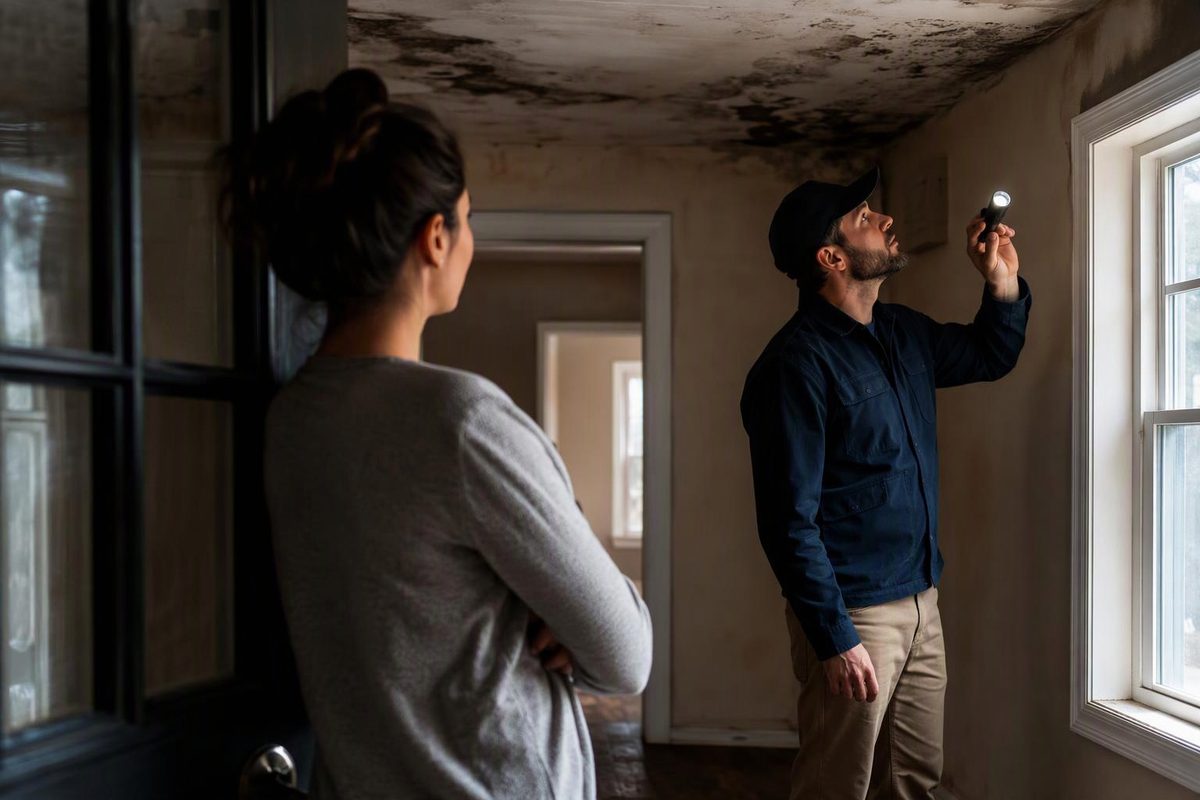
You can say no to a home insurance inspection, but you should not assume you can keep the policy—or collect on a claim—without cooperating. For U.S. homeowners, the consequence depends on why the insurer wants access, your policy wording, and state law.
For an inspection used to decide whether to insure your home, refusal may lead to cancellation or nonrenewal. PEMCO explicitly warns of both possibilities. An inspection after a claim raises a different issue: your contractual duty to let the insurer investigate the damage.
Before saying no, separate refusing the inspection entirely from asking for a verified inspector, a different appointment, or an approved alternative.
Which inspection are you being asked to allow?
| Purpose | What the insurer is checking | What refusal puts at risk |
|---|---|---|
| New-policy inspection | Property condition, hazards, and rebuilding cost | Whether the insurer will issue or continue coverage |
| Inspection of an existing policy | Whether the home still meets underwriting requirements | Renewal, or cancellation where permitted |
| Claim inspection | Cause, extent, and cost of reported damage | The insurer’s ability to evaluate and pay the claim |
An underwriting inspection helps an insurer decide whether to accept the risk and what to charge. It is not the same as the comprehensive inspection you might order before buying a house. It may be an exterior drive-by or an appointment covering the interior and exterior, according to Progressive’s inspection guide.
Not every home requires an interior visit. Ask what your insurer actually needs before treating the request as permission to inspect every room.
Can the insurer cancel immediately if you refuse?
Do not treat a warning about cancellation as proof that coverage has already ended. Cancellation ends coverage before the policy expires; nonrenewal ends it at expiration. Applicable grounds and notice requirements depend on your state and policy.
For example, the Texas Department of Insurance says companies must give 10 days’ notice before cancellation. Texas Insurance Code Section 551.104 also restricts cancellation grounds. Its inspection-related provision concerns a qualifying inspection report not accepted before a homeowners policy takes effect, with cancellation permitted while the policy has been in effect less than 60 days. It is not blanket permission to cancel any Texas homeowners policy for refusing a visit—and the Texas notice period is not a nationwide deadline.
Ask the insurer for the policy provision or underwriting requirement, the applicable deadline, and the proposed action in writing. If a cancellation or nonrenewal notice arrives, check its effective date rather than assuming you have until your next premium payment.
Refusing a claim inspection can affect payment
After reporting damage, look for “Duties After Loss” in your policy.
The ISO sample HO-3 homeowners form hosted by the Insurance Information Institute, edition 10/00, Section I—Conditions, requires cooperation with the claim investigation and showing damaged property as often as reasonably required. This sample also says failure to comply must be prejudicial to the insurer for the stated no-coverage consequence to apply. In plain language, the failure must harm the insurer’s interests. Your form and state law may differ; refusal does not automatically void every claim.
If the proposed visit seems unsafe, unrelated to the damage, or unnecessarily intrusive, explain the specific concern and request a workable arrangement rather than blocking all access.
Example: inspection, deductible, limit, and exclusion
Assume a hypothetical policy has a $400,000 dwelling limit, a $2,000 applicable deductible, replacement-cost coverage, and a wear-and-tear exclusion. If the insurer accepts $10,000 of storm damage as covered and replacement-cost settlement requirements are met, the simplified total payment is $8,000.
An inspection helps distinguish storm damage from deterioration. Refusing reasonable access could put that payment at risk under the duties-after-loss clause. Conversely, allowing an inspection does not make excluded wear and tear covered. An underwriting request to replace a worn roof is not itself an insured loss. Texas’s consumer guide explains these deductible, limit, valuation, and exclusion distinctions.
What to do instead of a blanket refusal
- Verify the request. Call the insurer using the number on your policy or account—not just a number supplied by the visitor. Confirm the inspector’s name, company, and purpose before allowing entry.
- Confirm scope and timing. Ask whether the inspection is exterior-only, which interior areas are needed, what will be photographed, and whether you must be present. Request another appointment if necessary.
- Ask about alternatives. Some insurers offer digital self-inspections. PEMCO, for example, sometimes provides a smartphone photo option. Do not assume your own photos or an earlier buyer’s report will satisfy the request; obtain approval.
- Get deadlines and agreements in writing. Confirm any extension or alternative, and keep the correspondence. For disputed cancellation or nonrenewal, contact your state insurance department promptly; do not assume a complaint pauses the effective date.
- Avoid a coverage gap. If the insurer will not continue coverage, arrange replacement coverage before the termination date. Use the same limits, deductibles, and valuation terms when comparing home insurance quotes. A replacement insurer may also require an inspection, so switching is not a guaranteed way around the requirement, as Progressive notes.
If you have a mortgage, a lapse can also trigger lender-arranged, or force-placed, insurance. The Consumer Financial Protection Bureau warns that it is usually more expensive and, in many cases, protects only the lender—not you.