
18 min read ·
Texas Car Crash Legal Checklist: Prioritize Safety, Comply, and Protect Your Claim
Notify police immediately when a crash causes injury, death, or leaves a vehicle unsafe to drive. The next steps preserve scene evidence and your claim.
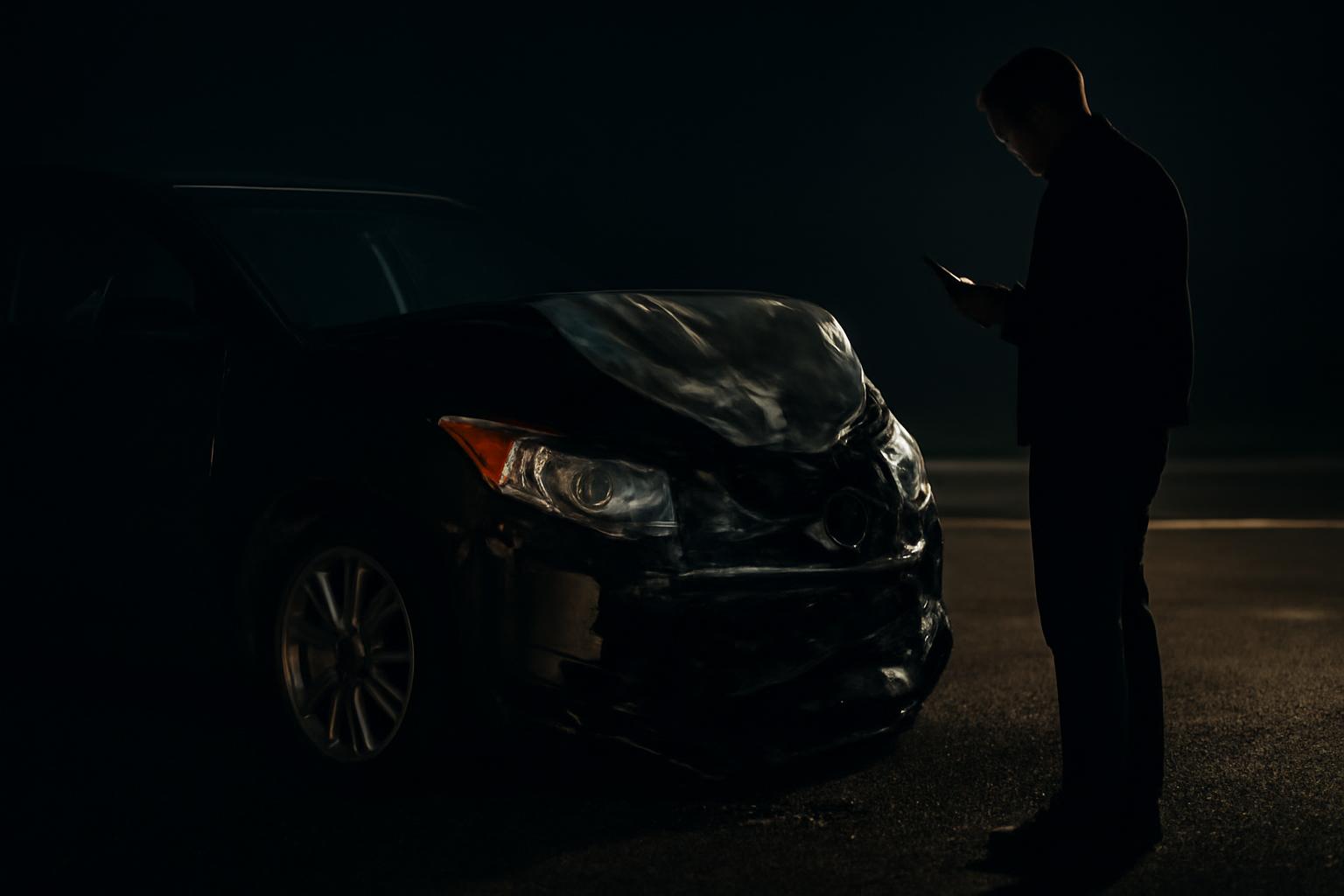
If you are searching for what to do after a car accident legally in Texas, the first priority is straightforward: protect people from further harm. The second is just as important: do the things Texas law expects at the scene so a collision does not turn into a criminal, insurance, or evidence problem.
A useful way to think about the aftermath is in stages. First, secure the scene and stay put. Next, report the crash when the facts trigger that duty. Then exchange information, document what happened, get medical care, and notify your insurer carefully. If fault, injuries, or coverage become disputed later, the quality of those early steps often matters more than people expect.
This guide follows that order and keeps the focus on Texas-specific obligations, claim protection, and practical next steps. It is general educational information, not legal advice for any particular crash.
Ensure Safety and Fulfill Immediate Legal Duties at the Scene
Your first legal obligation is to stop and remain at or near the scene long enough to complete the required duties under Texas Transportation Code Chapter 550, including aid and information exchange where applicable (Texas Transportation Code Chapter 550).
In real life, that means doing the calm, obvious things first, even if your nerves are spiking:
- Check yourself, your passengers, and others for injuries.
- Turn on hazard lights.
- If you have warning triangles or flares and can place them without stepping into danger, use them.
- Move drivable vehicles out of active traffic lanes if it is safe to do so.
- Stay at the scene until the necessary steps are complete.
Texas crash guidance commonly describes the safe-movement idea as “Steer It, Clear It.” The practical point is not that you can leave. It is that if the vehicles can be moved safely, you should reduce the risk of a second collision and then complete your legal duties nearby.
If anyone appears badly hurt, call 911 immediately. If emergency responders are on the way, focus on keeping the area as safe as possible. Texas post-crash guides also caution against moving someone who appears seriously injured unless leaving that person in place creates an immediate danger, such as fire or oncoming traffic (Texas step-by-step crash guide).
Reasonable aid does not mean you need to become a roadside medic. It usually means calling for help, staying with the injured person, and helping them get access to medical care if that can be done safely. The bigger mistake is either leaving too early or turning the scene into a shouting match.
That last point matters more than many drivers realize. You do not need to solve blame on the shoulder. You need to protect people, comply with the law, and preserve the facts before they disappear.
A few practical scene habits help:
- Speak clearly and briefly.
- Do not argue with the other driver.
- Do not chase anyone.
- Do not say you are “fine” before you actually know.
- Do not leave just because the damage looks minor.
If your vehicle cannot be driven and police call a tow, Texas Department of Insurance guidance says you can tell them to take it to a storage lot or body shop of your choice. That decision can affect cost, convenience, and later repair disputes, so it is worth making deliberately rather than letting it happen by default.
Call Police and Understand Reporting Requirements
This is the main legal question many Texas drivers ask, and it helps to separate three different ideas:
- When Texas law requires immediate notice
- When police may investigate and create a crash report
- When calling is still smart even if the facts seem minor
The clearest mandatory notice rule is in Section 550.026. If the crash causes injury, death, or damage that leaves a vehicle unable to be normally and safely driven, notice must be given immediately by the quickest means of communication. Section 550.041 also describes when peace officers may investigate crashes involving injury, death, or at least $1,000 in apparent property damage, including many crashes on private property, subject to exceptions (Texas Transportation Code Chapter 550).
For ordinary drivers, the practical takeaway is simple: call 911 or local law enforcement right away when any of these are present:
- Anyone may be injured
- Someone has died
- A vehicle cannot be driven safely
- The damage appears substantial
- The other driver is impaired, aggressive, uninsured, or uncooperative
- You are honestly not sure how serious the situation is
That is different from the officer-investigation threshold. The law’s immediate-notice duty is tied most clearly to injury, death, or an unsafe-to-drive vehicle. The officer-investigation rule is broader and includes apparent property damage of at least $1,000. So a crash can fall into the “call” category for practical reasons before you ever know the exact repair bill.
If an officer investigates, the written report is commonly called a CR-3. That report often becomes one of the most useful claim documents because it gathers location details, involved parties, vehicles, witnesses, and the officer’s observations in one place. Texas crash-report resources explain how these reports are handled and requested after the collision (Texas Department of Transportation crash reports).
When police respond, try to get:
- The officer’s name
- Badge number
- Agency
- Incident or report number
- Instructions on how and when to request the report
Availability varies. Some reports appear fairly quickly; others take longer. The easiest way to avoid confusion later is to ask at the scene exactly where the report will be available and what identifying information you will need to request it.
Once you get the report, read it carefully. Check the date, time, location, vehicle descriptions, names, insurance information, and witness listings. Even a helpful report can contain ordinary factual mistakes. If something basic is wrong, save your own proof so you can show the insurer where the discrepancy is.
If no officer comes out, do not let uncertainty about forms distract you from the essentials. Online guidance has not been perfectly consistent over time about older self-report procedures, so the safest move is to document the crash thoroughly, notify your insurer promptly, and confirm any current reporting expectation with the local agency or your insurer instead of relying on an old checklist.
Exchange Information and Document the Scene Thoroughly
Texas law expects drivers in a reportable crash to exchange identifying and insurance information. Guidance summarizing Transportation Code Section 550.023 says drivers should provide their name, address, vehicle registration information, insurer name, and show a driver’s license if requested (Texas summary of Section 550.023 exchange duties).
At the scene, try to collect and verify:
- Full name
- Home address
- Phone number
- Email, if voluntarily offered
- Driver’s license number
- License plate number
- Vehicle make, model, and color
- Insurance company
- Policy number, if available
- Registered owner, if different from the driver
Verification matters. A rushed handwritten note is better than nothing, but a clear photo of the other driver’s license, insurance card, and plate is often better than memory. Then provide the same basic information from your side.
If the other driver refuses to cooperate, do not escalate the confrontation. Make note of the refusal, get plate and vehicle details if you safely can, and let police handle the noncooperation.
After the basic exchange, build your evidence file while the scene still exists. Texas Department of Insurance advises getting photos, witness names, and basic incident details such as location, time, weather, and what happened (Texas Department of Insurance post-wreck guidance).
Useful photos and videos usually include:
- All vehicles from multiple angles
- Close-ups and wide shots of visible damage
- License plates
- The surrounding roadway or intersection
- Traffic lights, stop signs, lane markings, and road layout
- Debris, skid marks, broken glass, and fluid spills
- Weather, lighting, and visibility conditions
- Nearby businesses or homes that may have cameras
- Visible injuries, if appropriate and respectful
Do not forget the wider context. Many claims later turn on small things that are easy to miss in the moment: a turn-only lane marking, a partially obstructed sign, a wet roadway, a work zone, or the final resting position of the vehicles.
Witnesses can matter even when the damage looks simple. If someone saw the crash, get a name and phone number. If they are willing, make a quick note about what they said they saw. Do not coach them or argue with them. Just preserve the contact and the basic lead.
Also write down your own factual timeline before memory starts to smooth over details. Include:
- Where you were coming from and going
- Which direction you were traveling
- What lane you were in
- The traffic signal or sign you remember
- What you noticed just before impact
- What you heard or felt
- What happened right after impact
Keep that record factual. Avoid filling gaps with guesses about speed, exact distance, or legal fault if you are not sure.
What you say at the scene matters too. The safest approach is polite, limited, and factual. Statements that often create problems later include:
- “I’m sorry,” if it sounds like an admission of fault
- “I never saw you”
- “I’m completely fine”
- “It was definitely my fault”
- “Let’s just handle this without insurance”
You do not have to be cold. You just have to avoid creating bad evidence against yourself before you know the full facts.
And do not sign anything at the scene other than what law enforcement requires and what you fully understand. A rushed roadside document is almost never where you want to make a claims decision.
Seek Medical Attention Promptly
A crash can leave you feeling wired, shaky, angry, embarrassed, or strangely normal. That does not always mean you escaped injury. Texas post-accident guidance repeatedly warns that symptoms can show up later and that prompt evaluation creates a clearer treatment and claim record (Texas injury guidance on prompt care and follow-through).
If emergency care is offered and you need it, take it. If it is not an ambulance situation, get checked promptly if you develop pain, headache, dizziness, stiffness, numbness, bruising, confusion, or any symptom that is new after the crash.
Early medical evaluation matters for two separate reasons:
- It protects your health.
- It documents when symptoms began and what the providers found.
That second point becomes important because insurers often look closely at timing. If treatment starts soon after the collision, the timeline is usually easier to understand. If care starts much later, that does not automatically defeat a claim, but it can create an avoidable argument about whether the crash caused the problem.
Keep every medical record connected to the incident, including:
- Ambulance paperwork
- Emergency room and urgent care records
- Imaging orders and results
- Discharge instructions
- Prescriptions
- Specialist referrals
- Physical therapy notes
- Itemized bills
- Receipts for medications or medical supplies
- Mileage or transportation expenses for appointments
- Work notes and wage-loss documentation
Then follow the treatment plan as consistently as you reasonably can. A missed appointment does not automatically ruin a claim, but a long pattern of delayed or abandoned care can make both treatment and claim evaluation harder.
A simple symptom log can help more than people think. Date each entry and record practical effects, not drama: pain level, limited movement, headaches, missed work, sleep disruption, trouble lifting, trouble driving, or activities you could not do normally. That kind of day-by-day record can be far more useful than a vague memory months later.
One more caution: do not overstate or minimize symptoms. “I’m dying” and “I’m totally fine” can both be wrong in the first hours after a wreck. Accuracy is better than optimism or exaggeration.
Notify Your Insurance Company Correctly
After you leave the scene and urgent medical needs are addressed, report the collision to your own insurer promptly. Texas Department of Insurance guidance tells drivers to report the wreck, get the assigned adjuster’s name and contact information, and provide supporting documents such as photos, the police report, and medical records if relevant. The same guidance also says you may choose the repair shop you want; the insurer can suggest shops, but it cannot force you to use only its preferred one (Texas Department of Insurance auto-claim tips).
When you report the crash, stick to facts:
- Date, time, and location
- Vehicles and people involved
- Whether police responded
- Whether anyone reported injuries
- Whether you sought treatment
- Visible damage
- Witnesses and photos
- Report number, if available
That is enough to start the claim. You do not need to volunteer guesses. “The other vehicle struck my left rear quarter panel while changing lanes” is useful. “They were definitely 100% at fault and going 20 over” may not be.
The first call is usually about opening the claim, not winning the argument.
For repairs, expect an estimate process rather than a one-shot payment decision. The insurer may inspect the vehicle directly, use photos, or rely on a shop estimate. If hidden damage appears after teardown, the shop can submit a supplement for additional repair costs. Read any repair authorization or storage paperwork before signing it, and keep copies.
Be more cautious with the other driver’s insurer than with your own. Texas crash guidance commonly warns drivers not to rush into a recorded statement or broad medical release before they understand their injuries and paperwork (Texas post-crash do’s and don’ts on insurer communications).
That does not mean every contact from the other carrier is a trap. Property-damage communication can be routine. But you do not need to give a broad recorded interview immediately, and you do not have to sign expansive authorizations just because an adjuster asks for them quickly. If you are unsure, slow the process down rather than guessing your way through it.
If the other driver appears at fault, you may pursue payment through that driver’s liability insurer first. If that carrier delays, denies, or disputes fault, using your own collision coverage may repair the vehicle faster while your insurer later tries to recover what it paid through subrogation. That can include your deductible in some cases. If you go that route, remember that your deductible is the part you generally pay first on a covered claim, so compare the out-of-pocket cost against the benefit of getting the car fixed sooner.
On minimum coverage, Texas consumer guides commonly summarize the state’s liability floor as 30/60/25: $30,000 for bodily injury per person, $60,000 per accident for bodily injury, and $25,000 for property damage. Those same Texas guides also note that coverages such as PIP and UM/UIM are generally offered, while actual selections and written rejections vary by policy (Texas crash guide discussing minimum limits and optional coverages).
That is why your declarations page matters so much. The label on a coverage is not the same thing as having enough of it. Check your actual limits, deductibles, and endorsements instead of assuming your policy looks like the minimum or like your last policy.
Handle Hit-and-Run or Uninsured Driver Scenarios
If the other driver leaves, do not chase them. Chasing turns one crash into a possible second crash and can create a fresh set of safety and liability problems. Instead, capture whatever you safely can: plate digits, vehicle color, make or model, body style, distinctive stickers, obvious damage, and direction of travel. Then call police immediately (Texas hit-and-run guidance and checklist).
In a hit-and-run, the police report matters even more because it helps document that another vehicle was involved even though the driver fled. The same is true when the other driver stops but later turns out to be uninsured, gives false information, or has coverage problems.
If the at-fault driver has no usable insurance, possible payment sources depend on what you purchased:
- Collision coverage may help pay for vehicle repairs regardless of fault, subject to your deductible.
- PIP or MedPay may help with certain medical expenses, depending on your policy.
- UM/UIM coverage may help when the at-fault driver is uninsured, underinsured, or unidentified in a qualifying hit-and-run situation, if you carry that coverage.
Those are policy-specific tools, not guarantees. Do not assume every Texas auto policy includes all of them.
Uninsured and hit-and-run claims also tend to produce more documentation fights, so preserve everything:
- 911 call information
- Police report number
- Dashcam footage
- Cell phone photos
- Witness texts or emails
- Towing bills
- Storage invoices
- Repair estimates
- Rental records
- Medical records and bills
If there is any chance nearby cameras captured the fleeing vehicle, note that right away. Doorbell, parking lot, gas station, and intersection footage can disappear quickly.
Key Texas Rules: Fault, Timelines, and Next Steps
Texas follows a modified comparative-fault system, called proportionate responsibility in the statute. In general, a claimant cannot recover damages if they are more than 50% responsible; if they are 50% or less responsible, recovery is reduced by that percentage (Texas Civil Practice and Remedies Code Chapter 33).
That rule matters because many ordinary post-crash decisions later become fault evidence. A casual apology, a sloppy recorded statement, missing photos, a gap in treatment, or a social media post can all be used to argue for a higher share of blame.
Texas guides also consistently state that the general limitations period for a personal injury lawsuit arising from a car crash is two years from the date the cause of action accrues under Section 16.003 (Texas Civil Practice and Remedies Code § 16.003).
That two-year window is longer than most people expect, but waiting is rarely smart. Evidence fades fast. Witnesses forget. Camera footage is overwritten. Vehicles are repaired, sold, or destroyed. Medical narratives get muddier. Early organization is usually far more valuable than late urgency.
Good next steps in the first 24 to 72 hours often include:
- Obtain the crash report information, if one exists.
- Request the report when it becomes available.
- Review it for basic factual errors.
- Organize photos, receipts, records, and notes in one folder.
- Confirm the claim number and adjuster contact.
- Schedule repair inspection or estimates.
- Continue medical follow-up.
- Preserve any dashcam or phone data before it is deleted.
- Avoid posting about the crash on social media.
- Decline rushed settlement offers until you understand the full vehicle and injury picture.
The crash report deserves a second look here. A lot of people either overvalue it or ignore it. It is important, but it is not the whole case. If the report helps you, keep it with the rest of your file. If it contains errors or leaves gaps, your photos, witness contacts, medical records, and timeline notes still matter.
Not every Texas crash requires a lawyer. A minor property-damage-only claim with clear fault and no injuries may be manageable without one. The value of legal help rises when injuries are meaningful, fault is disputed, the other driver fled, a commercial vehicle is involved, coverage is unclear, or an insurer is pushing for a fast statement or a low early settlement.
Common Mistakes to Avoid After a Texas Car Accident
Some mistakes create bad facts. Others erase good facts. Both can damage a claim.
A recurring Texas warning is that drivers hurt themselves most by leaving too early, speaking too loosely, or waiting too long. Texas post-accident guides also repeatedly warn against social media posts and quick settlements before the real damage is known.
The most common mistakes look like this:
- Leaving the scene before duties are complete. Even when the damage seems minor, stay until safety, information exchange, and any required reporting are handled.
- Arguing fault on the roadside. You are there to protect people and preserve facts, not win a debate.
- Admitting fault too quickly. You may not know yet what the other driver did, what witnesses saw, or what video will show.
- Saying you are uninjured before you know. It is safer to say you are still assessing how you feel.
- Skipping medical evaluation. If symptoms emerge later, the lack of early documentation can complicate treatment and claims.
- Waiting to notify your insurer. Late notice can create avoidable headaches.
- Failing to photograph the scene. Once the vehicles move, a lot of evidence disappears forever.
- Giving broad recorded statements too soon. Slow down and understand what you are being asked for.
- Posting online. Even a harmless-looking photo or “I’m okay” post can be used out of context.
- Taking the first settlement just to get it over with. Fast money can look smaller after repair supplements, rental costs, or delayed symptoms appear.
- Ignoring the crash report. Review it instead of assuming it is perfect.
- Losing paperwork. Keep one file for towing, repairs, bills, prescriptions, wage loss, and communications.
A simple rule helps: if the step protects health, preserves evidence, or creates a paper trail, do it early. If the step pressures you to guess, admit, waive, or settle, slow it down.
Do I need to call police for every minor fender-bender in Texas?
Not always. The clearest mandatory notice rule applies when the crash causes injury, death, or damage that leaves a vehicle unable to be driven safely. Texas guidance discussing Sections 550.026 and 550.041 also explains that officers may investigate crashes involving injury, death, or at least $1,000 in apparent property damage, including many private-property crashes subject to exceptions, so calling is still the safer move when damage, injuries, or cooperation are uncertain (Texas collision-reporting overview).
Can I file an insurance claim without a police report?
Yes. Texas guidance says a police report is helpful but not legally required to begin the insurance-claim process. If no report exists, your own photos, witness contacts, exchanged information, and written notes become much more important.
What if no police respond—do I file a crash report myself?
Do not assume an old self-report form still applies just because it appears in an online checklist. Texas online guidance has not been fully consistent about older self-report procedures, so the safest approach is to document the crash thoroughly, notify your insurer promptly, and confirm any current reporting step with the local law-enforcement agency or your insurer. When no officer-generated report exists, your photos, witness names, exchanged information, and timeline notes carry much more weight.
Does Texas require minimum auto insurance coverages?
Yes. Texas consumer guides commonly summarize the required minimum liability package as 30/60/25: $30,000 bodily injury per person, $60,000 bodily injury per accident, and $25,000 property damage. Optional protections such as collision, PIP, and UM/UIM depend on what you bought or rejected in writing.
When should I talk to a lawyer after my accident?
Not every crash needs a lawyer, but it is wise to consider a consultation sooner rather than later if you needed medical treatment, fault is disputed, the other driver fled, a commercial vehicle was involved, or the insurer is pushing a quick statement or settlement before the damage picture is clear. Early advice can also help preserve evidence before it disappears.
The bottom line is simple: after a Texas crash, prioritize safety, stay at the scene, help the injured, call police when the facts require it, exchange information, document everything, get medical care, and notify your insurer with facts rather than conclusions. Those basics put you in the strongest position to comply with Texas law and protect any claim that follows. For general insurance questions, the Texas Department of Insurance lists consumer help at 800-252-3439.