
9 min read ·
The Crash and the Insurance Violation Are Two Separate Problems
Fault decides who owes crash losses; uninsured-driving penalties can apply separately, with different outcomes if another driver caused the crash.
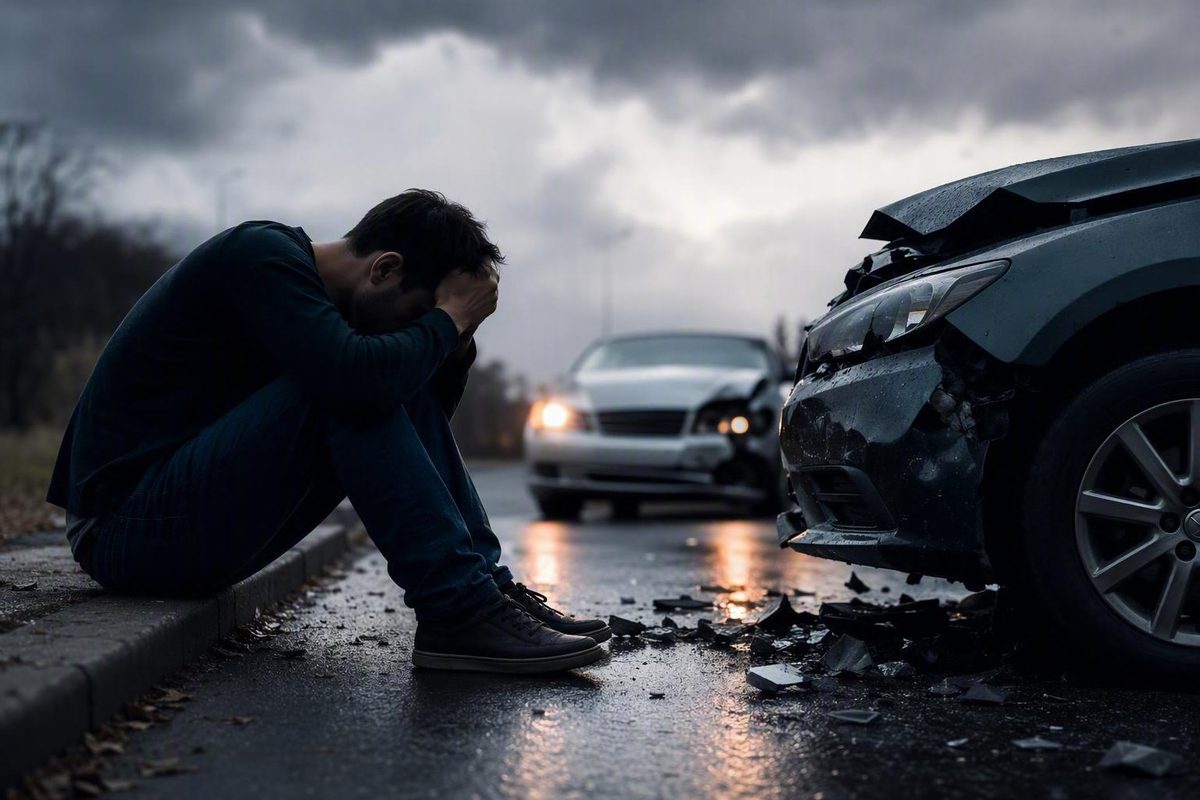
What happens if you get in an accident without insurance depends on the state, who caused the crash, the injuries and property damage, prior violations, and any other applicable coverage. Being uninsured does not automatically make you at fault. If you caused the crash, you may owe the resulting losses personally. If someone else caused it, you may still have a claim against that person or an applicable policy.
The insurance violation is a separate matter. Even a driver who did not cause the collision may receive a citation or face action against a driver’s license, vehicle registration, or plates. The exact consequences must be checked under the law of the state where the crash occurred.
The short answer: fault and insurance status are separate
An uninsured accident creates two questions:
- Who is legally responsible for the collision and its losses?
- Did the uninsured driver violate an insurance or financial-responsibility law?
The same event can produce different answers.
| Situation | Accident losses | Insurance-law consequences |
|---|---|---|
| The uninsured driver caused the crash | The driver may owe proven medical expenses, vehicle damage, lost income, and other recoverable losses personally. | A citation, suspension, registration action, impoundment, fees, or future proof requirements may also apply. |
| The uninsured driver did not cause the crash | A claim against the responsible driver or an applicable policy may remain possible. | The uninsured driver can still face separate consequences for operating without required coverage. |
Fault is evaluated from the circumstances of the collision, not simply from whether each driver had insurance. Relevant evidence may include driver and witness statements, photographs, vehicle damage, road markings, traffic signals, video, and police findings. Applicable state law may also affect recovery when more than one person contributed to the crash. State-specific guidance illustrates that an uninsured driver may still seek recovery when someone else caused the collision while remaining exposed to separate uninsured-driving penalties (Indiana uninsured-accident guidance).
What to do immediately after the crash
Handle the scene as you would any other collision. Do not let fear of an insurance citation cause you to leave, hide information, or ignore an injury.
- Stop and remain at the scene. Move the vehicles out of active traffic when doing so is safe and appropriate.
- Check for injuries. Call 911 if anyone is injured. Kansas safety guidance also recommends calling when airbags deploy or a vehicle cannot be driven.
- Stay safe while waiting. If you cannot leave the vehicle safely, remain belted, turn on the hazard lights, and call for help.
- Notify law enforcement when required. Injuries, serious damage, an undrivable vehicle, or an uninsured involved driver may affect whether police must or should be contacted.
- Exchange truthful information. Provide your name, contact information, driver’s-license details, vehicle and registration information, and any insurance information that actually exists.
- Document the scene. Photograph the vehicles, visible damage, license plates, traffic signals, signs, lane markings, debris, weather, and the wider roadway.
- Collect witness details. Record names, telephone numbers, and email addresses without asking witnesses to decide who was at fault.
- Preserve records. Keep the incident number, photographs, messages, medical documents, towing receipts, repair estimates, and correspondence together.
These safety steps are reflected in the Kansas Department of Transportation’s crash guidance. The precise legal duties and reporting thresholds in that guidance are Kansas-specific, so check the rules for the state where your crash occurred.
Do not invent an insurer, policy number, or coverage dates. If no policy was active, say so truthfully.
Calling the police may not complete every reporting obligation. Some states require a separate report to the motor-vehicle agency, and the agency deadline may differ from the deadline for notifying law enforcement. Record every deadline given on a citation, crash form, agency notice, or claim letter.
If an agency suspends your license or registration, do not assume that buying insurance immediately restores your privileges. Follow the reinstatement instructions and wait for confirmation that you may legally drive again.
If you caused the accident, you may owe the losses personally
Without applicable liability coverage, an at-fault driver may be personally responsible for losses caused by the crash. Depending on the evidence and governing law, those losses can include:
- Vehicle repair or replacement costs
- Towing and storage charges
- Medical expenses
- Lost wages
- Other damages recoverable under state law
The amount is not automatically whatever the other person demands. Responsibility and damages still need to be established. The result can depend on the evidence of fault, repair records, medical documentation, whether each claimed loss resulted from the crash, and any other coverage or benefits that apply.
A case may move through several stages, although not every dispute follows the same path:
- The other person or an insurer sends a claim or demand.
- The parties discuss responsibility, the documented amount, and possible payment terms.
- If the dispute is not resolved, the claimant may file a lawsuit.
- A court may enter a judgment if liability and damages are established.
- The claimant may use collection methods allowed by state law.
A judgment does not mean that money or property is seized automatically. State law controls what collection methods are available and which wages, funds, or assets are protected. The claimant may also be unable to collect the entire amount. Ohio’s official consumer guide explains that an uninsured driver can be personally responsible for uncovered crash costs and that permitted collection can reach eligible assets or wages (Ohio Department of Insurance automobile guide).
An uninsured driver usually lacks those policy benefits and may need to respond to the claim and fund any defense personally.
The other driver may first seek payment through applicable collision, uninsured-motorist, medical-payments, or health coverage. None of those payment paths is guaranteed. Deductibles, limits, exclusions, covered persons, policy wording, and state law all matter.
If you receive a demand, lawsuit, citation, or agency notice, keep the complete document and note any response or hearing date. Because the legal effect of settlement agreements and releases depends on their wording and local law, consider jurisdiction-specific help before agreeing to terms you do not understand.
If you did not cause the accident, you may still have a claim
Having no insurance does not, by itself, erase a claim against the driver who caused the collision. Recovery can still depend on:
- Evidence showing how the crash happened
- The state’s fault rules
- The responsible driver’s insurance and policy limits
- The types and amounts of documented loss
- Any state restrictions that apply to uninsured claimants
Possible payment sources may include the at-fault driver’s liability insurance, applicable collision coverage, medical-payments coverage, health insurance for eligible treatment, or other available first-party benefits. The existence of a policy does not guarantee that it covers a particular person, vehicle, treatment, or loss.
Report the collision promptly to any insurer that may provide applicable coverage. Supply requested photographs, repair estimates, medical documentation, witness details, and police-report information. Do not treat another driver’s verbal promise to pay as a substitute for documenting the loss.
You may still receive a citation or face licensing or registration consequences for driving uninsured even if the evidence shows that someone else caused the collision. When dealing with police, insurers, courts, or a motor-vehicle agency, keep the two issues separate:
- Crash liability: Who caused the collision and who owes the resulting losses?
- Insurance compliance: Was the vehicle or driver operating without the financial responsibility required by that state?
Possible penalties for driving uninsured
The consequences of driving uninsured vary by jurisdiction, violation history, and circumstances. Possible outcomes include:
- A traffic citation
- A fine or court costs
- Driver’s-license suspension
- Vehicle-registration or plate suspension
- Plate or vehicle impoundment
- Reinstatement and impound fees
- A requirement to file proof of future financial responsibility
- More serious consequences for repeat violations
Filing periods, eligibility rules, and reinstatement procedures vary by state.
The following are examples, not nationwide rules:
| State example | Possible consequence | Important qualification |
|---|---|---|
| California | An uninsured collision can lead to suspension for up to four years. Driving privileges may be restored during the final three years by filing and maintaining the required proof certificate. | Suspension can apply regardless of fault. See the California DMV financial-responsibility rules. |
| Ohio | The state guide lists a 90-day suspension, with longer periods possible for repeat violations, along with possible plate or vehicle impoundment and reinstatement requirements. | The action depends on the violation history and circumstances. Check the current Ohio Department of Insurance automobile guide. |
| Virginia | An uninsured vehicle owner may face suspension of driving and registration privileges, fees, and an SR-22 requirement for reinstatement. | The required steps depend on the administrative action. Review the Virginia State Corporation Commission’s auto insurance guide. |
Do not rely on another state’s fine, deadline, suspension period, or reinstatement process. Confirm current requirements through the DMV, transportation department, or insurance regulator for the state where the collision occurred.
No insurance is not always the same as no proof
There is an important difference between:
- Having no active policy at the time of the crash, and
- Having active coverage but being unable to display the insurance card
Contact the insurer immediately and ask it to confirm in writing:
- Whether the policy was active at the exact date and time of the crash
- Which vehicle was listed
- Whether the driver was covered under the policy
- Whether a cancellation or reinstatement had taken effect
- How to obtain electronic or printed proof of insurance
Then follow the instructions on the citation or agency notice. Submit proof through the required channel and by the stated deadline. Later proof may establish that coverage existed, but do not assume it will automatically cancel a citation or prevent every administrative consequence.
If the insurer says the policy was not active, ask for the relevant cancellation, expiration, or payment records. Preserve those documents with the crash file. Do not alter an insurance card or represent a later policy as having been active on the collision date.
What to check in the next few days
After leaving the scene, work through this checklist:
- Verify whether any policy was active. Review your records and contact any insurer that may have issued applicable coverage.
- Obtain the police information. Save the incident number and request the report when it becomes available.
- Complete required state reports. A police report and a DMV report may be separate obligations.
- Preserve evidence. Back up photographs, video, witness details, messages, and correspondence.
- Document the losses. Keep repair estimates, towing and storage invoices, medical records, bills, and proof of missed work where relevant.
- Check your license and registration. Use the issuing agency’s official lookup or contact information rather than assuming that no notice means no action.
- Track every deadline. Record dates for claims, citations, agency reports, hearings, lawsuits, and reinstatement requirements.
- Review future proof requirements. Determine whether the state requires an SR-22 or another form of financial responsibility before you drive again.
California shows why separate agency reporting matters. A collision involving injury or death, or property damage exceeding $1,000, must be reported to the DMV within 10 days regardless of fault. Failure to file a required report can result in suspension. Use the current California DMV instructions for collision reporting to confirm the criteria and obtain the SR-1 form. Other states use different forms, thresholds, and deadlines.
Consider jurisdiction-specific legal guidance if the collision caused serious injury or death, fault is disputed, an agency is threatening suspension, or you receive a substantial demand or lawsuit. Representation is not mandatory after every uninsured accident, but those circumstances may require analysis of local law, evidence, deadlines, and available coverage.
Treat the situation as three tasks: comply with crash-scene and reporting duties, determine fault and who may pay each loss, and address any license or registration action. Insurance Roster provides general insurance education, not legal or insurance advice. Confirm current requirements with the relevant state agencies and verify possible coverage against the actual policy terms.