
4 min read ·
Does Renters Insurance Cover Fire Damage? Usually, Yes
Renters insurance usually covers fire-damaged belongings and extra living costs. See how deductibles, limits, valuation and liability affect payment.
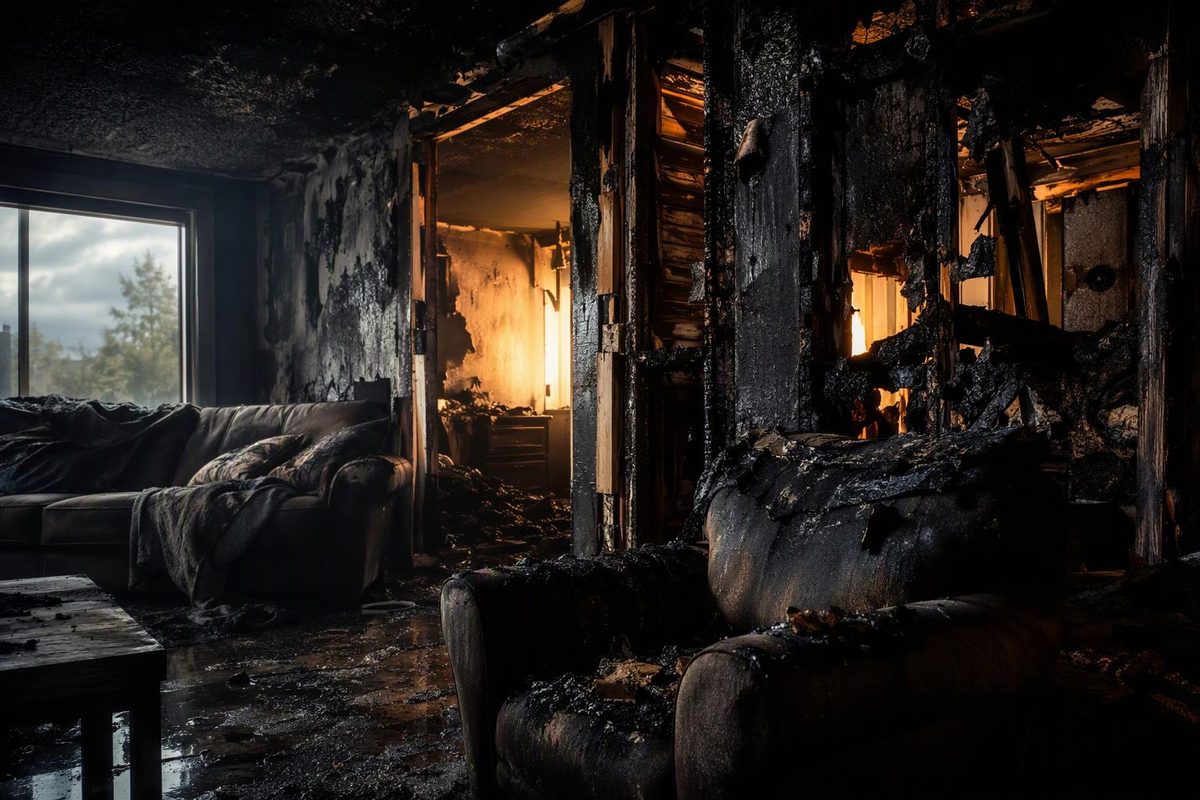
Renters insurance usually covers fire and smoke damage to your belongings. It may also pay extra living costs if covered damage makes your rental unlivable. But it generally does not insure the building itself—that is the landlord’s responsibility. Your payout depends on the applicable coverage, deductible, limits and exclusions. Progressive’s fire coverage guide explains these distinctions.
This is a general guide to U.S. renters policies; your policy and state rules control the claim.
Which part of the policy pays?
A rental fire can involve three separate coverages. Don’t treat them as one pool of money.
Your belongings: personal property coverage
Furniture, clothes, electronics and other covered possessions can qualify for repair or replacement after a fire. Smoke-damaged belongings may qualify even if flames never touched them. Payment is subject to your personal property limit and deductible, and some items may have lower limits. Progressive describes both fire and smoke coverage.
Check whether an item’s special limit applies to fire or only to another cause of loss. For example, the HO-4 contents form published by Maine’s insurance regulator limits jewelry losses by theft, while its limit on money is not theft-specific. Your form may differ.
Your landlord’s insurance does not cover your personal belongings, according to the National Association of Insurance Commissioners (NAIC). A lease requiring renters insurance does not mean the landlord has bought that protection for you.
Temporary housing: loss of use coverage
If covered fire or smoke damage makes the rental unlivable, loss of use coverage may pay for temporary housing and other eligible increased expenses. It is not a promise to pay every bill while you are displaced. Progressive says meals and groceries are covered above what you normally spend.
For example, if you normally spend $400 on food during a month but spend $700 because your temporary accommodation has no kitchen, the increase is $300—not $700. Eligibility still depends on the policy and documentation. Coverage can have both dollar and time limits; the Texas Department of Insurance confirms those limits for homeowners and renters policies.
Damage you cause to others: personal liability coverage
If you are legally responsible for an accidental fire that damages the landlord’s property or someone else’s belongings, liability coverage may respond, up to its limit. That is different from insuring the building under your own property coverage. Both Progressive and the NAIC’s renters guide describe liability protection for qualifying property-damage claims.
Being blamed for a fire is not, by itself, a coverage decision. Send any demand or lawsuit to your insurer promptly for review; the HO-4 form expressly requires forwarding those documents.
How much would you receive?
The valuation method matters as much as the coverage limit:
- Actual cash value (ACV): Accounts for depreciation, so older belongings can produce a smaller payment.
- Replacement cost: Pays based on replacing covered items with comparable new ones, subject to the policy’s settlement conditions, deductible and limits.
The NAIC explains the difference.
Hypothetical example: deductible, limit and exclusion
Assume an accidental kitchen fire destroys covered belongings:
| Claim detail | Assumed amount or term |
|---|---|
| Personal property limit | $20,000 |
| Property deductible | $500 |
| Cost of comparable new replacements | $8,000 |
| Insurer-assessed depreciated value | $5,000 |
| Exclusion | Intentional loss caused by an insured |
With ACV coverage, the illustrative payment is $5,000 − $500 = $4,500. With replacement-cost coverage, the total could reach $8,000 − $500 = $7,500, if you meet the settlement requirements. Neither calculation hits the assumed $20,000 limit. These figures assume no item-specific limits or other adjustments.
Ask whether replacement purchases and receipts are required before the insurer releases the full replacement-cost amount—and what deadline applies. The NAIC’s claims guide explains that an insurer may initially pay ACV, then release recoverable depreciation after you provide evidence of repair or replacement.
Accidentally starting a fire does not automatically defeat coverage: Lemonade’s guide includes accidental kitchen, electrical and unattended-candle fires. Deliberately causing the insured loss is different: the HO-4 form’s intentional-loss exclusion applies to acts an insured commits or conspires to commit with intent to cause a loss. A covered property loss below your deductible can also produce no payment.
What to do after a fire
- Put safety first. Return only when authorities say it is safe.
- Notify your insurer promptly. Describe damaged belongings and whether you need temporary housing; obtain a claim number.
- Document the contents loss. Photograph damage when safe and list items, approximate ages and replacement costs. Use purchase records or older household photos if receipts were destroyed.
- Keep displacement receipts. Ask which expenses qualify, the housing allowance and the coverage end date.
- Request the payment breakdown. Check valuation, depreciation, deductible, item limits and any cited exclusion.
The NAIC’s post-disaster claims guide supports these safety, reporting and documentation steps.
Before a loss, check whether your personal property limit would replace everything you own—not just the expensive electronics—and whether the policy pays ACV or replacement cost. Those two checks can reveal a substantial gap even when fire is covered.