
8 min read ·
When a Storm Downgrade Does Not Lower Your Deductible
See when a named-storm deductible survives a hurricane downgrade, how tornado damage is treated, and how much a percentage deductible costs.
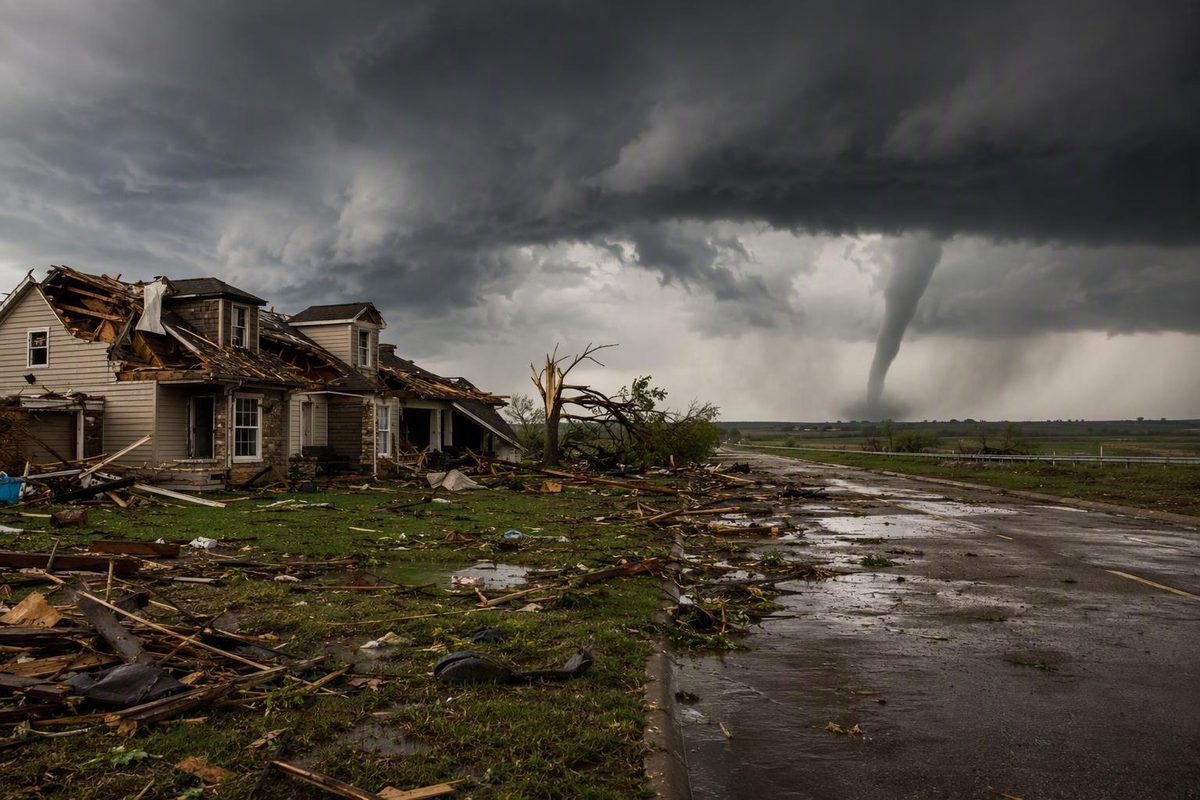
Yes. A named-storm deductible can still apply after a hurricane is downgraded to a tropical storm or depression. The storm may remain within the policy’s named-storm definition, or a trigger activated earlier may continue through a period defined by the policy or state law. The storm’s classification when the damage occurred is relevant, but it is not always decisive.
This is not a universal rule. A narrow hurricane-only deductible, a named-storm deductible, and a wind-and-hail deductible can have different triggers. Coverage is a separate issue: the damage must result from a covered cause and be attributable to the qualifying storm.
Enter your policy figures to compare the storm and standard deductibles, then sort the trigger examples by type.
Use the figures from your declarations page and damage estimate. Blank fields remain unknown rather than being estimated.
The 2% named-storm deductible is $6,000. Enter the flat deductible and damage estimate for a filing comparison.
Known example: 5% of $300,000 is $15,000. This tool compares deductible arithmetic only; it does not determine coverage.
These are literal examples from the cited article sources, not a complete national table. Your policy and current state law control.
| State | Deductible | Trigger | Downgrade Effect |
|---|---|---|---|
| Louisiana | Named storm | System reaches tropical-storm strength | Arthur guidance said it could continue after downgrade, subject to policy language. |
| Louisiana | Hurricane | System reaches hurricane strength | Check the policy’s continuation and ending terms. |
| Florida | Hurricane | Hurricane warning issued for any part of Florida | Period ends 72 hours after the last applicable Florida watch or warning terminates. |
Sources: NAIC consumer guidance; Triple-I deductible overview; Florida Department of Financial Services guidance; Louisiana reporting on Tropical Storm Arthur. Figures shown: $300,000, 2%, 5%, $6,000, $15,000, and 72 hours.
The Written Trigger Controls After a Downgrade
A named-storm provision commonly includes officially named tropical storms as well as hurricanes. If a hurricane weakens but remains a named tropical storm, the named-storm definition may still be satisfied.
An earlier trigger can also remain active. Depending on the policy and jurisdiction, the deductible period may begin with official naming, a hurricane designation, a watch or warning, landfall, or another stated event. Its ending point might be tied to a later advisory or the termination of a watch or warning rather than the instant the storm weakens.
The declarations page usually identifies the deductible’s label and amount. The associated endorsement and definitions establish:
- Which organization must name or classify the storm
- Which classifications qualify
- Whether a watch, warning, landfall, or geographic condition is required
- When the deductible period begins and ends
- Which property and causes of loss are subject to it
- Whether the deductible applies per event, season, year, or policy period
These details vary by state and policy. Triple-I’s overview of hurricane and windstorm deductibles explains why the declarations and endorsements must be checked together.
Named-Storm and Hurricane Deductibles Have Different Reach
A named-storm deductible is generally broader than a hurricane-only deductible. It may include officially named tropical storms or tropical cyclones in addition to hurricanes. Some forms may include named tropical depressions.
A hurricane deductible generally requires an official hurricane declaration, although its application may also depend on a warning, location, landfall, or defined time period. A windstorm or wind-and-hail deductible can be broader still because naming may not be required. The NAIC’s named-storm deductible guidance outlines these distinctions.
| Deductible | Potential Scope | Key Question |
|---|---|---|
| Named storm | Named hurricanes and tropical storms; sometimes other named cyclones | Does the downgraded system remain within the definition? |
| Hurricane | Officially designated hurricanes | Was the trigger activated, and is its period still open? |
| Wind and hail | Wind or hail from multiple kinds of storms | Does naming or classification matter under this form? |
| All perils | Covered losses not assigned another deductible | Does a storm endorsement replace it for this loss? |
A tropical storm that never became a hurricane may satisfy a named-storm trigger but fail a hurricane-only trigger. Conversely, a system that previously became a hurricane may activate a hurricane deductible that continues after downgrade.
For classification context, the National Hurricane Center defines a hurricane as a tropical cyclone with maximum sustained surface winds of at least 74 mph (NHC glossary). The weather agency determines the storm’s classification; the policy and governing law determine the classification’s insurance effect.
The Damage Timeline Can Matter More Than Discovery Time
Consider a storm that is named, reaches hurricane strength, causes a relevant warning to be issued, weakens to a tropical storm, and then damages a home. A named-storm deductible may apply because the system remains named. A hurricane deductible may also remain possible if its earlier trigger was satisfied and its defined period has not ended.
Specific continuation periods are not nationwide rules. A policy might measure its period from an advisory, downgrade, watch, or warning, or use no comparable continuation period. Do not import a timing rule from another state or policy.
Also distinguish when damage occurred from when it was discovered. A ceiling stain noticed the next morning does not prove that the roof opening occurred at that moment. Photographs, videos, emergency reports, power interruptions, contractor observations, and official advisories can help establish a sequence, but each item has limits.
The NHC’s later best-track assessment can differ from operational advisories. Preserve the advisories available around the loss and ask which official record the endorsement incorporates. A later meteorological revision does not by itself settle the contractual question.
Louisiana and Florida Use Different Trigger Frameworks
Louisiana’s Named-Storm Example
Louisiana materials distinguish named-storm, hurricane, and windstorm-and-hail deductibles. The cited state summary associates a named-storm trigger with a system reaching tropical-storm strength and a hurricane trigger with reaching hurricane strength, although the homeowner’s actual policy remains controlling.
After Tropical Storm Arthur in June 2026, Louisiana homeowners with tornado damage were reported as facing 2% to 5% named-storm deductibles (FOX 8’s report on Arthur claims). On June 22, Louisiana insurance officials said the deductible could continue after the system was downgraded, subject to the individual policy language.
The related WBRZ report on Louisiana’s guidance said an insurer could apply the named-storm deductible or the all-perils deductible for one named-storm event, but not both. It also distinguished property, flood, and auto deductibles.
Louisiana’s cited framework includes a state-specific restriction against imposing more than one named-storm or hurricane deductible during a hurricane season. That restriction is not a nationwide annual-deductible rule.
Florida’s Warning-Based Period
Florida’s official consumer guidance defines a hurricane for insurance purposes as a system declared a hurricane by the National Hurricane Center. The hurricane-deductible period begins when a hurricane warning is issued for any part of Florida and ends 72 hours after the last applicable Florida hurricane watch or warning terminates (Florida hurricane-deductible guidance).
A hurricane could therefore trigger the period, weaken to a tropical storm, and cause covered wind damage while the period remains open. The downgrade would not necessarily prevent the hurricane deductible from applying.
A system named as a tropical storm but never declared a hurricane would not meet Florida’s cited hurricane definition. Another wind-related deductible could still apply if the policy contains one. Florida’s cited rule concerns personal residential coverage and notes that surplus-lines provisions may differ.
A Spawned Tornado Can Still Be Attributed to the Named Storm
A tornado does not automatically escape a named-storm deductible merely because the immediate mechanism of damage was tornadic wind. The insurer may examine whether the tornado and covered damage were attributable to the qualifying named system, as well as the endorsement’s causal language.
Direct wind damage to a roof, siding, windows, or another insured component may fall under homeowners coverage if the cause is covered. The insurer may also consider physical evidence, exclusions, timing, and whether pre-existing deterioration contributed to the loss.
Water requires a separate cause analysis. Wind-driven rain entering through an opening first created by wind may be treated differently from storm surge or rising surface water. Florida’s cited hurricane definition, for example, includes certain interior precipitation damage when wind first damages the building and creates the opening; it does not include flooding.
Storm surge and other flooding are generally evaluated under an NFIP or private flood policy, if one was purchased. Vehicle damage is evaluated under the applicable auto coverage, such as comprehensive coverage if purchased. A homeowners named-storm deductible does not transfer to a separate flood or auto claim.
One storm can therefore produce homeowners, flood, and auto claims with separate coverage decisions and deductibles. Where wind and flood overlap, the complete policies and causation provisions must be reviewed.
Percentage Deductibles Use the Insured Limit
Named-storm and hurricane deductibles are often percentages of an insured property limit, commonly the Coverage A dwelling limit. They are not necessarily percentages of the repair estimate.
With a $300,000 Coverage A limit, a 2% storm deductible is $6,000. The formula is the dwelling limit multiplied by the deductible percentage.
With the same limit, a 5% deductible is $15,000. The NAIC uses the same $300,000 and 5% example to illustrate a $15,000 policyholder share.
That amount can be substantially higher than a fixed all-perils deductible. If estimated covered damage does not exceed the applicable deductible, arithmetic alone suggests no insurer payment. If it exceeds the deductible, the potential payment is still subject to limits, exclusions, valuation provisions, sublimits, and the insurer’s coverage decision.
The deductible is generally the policyholder’s share of a covered loss, not a guarantee that every dollar above it will be paid. Ask the insurer to identify the exact insured limit, percentage, and endorsement used if its calculation does not match the declarations.
Test the Deductible in Four Steps
Identify the Exact Deductible
Copy the label and amount from the declarations page without paraphrasing it. Locate every named-storm, hurricane, windstorm, wind-and-hail, or percentage-deductible endorsement in effect on the loss date.
Identify the Official Trigger
Read the endorsement and definitions together. Record the required classification, naming authority, geographic condition, watch or warning, and start and end events. Pay attention to defined terms and causal phrases such as caused by or arising out of.
Place the Damage on the Timeline
Preserve official advisories and watch or warning records. Add time-stamped photographs, videos, emergency calls, contractor observations, and the time the condition was first noticed. State what each record proves rather than assuming discovery time is occurrence time.
Connect Each Damage Category to Its Cause
Separate wind uplift, tree impact, tornado damage, rain through a wind-created opening, groundwater, storm surge, sewer backup, and maintenance conditions. Timing near a storm does not alone establish that every damaged component was caused by it.
Keep the declarations, full policy, endorsements, insurer’s estimate, written deductible calculation, storm timeline, photographs, contractor findings, and records from earlier storm claims. A structured review can help distinguish a questionable deductible from a large but contractually valid one (claim review guidance).
Request the Insurer’s Written Basis for the Deductible
If the special deductible appears incorrect, ask the insurer to identify:
- The exact policy provision and endorsement
- The event and official record that activated the deductible
- The beginning and end of the applicable period
- The evidence placing the damage within that period
- The cause-of-loss finding for each damaged component
- The insured limit and percentage used
- Whether the deductible applies per event, season, year, or policy period
- Any credit or accumulation from an earlier storm claim
Compare the response with the declarations, endorsement, definitions, and official storm timeline. Keep notes of calls and confirm material conversations in writing.
If the issue remains unresolved, contact the insurance department governing the policy. Louisiana policyholders can use the Louisiana Department of Insurance consumer resources; the department lists its consumer hotline as 1-800-259-5300.
Insurance Roster provides general insurance education, not insurance or legal advice. The policy and governing jurisdiction—not the storm’s latest label by itself—control the claim.