
22 min read ·
Who Pays After a Crash Involving a Drunk Driver?
Liability does not repair the impaired driver's own car, but purchased collision coverage may pay qualifying damage after the deductible.
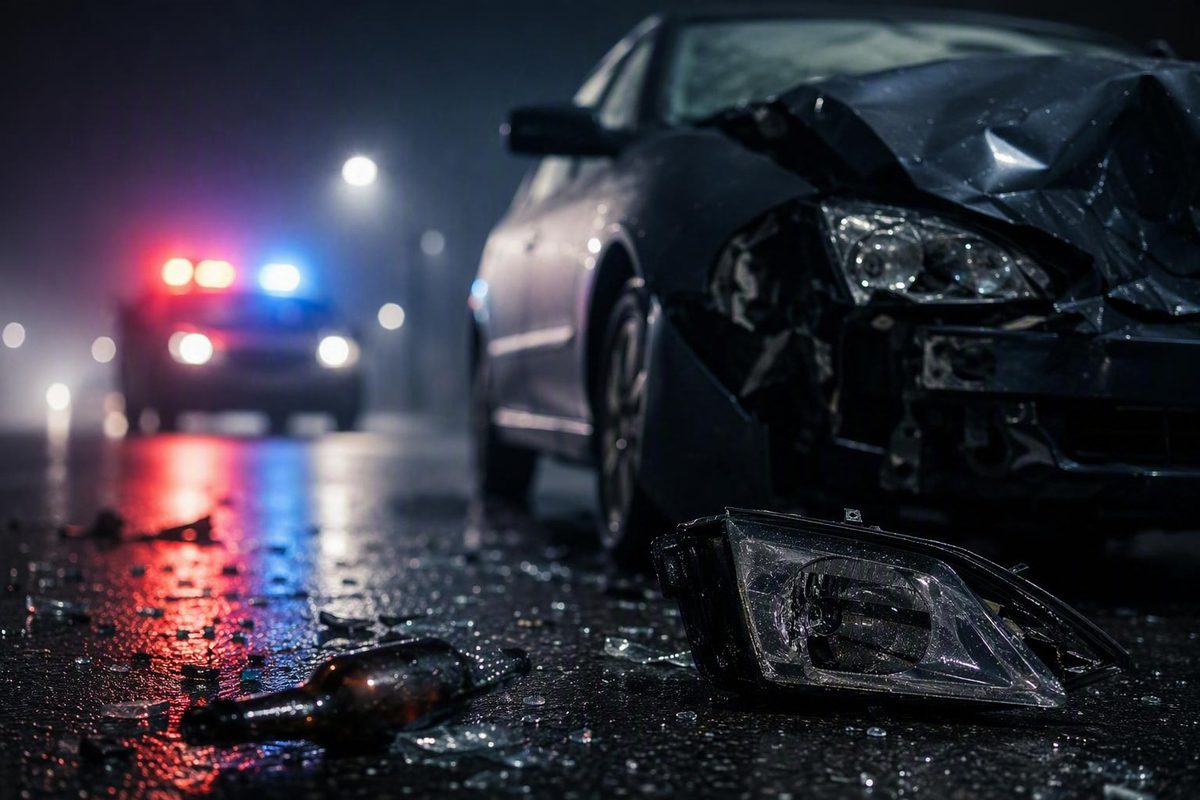
The short answer: insurance may cover the crash, but not every loss
Car insurance often covers at least some losses from a drunk-driving accident, but the answer is not automatic, unlimited, or all-or-nothing. An impaired driver’s liability coverage may protect people the driver injures. Other coverages may apply to the impaired driver’s vehicle, a passenger’s medical expenses, or a victim’s losses when the responsible driver has no insurance or inadequate limits. Progressive similarly explains that liability, collision, and comprehensive coverage address different losses after a DUI-related accident (Progressive’s DUI coverage overview).
The first question is who wants payment:
- A driver, pedestrian, cyclist, or property owner harmed by the impaired driver
- The impaired driver
- A passenger in either vehicle
- A vehicle owner who was not driving
The next question is what loss needs to be paid. Medical bills, vehicle repairs, lost income, and damage to someone else’s property do not necessarily fall under the same coverage.
A claim usually turns on:
- Who was legally responsible for the collision
- Whether that conduct caused the claimed injury or damage
- Which coverages were purchased
- The wording of the policy and its exclusions
- Coverage limits and deductibles
- Evidence supporting the nature and value of the loss
- The law of the applicable state
As a general observation, intoxication does not by itself answer every coverage question or necessarily invalidate every coverage part. The specific policy and applicable state law still control. Intoxication also does not automatically prove that the impaired driver legally caused the crash. For example, a driver may have been over the applicable alcohol limit when another motorist ran a red light and struck that driver. The alcohol evidence could be important, but fault and causation would still require investigation.
It helps to separate three issues that are often blended together:
- Criminal responsibility: Did the driver commit DUI or another offense?
- Civil fault: Whose conduct legally caused the collision and resulting losses?
- Insurance coverage: Does a specific policy cover a specific person and loss?
An answer to one question does not necessarily decide the other two.
This article provides general insurance education, not individualized insurance or legal advice. Insurance Roster describes its role as explaining policy concepts readers can check rather than deciding specific claims; coverage must be confirmed using the actual policy and the rules in the applicable jurisdiction (About Insurance Roster).
The site’s terms likewise emphasize that coverage, claim, and deductible rules vary by policy and jurisdiction (Insurance Roster’s terms and important notice).
Start with who is seeking payment
A practical way to analyze a drunk-driving crash is to identify the claimant before looking for coverage.
Claimant-role decision tree
-
Who suffered the loss? - A person outside the impaired driver’s vehicle - The impaired driver - A passenger - A non-driving vehicle owner
-
What was lost? - Health or income - A vehicle - Personal or real property - Another type of potentially recoverable loss
-
Who may be legally responsible? - The impaired driver - Another driver - More than one person - In limited, state-dependent circumstances, another person or business
-
Which policy and coverage might match the loss? - The responsible driver’s liability coverage - The claimant’s collision, PIP, MedPay, UM, or UIM coverage - Another potentially applicable policy
A person hit by the impaired driver
If an insured impaired driver is legally at fault, bodily-injury liability may pay covered injuries suffered by other people. Property-damage liability may pay for damage to another vehicle, a fence, a building, or other property. Payment remains subject to proof of responsibility and damages, policy limits, policy terms, and state law.
The victim may make a third-party claim against the impaired driver’s insurer. That insurer will ordinarily investigate instead of paying solely because alcohol was involved. It may examine how the collision occurred, whether its policyholder caused it, whether the treatment or repair relates to the crash, and how much the supported loss is worth.
The impaired driver
Liability insurance is not designed to repair the impaired driver’s own vehicle. It addresses covered legal responsibility for injuries or property damage caused to others.
Damage to the impaired driver’s vehicle must instead be considered under collision coverage, if purchased. A deductible ordinarily applies to a covered collision claim, along with the policy’s definitions, conditions, exclusions, and valuation rules.
The impaired driver’s medical expenses raise a separate issue. PIP or MedPay may be relevant where available, but the evidence does not support a single national rule governing an impaired driver’s eligibility. The answer must be checked under the applicable policy and state system.
A passenger
A passenger may have more than one possible source of payment, but no source should be assumed without reviewing the policies and facts. Questions may include:
- Was a driver legally responsible for the passenger’s injuries?
- Does an applicable policy define the passenger as an insured or otherwise eligible claimant?
- Is PIP or MedPay available?
- Does the passenger have eligible coverage under another policy?
- Is UM or UIM potentially relevant?
- Does a state no-fault system affect where the initial claim is submitted?
The supplied evidence does not establish a nationwide rule for passenger priority, eligibility, or intoxication-related restrictions. Passenger claims therefore require policy-specific and state-specific review.
A vehicle owner who was not driving
When another person was driving the owner’s vehicle, the available evidence does not support a general outcome. The insurer may need to examine:
- Whether the driver had permission
- Whether the driver was listed on the policy
- Whether the driver was expressly excluded
- How the policy defines an insured or covered driver
- Whether the vehicle and its use qualified for coverage
- Whether another policy may apply
- What state law requires
A simple rear-end example
Suppose an insured impaired driver rear-ends a stopped car:
- The stopped driver’s injuries: Bodily-injury liability may apply if the impaired driver is legally responsible.
- The stopped vehicle’s damage: Property-damage liability may apply.
- The impaired driver’s damaged vehicle: Collision coverage may apply if purchased and otherwise available.
- The impaired driver’s injuries: PIP or MedPay may be relevant, but eligibility requires policy and state-law review.
- Covered losses above the available liability limits: The victim’s UIM coverage may become relevant if purchased and available under state law.
The crash is not simply “covered” or “excluded.” Each claimant and each loss must be matched to a particular coverage.
Match each loss to the right type of auto coverage
The policy form and endorsements explain who qualifies, what is covered, and which conditions or exclusions apply. The descriptions below are general categories, not promises that a specific policy will pay.
| Coverage | Who it generally protects | Losses it may pay | Major limitations |
|---|---|---|---|
| Bodily-injury liability | Other people injured through an insured’s covered legal responsibility | Eligible medical expenses, income loss, pain and suffering, and other legally recoverable injury damages | Fault, causation, limits, exclusions, claimant eligibility, policy wording, and state law |
| Property-damage liability | Owners of property damaged through an insured’s covered legal responsibility | Vehicle damage and damage to other eligible property | Property-damage limit, proof of value and causation, exclusions, and state law |
| Collision | The insured vehicle or another vehicle qualifying under the policy | Repair or replacement after a collision | Must generally be purchased; deductible, valuation, exclusions, and vehicle eligibility apply |
| PIP | People eligible under the policy and applicable state system | Defined medical expenses and sometimes other specified benefits | Benefits, priority rules, eligibility, exclusions, and intoxication restrictions vary materially |
| MedPay | People eligible under the policy | Covered medical expenses | Purchased limit, eligibility, covered-expense definitions, exclusions, and coordination rules |
| Uninsured motorist (UM) | Eligible claimants under the victim’s policy | Covered losses caused by an uninsured and, in some systems, unidentified at-fault driver | Definitions, proof of fault, limits, procedures, and state law |
| Underinsured motorist (UIM) | Eligible claimants when responsible-party liability insurance is inadequate | Certain covered losses exceeding available liability insurance | Availability, limits, offsets, procedures, policy wording, and state law |
| Comprehensive | The covered vehicle for qualifying non-collision events | Theft, weather damage, animal strikes, and other qualifying non-collision losses | Ordinarily not used for two-vehicle collision damage; deductible and exclusions may apply |
Liability coverage
Bodily-injury and property-damage liability are the primary potential coverages for people harmed by an insured, at-fault impaired driver. They apply to different losses and may have separate limits.
Liability payment requires more than evidence that the insured consumed alcohol. A claimant ordinarily must support legal responsibility, causation, and damages. The insurer may dispute whether treatment was related to the crash, whether vehicle damage was pre-existing, whether claimed income was actually lost, or whether a requested category of damages is legally recoverable.
Collision coverage
Collision coverage may pay to repair or replace a qualifying insured vehicle after a collision, often without making fault the controlling issue. It generally must be purchased, and payment remains subject to the deductible, policy terms, vehicle valuation, and applicable exclusions. Insurer guidance identifies collision as a potentially relevant coverage for the impaired driver’s own crash-damaged vehicle while distinguishing it from liability coverage for harm to others (Progressive’s coverage explanation).
For example, assume the insurer determines that a covered collision caused $8,000 in payable damage and the policy has a $1,000 collision deductible. The starting insurance payment would be $7,000, subject to the insurer’s valuation and the remaining policy terms. A covered loss below the deductible may produce no payment. A deductible is the policyholder’s stated share of a covered loss, not an added punishment for causing a crash (how insurance deductibles work).
Do not automatically transfer that calculation to another person’s liability claim. Deductible treatment depends on the coverage and jurisdiction. For example, Illinois regulator guidance states that a third-party claimant does not pay a deductible on a claim against another driver’s insurer, but that guidance is specific to Illinois.
PIP and MedPay
PIP and MedPay may provide first-party medical benefits to eligible people. PIP may also include other defined benefits under a particular state system. These coverages can operate without waiting for a final determination that another driver was at fault.
The details vary materially. A policy or state system may determine:
- Who qualifies for benefits
- Which expenses are covered
- Which policy receives the claim first
- The available limit
- Whether other benefits reduce or coordinate with payment
- Whether an intoxication-related restriction applies
A restriction affecting an impaired driver’s own benefits does not necessarily establish the result for a passenger or third-party liability claimant. As one state-specific example, a New York law-firm source describes intoxication restrictions affecting an impaired insured driver’s personal-injury benefits while also describing required emergency-health-service protection; that account should not be generalized beyond New York (New York DUI coverage discussion).
UM and UIM
UM coverage may help when the legally responsible driver has no applicable liability insurance. UIM may help when the driver has liability insurance but the amount available is inadequate for the victim’s covered loss.
The terms should not be treated as interchangeable:
- UM: The responsible driver has no applicable liability insurance.
- UIM: The responsible driver has liability insurance, but the available amount is inadequate for the covered loss.
Both are claims under the victim’s own policy. The claimant may still need to prove fault, causation, damages, and eligibility. State law and policy wording determine whether the coverage addresses injury, property damage, or both, as well as how limits and claim procedures operate.
Comprehensive coverage
Comprehensive generally addresses qualifying non-collision events, such as theft, hail, or an animal strike, depending on the policy. It ordinarily is not the coverage used when one vehicle collides with another.
The phrase “full coverage” does not resolve the issue. It is necessary to check the declarations page and policy to determine whether collision, comprehensive, UM/UIM, PIP, MedPay, or other relevant protection was actually purchased.
Why a covered accident may still produce a limited or disputed payment
Even when a coverage potentially applies, an insurer may dispute all or part of the claim. Common reasons include:
- The claimed amount exceeds a per-person, per-accident, or property-damage limit
- A first-party deductible applies
- Evidence indicates shared fault
- The insurer disputes whether the collision caused a particular injury or item of damage
- A policy exclusion or coverage condition applies
- The claimant has not sufficiently documented treatment, repairs, income loss, or other damages
- The requested damages are not recoverable under the governing law
- The person, vehicle, or use does not satisfy the policy’s coverage definitions
Exclusions require exact wording
Criminal-act, illegal-act, and intentional-act exclusions require careful treatment. Their titles alone do not establish the outcome. The analysis depends on:
- The exact policy language
- The particular coverage involved
- The facts of the collision
- The required connection between the excluded conduct and the loss
- Controlling state law
Voluntarily drinking and then driving should not automatically be treated as proof that the driver intended to cause a collision. A deliberately caused crash may raise a different issue from a crash resulting from negligent or reckless driving. The supplied evidence does not establish a uniform national interpretation of these exclusions, so the policy and governing law must be reviewed.
Different coverage parts can also contain different insuring agreements, definitions, conditions, and exclusions. A restriction affecting the impaired driver’s first-party benefits may not determine whether liability coverage responds to an injured third party’s claim.
Alcohol evidence is relevant, but not conclusive
A breath or blood test, witness account, arrest, charge, or conviction may be important evidence. None necessarily proves every element of civil fault, causation, damages, or insurance coverage.
An investigation may still consider:
- Which vehicle violated a traffic control
- Whether either driver could have avoided the crash
- Whether road conditions, weather, or mechanical failure contributed
- Whether the collision caused the claimed medical condition
- Whether vehicle damage was pre-existing
- Whether the claimant shares legal responsibility
Limits may leave a shortfall
A valid claim can exceed the amount of insurance available. A policy may contain separate bodily-injury limits for one person and for the entire accident, as well as a separate property-damage limit. When multiple people are injured, the total amount payable under an applicable per-accident limit may be insufficient to cover all supported claims.
The responsible driver may face personal liability for unpaid damages, but whether a judgment can be collected is a separate practical question.
Similar-sounding outcomes are different
These terms should not be used as synonyms:
- Denial: The insurer refuses all or part of a claim based on its coverage or claim determination.
- Partial payment: The insurer accepts some amount but disputes or excludes the rest.
- Policy-limit exhaustion: The applicable insurance has been used up.
- Cancellation: The policy ends before its scheduled expiration, subject to applicable rules.
- Nonrenewal: The insurer declines to offer another policy term.
Cancellation, nonrenewal, and rescission are legally distinct and state-dependent.
Treat a final release seriously
A settlement may require the claimant to sign a release. Its effect depends on the document and governing law, but a broad final release can prevent further recovery from the released parties even if additional expenses later emerge.
Illinois regulator guidance specifically warns that signing a release or cashing a settlement check may make a payment final and advises claimants to consider unresolved medical costs before settlement (Illinois third-party auto-claim guidance). Claimants elsewhere should verify the effect under their own state’s law before signing.
A DUI case and an insurance claim follow different tracks
A criminal DUI case concerns whether the government can prove a criminal offense and what penalties may follow. A civil claim addresses legal responsibility for injuries or property damage and the compensation potentially owed. An insurance decision asks whether a particular contract responds to that civil claim or first-party loss.
These proceedings may use some of the same evidence, but they serve different purposes.
An insurer may investigate a collision using available evidence rather than treating a criminal conviction as the sole basis for its decision. A California-focused source, for example, describes insurers reviewing evidence and evaluating DUI-related claims without waiting for a conviction; that proposition is presented here as a state-specific example rather than a nationwide procedural rule (California DUI claim overview).
Relevant evidence may include:
- Police crash reports and diagrams
- Statements from drivers and witnesses
- Photographs or video from the scene
- Vehicle locations and damage patterns
- Medical records connecting injuries to the collision
- Alcohol-test information where lawfully available
- Arrest or charge records
- Repair estimates, invoices, and valuation evidence
- Employer verification and wage-loss documentation
- Weather, roadway, and traffic-control evidence
An arrest is not a conviction. A positive alcohol test does not independently establish who caused a collision. A conviction may strengthen some arguments, but it does not automatically establish every element of civil fault, the value of every claimed loss, or coverage under every policy provision.
State fault rules can change recovery
Jurisdictions use different negligence systems. Under some comparative-fault systems, a claimant’s recovery may be reduced according to that person’s share of responsibility. Some jurisdictions also use a threshold after which the claimant cannot recover.
Other states apply different rules. For example, Schehr Law, a North Carolina personal-injury firm, describes that state’s contributory-negligence rule as potentially barring recovery when the claimant shares fault. Because this is a secondary, state-specific source, it should not be used as a substitute for current North Carolina legal advice or extended to other states (Schehr Law’s North Carolina overview).
No-fault insurance systems can also change the initial route for specified medical or wage-loss benefits. The details—including eligibility, benefit priority, thresholds, and any intoxication restriction—must be checked under the applicable state system and policy.
The practical lesson is straightforward: another state’s claim result does not establish what must happen in yours.
What if the drunk driver has no insurance or too little coverage?
A lack of adequate liability insurance does not always end the search for payment, but it can make the analysis more complicated.
Check the victim’s own policy
Potential first-party sources include:
- UM coverage when the at-fault driver is uninsured
- UIM coverage when available liability insurance is inadequate
- PIP or MedPay for eligible medical expenses
- Collision coverage for the victim’s damaged vehicle
Each coverage addresses a different category of loss. Using collision coverage for vehicle repairs, for example, does not resolve an injury claim. A collision deductible may reduce the initial payment, and any later recovery of that amount depends on the insurer’s recovery efforts, policy terms, and applicable law.
The Texas Department of Insurance identifies collision, PIP, MedPay, and UM/UIM as possible sources under a claimant’s own policy when another driver’s insurer does not fully pay, while emphasizing that available benefits depend on the policy and circumstances (Texas auto-claim guidance).
Consider a personal claim against the responsible driver
An injured person may pursue a legally responsible driver personally for damages not paid by insurance. Obtaining a judgment, however, does not guarantee collection. The driver may not have sufficient reachable income or assets.
Potentially recoverable losses may include, where supported and legally available:
- Past and future medical expenses
- Vehicle and other property damage
- Lost income or reduced earning capacity
- Pain and suffering
- Wrongful-death losses
These are possible categories, not guaranteed payments. The claimant must prove the losses, and state law may restrict whether or how they are recoverable. FindLaw likewise identifies insurance claims and personal claims as possible routes while emphasizing that policy limits, state law, fault, and the evidence affect recovery (FindLaw’s drunk-driving claim overview).
Punitive damages are exceptional and jurisdiction-specific. Their availability, required proof, amount, and insurability should not be assumed or included in a coverage estimate without state-specific analysis.
Investigate whether another party may be responsible
Some states recognize limited claims against alcohol-serving businesses under specified circumstances. These are often called dram-shop claims. The rules may depend on facts such as what the business knew, the customer’s apparent condition, age, timing, and causation.
For example, a Colorado law-firm source describes a limited, fact-dependent claim against a business that knowingly served a visibly intoxicated driver. That example is specific to Colorado and does not establish that such a claim exists or applies everywhere (Colorado drunk-driving crash guidance).
A claim requires a recognized legal basis under the applicable state’s law and supporting facts.
Example: losses exceed the liability limit
Assume an at-fault impaired driver has liability insurance, but the injured person’s supported damages exceed the amount available:
- The responsible driver’s liability insurer may pay up to the applicable limit.
- The victim may investigate UIM coverage under the victim’s own policy.
- PIP or MedPay may have addressed some eligible medical expenses.
- Collision may address eligible vehicle damage if purchased.
- A personal claim against the driver may be considered.
- Another potentially responsible party may be investigated if the facts and applicable state law support it.
None of these sources promises full compensation. Before resolving a liability claim, a person considering a UIM claim should review the UIM policy and ask the insurer what procedures apply.
What to do after a suspected drunk-driving crash
Safety and medical needs come first. Once the immediate danger is addressed, careful documentation can help insurers evaluate fault, coverage, and the value of the loss.
-
Move to safety if possible. If no one is injured and the vehicles can be moved safely, follow local requirements for clearing active traffic. The Texas Department of Insurance advises moving out of the road when no one is injured; circumstances and local rules may differ.
-
Call emergency services. Report the location, injuries, roadway hazards, and suspected impairment. Do not confront a driver who appears aggressive or severely impaired. Let trained responders investigate.
-
Obtain prompt medical attention. Do not delay necessary treatment to collect evidence. Describe symptoms accurately and retain records connecting the evaluation and treatment to the crash. DUI-specific Colorado guidance likewise places emergency reporting and medical care before claim documentation.
-
Exchange identifying and insurance information. Collect names, phone numbers, license-plate numbers, driver’s-license information, insurer names, and policy numbers. Photograph insurance cards and licenses if it is safe and lawful.
-
Photograph the scene. Capture vehicle positions and damage, license plates, visible injuries, debris, road angles, traffic signs or signals, lighting, weather, and other relevant conditions. Take wide views and closer detail photographs without entering moving traffic.
-
Collect witness information. Ask for names, phone numbers, and email addresses. Do not pressure witnesses to adopt a particular account.
-
Write a factual account. Record the time, location, weather, direction of travel, sequence of events, and statements you personally heard while the details are fresh.
-
Tell responding officers what you observed. Describe facts such as erratic driving, slurred speech, an odor, open containers, or difficulty standing. Avoid diagnosing intoxication or exaggerating what you did not personally observe.
-
Obtain the police report details. Ask for the report number, agency name, and instructions for obtaining the completed report. A report can be important evidence, but it may not be the final determination of civil fault.
-
Notify your own insurer promptly. Provide accurate facts instead of guesses. Ask which notice requirements apply and whether collision, PIP, MedPay, UM, or UIM coverage could be relevant. Request the claim number and adjuster’s contact information.
-
Preserve loss records. Keep medical records and bills, pharmacy receipts, repair estimates, towing and storage invoices, rental receipts, photographs, and proof of missed work or reduced income.
-
Track communications and deadlines. Keep a log of calls, emails, document submissions, offers, and insurer requests. Save copies rather than sending your only originals.
-
Review any settlement carefully. Determine whether it resolves property damage only, bodily injury only, or every claim. Do not assume later expenses can be added after signing a broad final release.
For policy questions, ask the insurer or agent to identify the relevant policy provisions and endorsements. A state insurance department can explain complaint procedures and general insurance rules. A qualified local lawyer may be appropriate when injuries are serious, fault is disputed, available limits appear inadequate, a broad release is proposed, or a legal deadline may be approaching.
The insurance consequences for the impaired driver come later
Payment of an accident claim and the impaired driver’s future insurability are separate issues. An insurer may pay a covered claim arising from the accident and later make a different underwriting decision for a renewal or replacement policy.
Depending on the insurer, state, driving history, and case outcome, a DUI may lead to:
- Higher premiums
- A surcharge
- Fewer available insurers or coverage options
- Nonrenewal
- A requirement to provide proof of financial responsibility
Some drivers can still obtain insurance after a DUI, although prices, insurers, limits, and underwriting requirements may change. There is no reliable universal premium increase or timetable that applies to every driver.
An SR-22 or FR-44 is generally a financial-responsibility filing associated with a qualifying insurance policy, not a standalone insurance policy. Whether a filing is required, which filing applies, and how long it must remain in place depend on the jurisdiction and the driver’s circumstances.
When a renewal or replacement policy is offered, compare equivalent terms rather than price alone:
- Liability limits
- UM and UIM limits
- PIP or MedPay benefits
- Collision and comprehensive deductibles
- Excluded-driver endorsements
- Listed vehicles and drivers
- Restrictions or reductions in coverage
A cheaper policy may have lower limits, higher deductibles, or narrower protection. Read cancellation and nonrenewal notices promptly and verify their effective dates to avoid an unintended lapse.
The central answer to “does car insurance cover drunk-driving accidents?” is therefore conditional: liability may protect people harmed by an at-fault impaired driver, while collision, PIP, MedPay, and UM/UIM address different first-party needs. Intoxication is important evidence, but it does not settle fault or coverage by itself.
Review the declarations, limits, deductibles, exclusions, and endorsements. Report the crash promptly, preserve evidence, and confirm state-specific requirements with the insurer or state insurance department.
Frequently asked questions
Can an insurer deny a claim just because its policyholder was drunk?
Not necessarily. Intoxication alone does not answer every coverage question. If an insured impaired driver is legally responsible, liability coverage may still apply to covered injuries and property damage suffered by other people.
The insurer may nevertheless dispute fault, causation, damages, claimant eligibility, policy status, or an applicable exclusion. Criminal-act, illegal-act, and intentional-act provisions require review of their exact wording and governing state law. A deliberately caused collision may present a different issue from negligent or reckless driving after drinking.
The answer may also differ by coverage. A restriction affecting the impaired driver’s own first-party benefits does not necessarily decide an innocent third party’s liability claim.
Will collision insurance pay for the drunk driver’s own damaged car?
It may. Liability coverage does not repair the impaired driver’s own vehicle, but purchased collision coverage may pay for qualifying collision damage after the deductible.
Payment is not guaranteed. The vehicle and driver must qualify under the policy, the coverage must have been in force, and no applicable term or exclusion can defeat the claim. The insurer’s valuation will also affect whether the vehicle is repaired or treated as a total loss.
Does a DUI automatically make the impaired driver at fault?
No. Impairment can be important evidence of unsafe conduct, but civil fault still depends on how the collision occurred and whether that conduct caused the claimed loss.
Police reports, witness statements, traffic controls, photographs, video, vehicle damage, and other evidence may show that one or more parties contributed. The applicable state’s negligence rules determine how shared responsibility affects recovery.
What coverage helps if the drunk driver is uninsured or underinsured?
UM coverage may help when the at-fault driver has no applicable liability insurance. UIM may help when that driver has liability insurance but the available limits are inadequate. Eligibility, covered losses, limits, offsets, and procedures depend on the victim’s policy and state law.
PIP or MedPay may address eligible medical expenses, while collision may address qualifying vehicle damage. A personal claim against the responsible driver or another legally responsible party may also be investigated, but neither a judgment nor another potential source guarantees full collection.
Does insurance have to wait for a DUI conviction before deciding the claim?
Not necessarily. Depending on the jurisdiction and circumstances, an insurer may investigate using the evidence already available rather than treating the criminal case as the sole basis for its claim decision.
A criminal prosecution determines whether the government can establish a DUI offense. The insurance investigation evaluates civil fault, causation, damages, and policy coverage. An arrest, alcohol-test result, charge, or conviction may be relevant, but none automatically resolves every issue in the insurance claim.