
8 min read ·
When Your Tow Vehicle’s Insurance Is Not Enough
A personal, non-motorized trailer often needs no separate liability policy when attached; state law, financing, classification and use can change that.
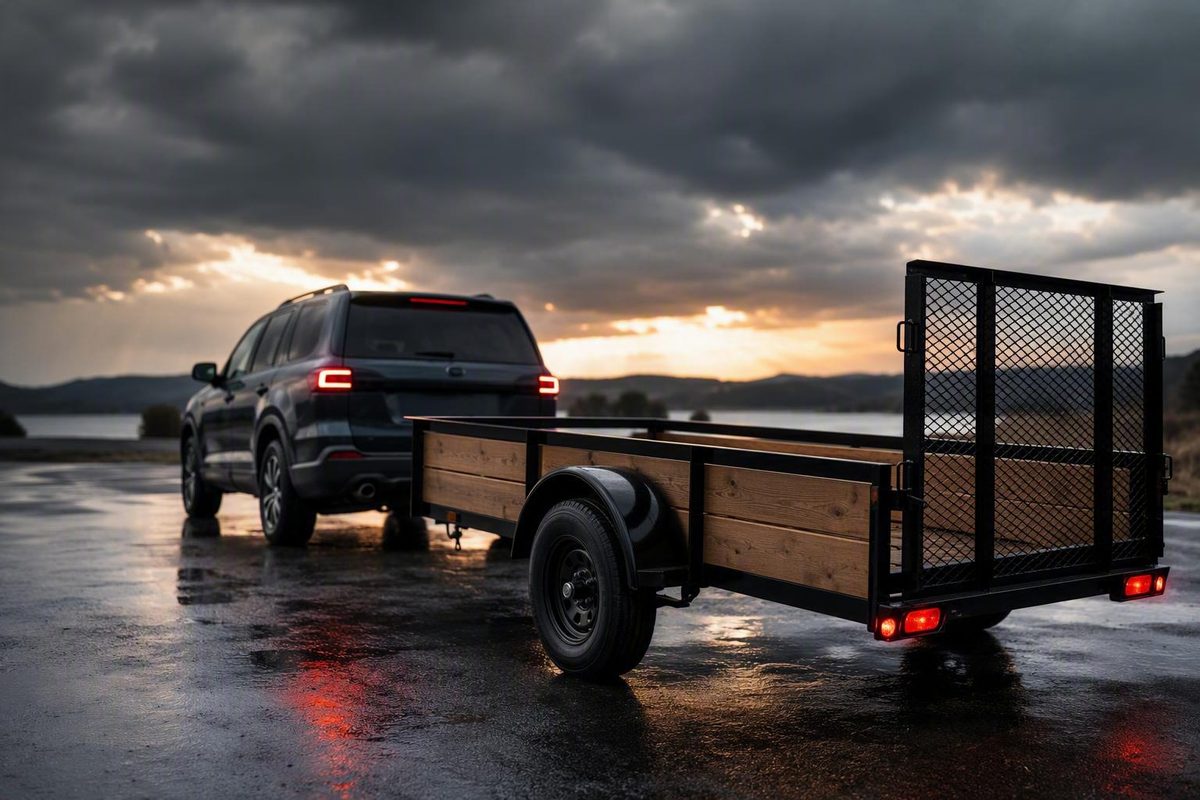
You often do not need a separate liability policy for a personal, non-motorized trailer while it is attached to an insured tow vehicle. That is a common insurance pattern, not a nationwide legal rule. State law, registration status, trailer classification, financing, and personal versus business use can change the answer. The tow vehicle’s liability coverage also generally does not protect your trailer against theft or physical damage. Lenders, lessors, campgrounds, and RV parks may impose their own insurance conditions regardless of state law, according to Farmers’ trailer-insurance guidance.
Before towing or canceling coverage, verify two separate issues: what the law or a contract requires, and what insurance would pay if the trailer or its contents were damaged or stolen. Obtain trailer-specific guidance from the relevant state DMV or insurance regulator, then confirm coverage under the actual policy.
The short answer: separate trailer insurance is not always required
The answer to “Do I have to insure a trailer?” begins with two questions:
- What insurance does the law or a contract require?
- What property and risks do you want insured?
A trailer can be legal to tow without its own policy yet remain uninsured against collision damage, fire, vandalism, severe weather, or theft. The appropriate arrangement may be a separate trailer policy, an endorsement to another policy, or specialized RV or commercial coverage.
| Situation | Coverage or requirement to check | Main concern |
|---|---|---|
| Personal trailer attached to an insured vehicle | Tow vehicle’s liability coverage | May cover damage to others, not the trailer |
| Financed or leased trailer | Loan or lease terms | Physical-damage coverage may be required |
| Travel or camper trailer | Specialized RV coverage | Parked, occupied, and personal-property exposures |
| Trailer used for paid work | Commercial auto and trailer coverage | Personal-policy business-use restrictions |
| Non-owned commercial trailer | Trailer-interchange coverage | Damage while held under an interchange agreement |
Legal compliance and financial protection should not be treated as the same decision. A lender or lessor may require collision and comprehensive coverage to protect its interest in the trailer. A campground or RV park may require proof of insurance as a condition of entry. These are contractual requirements, even if the trailer does not need a separate policy under the applicable state rules.
Liability coverage is not coverage for your trailer
Liability insurance primarily addresses your responsibility for injury or property damage suffered by someone else. If an attached utility trailer swings into another vehicle, for example, the tow vehicle’s liability coverage may respond to the other driver’s covered damage.
That extension is not guaranteed for every trailer, policy, owner, or use. An insurer may distinguish between personal and commercial towing, owned and borrowed trailers, or attached and detached losses. Tow-vehicle liability also generally does not pay to repair the trailer or replace the property being hauled, as explained in Farm Bureau Financial Services’ utility-trailer coverage overview.
Protection for your own trailer requires a separate physical-damage analysis:
- Collision coverage may cover damage caused by an impact with another vehicle or object, including a rollover.
- Comprehensive coverage may cover non-collision losses such as theft, vandalism, fire, hail, wildfire, or severe weather.
- Liability coverage generally does not repair or replace your trailer.
Check whether the trailer is identified by VIN or serial number on the declarations page.
What may apply in common trailer-loss scenarios
Both the event and the trailer’s status at the time of the loss can affect coverage.
| Event | Coverage to check | Common gap |
|---|---|---|
| Attached trailer damages another vehicle | Tow vehicle’s liability | Damage to your trailer may be uninsured |
| Trailer rolls over or strikes an object | Trailer collision coverage | Trailer is not listed or its use is excluded |
| Trailer is stolen or damaged by fire, vandalism, hail, or severe weather | Trailer comprehensive coverage | No physical-damage coverage or loss is below the deductible |
| Unhitched trailer rolls into property | Written liability terms for detached trailers | Attached-trailer extension may not apply |
| Parked or stored trailer is damaged | Trailer or RV policy’s storage provisions | Coverage changes based on location or status |
| Travel trailer is occupied as living space | Specialized RV coverage | Auto coverage does not address all living-space exposures |
Do not assume that coverage applying while the trailer is attached continues after it is unhitched. Treatment of a detached trailer may differ from an accident that occurs during active towing, so ask the insurer to confirm the applicable liability terms in writing.
Travel trailers require additional care because they may be towed, parked, stored, or occupied. Ask what coverage applies at home, in a storage lot, at a campsite, and while the trailer is being used as temporary or seasonal living space.
Trailer type and use can change the answer
Personal utility and cargo trailers. Tow-vehicle liability may apply while the trailer is attached, but separate collision and comprehensive coverage—or an endorsement covering the trailer—may be appropriate if paying for a major repair or replacement out of pocket would create a hardship.
Travel and camper trailers. That does not mean every travel trailer is legally required to have an RV policy.
Business trailers. A trailer used for contracting, landscaping, farming, deliveries, or other paid activity should not be assumed covered by a personal auto policy. Business use may be restricted or excluded, making commercial auto liability and trailer physical-damage coverage important items to investigate.
An owned commercial trailer may need to be scheduled by VIN or serial number, with its type, value, coverages, limits, and deductibles recorded. A business using a non-owned trailer under a written interchange agreement may need trailer-interchange coverage. That protection is distinct from cargo insurance and from physical-damage coverage on an owned trailer, according to this commercial trailer coverage explanation.
Commercial use does not create one universal insurance requirement. The result depends on the jurisdiction, trailer classification, ownership, contracts, operations, and policy wording.
The trailer and its contents are separate insurance questions
Insurance covering the trailer itself usually does not automatically cover everything inside it.
Suppose thieves damage an enclosed cargo trailer and steal the tools stored inside. Comprehensive coverage may pay for covered damage to the insured trailer, subject to the deductible and other terms, but provide no payment for the tools. The trailer and its contents therefore require separate coverage decisions.
Depending on who owns the property and how it is used, investigate:
- Homeowners or renters insurance for certain personal belongings, subject to off-premises limits and exclusions.
- Inland marine or commercial property insurance for business tools, equipment, or other mobile property.
- Cargo insurance for freight or customers’ property being transported.
A trailer policy generally insures the trailer rather than automatically insuring its contents, and other coverage may be needed for personal or business property inside, as State Farm notes in its trailer coverage guidance.
Cargo insurance protects transported property; trailer physical-damage insurance protects the trailer. Neither should be treated as a substitute for the other.
Create two inventories before choosing limits. For the trailer, record the VIN or serial number, purchase price, attached equipment, modifications, and estimated replacement cost. Separately list tools, freight, luggage, electronics, and other belongings, keeping receipts and photographs when available.
How to get a reliable answer for your trailer
Gather these seven items before contacting the DMV, insurance regulator, lender, or insurer:
- State of registration and use: Check the rules where the trailer is registered and where it will regularly operate.
- Classification and registration status: Determine how the state classifies that specific utility, cargo, boat, farm, travel, or commercial trailer.
- Trailer type and gross weight: Weight may affect registration, classification, policy eligibility, or coverage restrictions, although it does not create a universal national insurance rule.
- Ownership or financing: Identify whether the trailer is owned outright, financed, leased, rented, borrowed, or held under an interchange agreement.
- Personal or business use: Disclose paid work, deliveries, contracting, farming, or other commercial activity.
- Attached, detached, parked, and stored coverage: Ask about each status separately.
- Protection for contents: Identify which policy, if any, covers tools, equipment, freight, and personal belongings.
Use trailer-specific state guidance rather than treating a general vehicle-insurance page as conclusive. For example, the California DMV financial-responsibility page states that financial responsibility is required for vehicles operated or parked on California roads. However, that general page does not independently determine the obligation for every non-motorized trailer classification.
North Carolina states that vehicles with valid state registration must maintain continuous liability insurance and advises owners to surrender the plate before canceling required coverage. Its general page does not expressly resolve whether every trailer classification is included or exempt, so owners should request a trailer-specific determination from the North Carolina DMV.
Next, inspect the policy’s declarations page. Confirm whether the trailer’s VIN or serial number appears and which coverages, limits, and deductibles are listed. Review all endorsements and exclusions addressing trailers, business use, weight, value, storage, and non-owned property.
Ask the insurer to answer these questions in writing:
- Does my liability coverage extend to this trailer while it is attached?
- What coverage applies if the trailer becomes unhitched?
- Is the trailer covered while parked or stored?
- Is paid or business use restricted or excluded?
- Are there restrictions based on trailer type, value, or weight?
- What policy covers the contents?
- Must the trailer be listed by VIN or serial number?
- Does coverage apply in every state where I expect to tow it?
Before canceling an existing policy, review the loan or lease agreement, registration status, plate-surrender procedure, and applicable rules concerning insurance lapses. The practical objective is to confirm both legal compliance and protection against loss before the trailer is towed, stored, occupied, or used for business.
Is there a universal trailer-weight threshold that requires insurance?
No. There is no single trailer-weight threshold that controls insurance requirements across every state, insurer, and policy. Weight may affect registration, legal classification, policy eligibility, or whether the trailer must be specifically listed, but it is only one factor. Commercial guidance likewise notes that no universal weight threshold applies across insurers. Ask about weight-based restrictions and review the policy, endorsements, and exclusions rather than assuming a commonly quoted cutoff applies to your trailer.
Does a financed trailer need full coverage?
Farmers identifies financing and leasing terms as factors that can create coverage requirements in its trailer-insurance overview.
Review the finance contract for the required coverages, limits, deductibles, and other conditions, then verify that the policy declarations satisfy those requirements.