
22 min read ·
How to Build a Strong Post-Repair Vehicle Value Claim
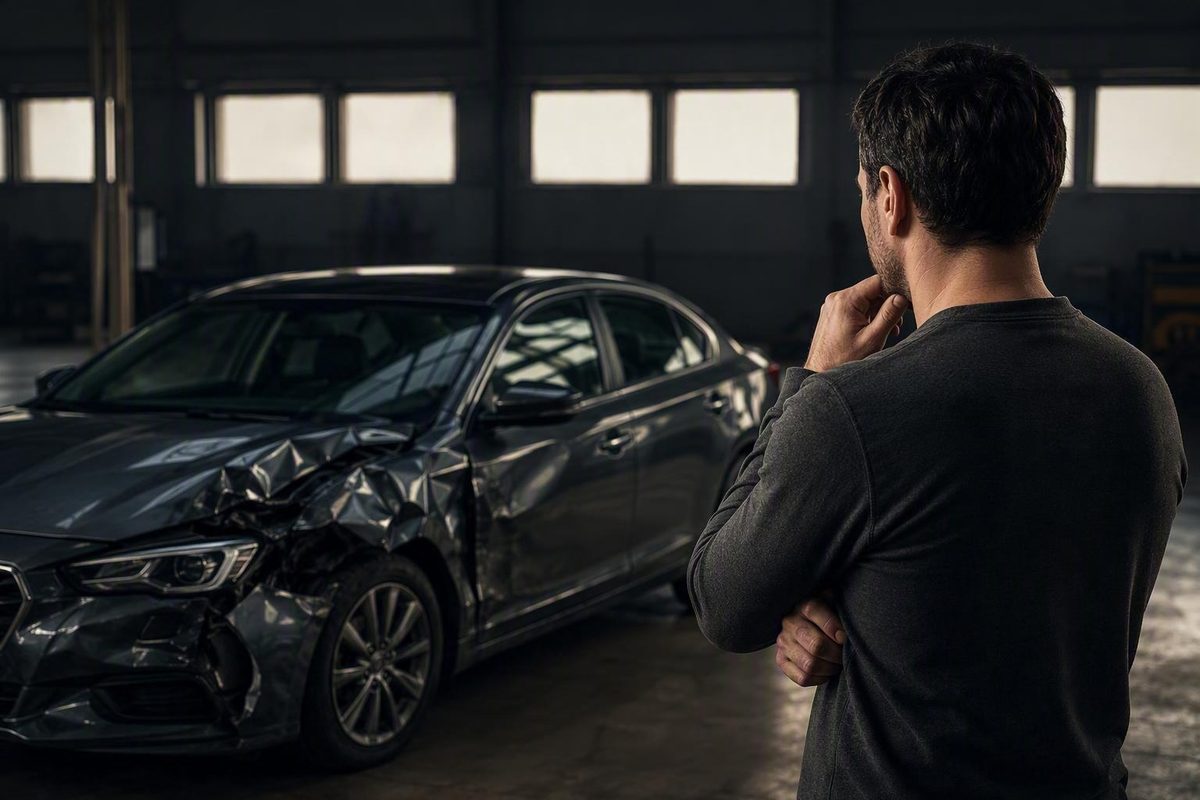
How to build a strong post-repair vehicle value claim
A California diminished value claim is not an automatic supplement to a repair payment. A persuasive demand must address four distinct questions:
- Who was responsible for the collision?
- Can you prove that the collision caused a remaining loss in this vehicle’s market value?
- Does an applicable insurance policy respond to that loss?
- Is the likely recovery worth the cost of appraisal, negotiation, or legal escalation?
Repair invoices establish the cost of restoring damaged components. They do not necessarily prove what informed buyers would pay for the repaired vehicle. Conversely, an accident record does not, by itself, establish a specific dollar loss.
The practical goal is to build a vehicle-specific market case, submit it to the appropriate party, and evaluate each response according to whether it raises a fault, valuation, causation, or insurance-coverage issue. Because several California questions remain dependent on policy wording, case-specific facts, and legal authority not addressed here, this article is a high-level claim-building guide rather than a definitive statement of every available remedy.
What diminished value means after a California collision
Diminished value generally means the measurable difference between a vehicle’s market value before a collision and its lower accident-affected value. In a post-repair claim, the focus is the reduction that allegedly remains after reasonable repairs.
Repair cost and diminished value measure different things:
- Repair cost concerns the expense of restoring physical damage.
- Post-repair diminished value concerns a remaining reduction in market value.
- Unresolved repair damage concerns physical, cosmetic, or functional conditions that were not properly restored.
A competently repaired vehicle may receive lower offers because its accident history is visible to buyers. But that result cannot simply be assumed. The claimant needs evidence that this particular vehicle is worth less because of the collision, rather than because of age, mileage, wear, ordinary depreciation, prior accidents, title history, modifications, or preexisting defects.
Industry and legal commentary commonly divide diminished value into three categories:
- Inherent or stigma diminished value: A market discount that allegedly remains after complete repairs because buyers or dealers treat the accident history as a negative.
- Immediate diminished value: The difference between the vehicle’s pre-collision value and its damaged, pre-repair value.
- Repair-related diminished value: A loss associated with incomplete, deficient, or non-equivalent restoration.
These are useful descriptive categories, but they should not be treated as a guarantee that California law or a particular policy compensates each category. An attorney-authored overview describes the categories and the evidence commonly associated with them.
A pure accident-history claim may depend heavily on matched market comparisons, dealer opinions, actual offers, or a reasoned appraisal. A repair-related claim should identify each remaining condition, such as:
- Paint or finish mismatch
- Residual alignment problems
- Structural variance
- Warning lights or diagnostic faults
- Missing factory functionality
- Non-equivalent replacement parts
- Unrepaired damage
Do not combine physical defects and market stigma into one unexplained percentage. Photograph visible problems, obtain measurements or diagnostic findings where appropriate, and distinguish the amount attributed to incomplete restoration from any discount attributed solely to the accident record.
A separate post-repair theory generally does not fit a total loss because the vehicle is valued rather than repaired and retained. That does not mean a total-loss valuation is necessarily correct. It means the dispute normally concerns the vehicle’s pre-loss value instead of a residual reduction after repair.
Who may be responsible: driver liability and insurance coverage are separate
Do not begin with the assumption that “the insurer has to pay.” Work through the following decision tree.
1. Who caused the collision?
If another driver caused it, the usual practical route is to submit a third-party property-damage demand to that driver’s liability insurer. If responsibility is disputed or shared, develop the fault evidence before spending heavily on valuation.
2. Can you prove a collision-caused loss?
Fault alone does not prove diminished value. You still need reliable evidence connecting a measurable market reduction to this collision.
3. Does the other driver’s liability policy cover the claimed category of loss?
That is a policy-interpretation question. The answer may depend on the definition of property damage, exclusions, limits, conditions, and whether the claim concerns physical damage that could not be fully restored or only post-repair stigma.
4. Does your own policy provide first-party coverage?
That is a separate contract question governed by your collision or other applicable coverage, exclusions, deductible, notice obligations, valuation terms, and dispute procedures.
When another driver caused the crash
A third-party demand is ordinarily sent to the other driver’s insurer because that company handles liability claims against its policyholder. Neither fault nor payment is automatic. The insurer may dispute responsibility, causation, the amount of the alleged loss, or whether its policy covers that type of damage.
The available sources reflect an important coverage tension. Consumer-facing and claim-service materials commonly describe third-party diminished-value demands as available. A case-focused insurance analysis, however, reports that federal courts applying typical California liability-policy wording have rejected coverage for pure stigma after complete restoration. It also reports that the analysis may differ where physical damage prevents restoration to pre-loss condition and notes that California authority on this precise third-party coverage issue is limited. That distinction and the cited decisions are discussed in a law-firm coverage analysis republished by JD Supra.
An insurer’s coverage position and the driver’s potential legal responsibility are analytically different questions. The supplied materials do not establish when a viable direct claim against the driver exists after an insurer denies pure-stigma coverage. Treat that as an issue for a qualified California attorney rather than assuming that a direct lawsuit will succeed or be economically sensible.
Claims under your own policy
First-party collision policies commonly contain diminished-value exclusions. The same case-focused analysis cites California appellate decisions concerning first-party claims and enforcement of express exclusions. Coverage still depends on the language of the actual policy rather than a universal statement that first-party diminished value is always covered or never covered.
Review:
- The definition of covered property damage
- The collision-payment provision
- Any diminished-value or diminution-in-value exclusion
- Valuation provisions
- Deductible terms
- Notice and proof-of-loss requirements
- Applicable limits or sublimits
- Appraisal, arbitration, or other dispute provisions
- Any endorsement that could modify the standard form
Uninsured-motorist property-damage treatment is particularly policy- and fact-specific. The supplied commercial sources make differing or insufficiently supported statements about it, so they do not justify promising that such coverage includes diminished value. Ask the insurer to identify the applicable endorsement and explain its position in writing. Obtain California legal advice if the amount is substantial or the wording is unclear.
California’s damages framework and the pre-accident-value ceiling
A commercial guide reproducing California’s CACI 3903J jury instruction describes the following framework for damage to a repairable vehicle that remains worth less after repairs:
- The reasonable cost of repair; plus
- The difference between the vehicle’s value immediately before the harm and its lower value after repair.
Under the reproduced instruction, the total vehicle-property award may not exceed the automobile’s value immediately before the harm. It describes fair market value through a transaction between informed, willing parties who are not under unusual pressure. Because the supplied source is a commercial appraisal guide rather than the official Judicial Council publication, verify the current instruction and its use notes before relying on it in litigation. The relevant wording appears in the guide’s discussion of CACI 3903J.
Consider this illustration:
| Component | Amount |
|---|---|
| Pre-collision value | $30,000 |
| Reasonable repair cost | $8,000 |
| Credible post-repair value | $26,000 |
| Asserted residual diminished value | $4,000 |
| Repair cost plus residual loss | $12,000 |
The asserted residual loss is $30,000 minus $26,000, or $4,000. Adding the $8,000 repair cost produces $12,000, which remains below the $30,000 pre-harm ceiling.
This example illustrates the arithmetic only. It does not establish fault, insurance coverage, admissibility of the valuation evidence, or the amount an insurer or court would accept.
Comparative responsibility may reduce an otherwise supportable recovery. For example, if a claimant establishes $5,000 in recoverable property loss but is treated as 20% responsible, a proportional reduction would produce $4,000 before considering coverage, limits, prior payments, or other defenses. This 20% reduction example is also described in California diminished-value commentary addressing comparative fault.
Do not assume every vehicle-related loss can be added together. The correct treatment depends on the facts, the governing damages rules, applicable coverage, and payments already made.
How to decide whether the claim is worth pursuing
Before buying an appraisal or preparing a lengthy demand, estimate whether the likely recovery justifies the cost.
Viability checklist
A stronger candidate generally has:
- Clear fault: Reports, photographs, witnesses, video, admissions, or other records support the other driver’s responsibility.
- A measurable post-repair loss: Actual offers, written dealer opinions, matched comparisons, or an appraisal show a meaningful collision-related discount.
- Complete records: The repair file, photographs, specifications, condition records, and vehicle history are available.
- Material vehicle value: The potential market loss is large enough to justify the work and expense.
- A plausible recovery source: There appears to be potentially applicable insurance or another realistically collectible source, without assuming coverage.
- Economical proof: Appraisal, expert, filing, and legal costs will not consume most of the likely recovery.
Vehicle characteristics that may affect valuation include:
- Age and mileage
- Make, model, trim, powertrain, and options
- Pre-collision condition and maintenance
- Prior accidents or repairs
- Salvage, rebuilt, or other title history
- Damage severity and location
- Structural involvement
- Airbag deployment and safety-system repairs
- Parts used and quality of repair
- Whether the accident appears in commercial history reports
- Local supply and buyer demand
A common vehicle can support a strong demand if matched market evidence shows a collision-related discount. An expensive vehicle can support a weak one if the comparisons are poor.
Weaker candidates often involve:
- An older or high-mileage vehicle
- Extensive prior damage
- Uncertain or disputed fault
- Minor repairs with no demonstrated market effect
- Little documentation of pre-collision condition
- Proof costs close to the likely recovery
A generic assertion that “all accident vehicles lose value” does not answer vehicle-specific objections.
If the vehicle still pulls to one side, has measurable structural variance, displays warning lights, lacks restored factory functionality, or has visibly mismatched finishes, obtain technical and repair evidence before reducing the problem to a resale percentage.
For a leased vehicle, do not assume that either the lessor or lessee necessarily owns the claim. Review the lease, ask the lessor how it handles collision-related market loss and return charges, and obtain legal advice if ownership of the claim is disputed.
Finally, a well-supported market loss can still exceed available insurance or the responsible party’s ability to pay. Practical claim value is not simply the amount asserted. It is the amount that can realistically be recovered after proof costs, delay, coverage disputes, and collection risk.
How to calculate and prove the vehicle’s lost market value
The basic calculation is straightforward:
Supported pre-collision fair market value − supported post-repair fair market value = asserted diminished value
The difficult work is establishing reliable inputs and isolating collision-caused loss.
Reconstruct the pre-collision value
A contemporaneous appraisal is uncommon. Reconstruct the vehicle’s value near the collision date using:
- VIN-decoded specifications
- Year, make, model, trim, drivetrain, and options
- Mileage on or near the collision date
- Maintenance and condition records
- Pre-collision photographs
- Prior accident and title history
- Local listings or sales evidence from the relevant period
- Closely comparable vehicles
Match comparables as closely as practical on model year, trim, mileage, equipment, condition, geography, and accident history. If a comparison differs, disclose and explain the adjustment.
For example, do not use a higher-trim vehicle at face value to inflate the subject vehicle’s pre-collision value. A listing from a distant or materially different market may also be a poor indicator of what an informed local buyer would have paid.
Establish the post-repair value
Potential evidence includes:
- A qualified independent appraisal
- A dealer’s written valuation addressing the accident history
- Actual purchase or trade-in offers
- Comparisons between closely matched accident-free and accident-history vehicles
- A completed arm’s-length sale, if one occurs
- Repair-quality evidence establishing unresolved defects
An appraisal is one potentially persuasive method, not a demonstrated legal requirement in every claim and not a guarantee of payment. Ask the appraiser to disclose:
- Whether the vehicle was physically inspected
- The valuation date
- Data sources
- Comparable selection
- Adjustments
- Treatment of accident history
- Treatment of prior damage and ordinary depreciation
- Assumptions about repair quality
Dealer evidence is more useful when it is written and specific. “We would offer less because it was wrecked” is weaker than a dated offer identifying the VIN, mileage, condition, repaired damage, disclosed accident history, and proposed price.
Listings require similar care. An insurer can challenge listings that are stale, geographically remote, mismatched by trim or mileage, or silent about accident history.
Understand—but do not automatically accept—the 17c approach
The 17c method starts with an appraised pre-accident value, applies a 10% base cap, and then applies damage and mileage multipliers. One published example uses:
- $21,600 appraised value
- Multiplied by 10%: $2,160
- Multiplied by a 0.5 damage factor: $1,080
- Multiplied by a 0.6 mileage factor: $648
That calculation appears in a California diminished-value overview explaining the 17c method. It demonstrates the mechanics only. The supplied evidence does not establish 17c as a valuation method required by California law.
A formula may be convenient, but it can flatten vehicle-specific differences. A market method instead asks what informed buyers or dealers would pay for the subject vehicle before and after disclosure of the collision history.
If an insurer uses 17c or another formula, request:
- The starting vehicle value
- The valuation source and date
- Every multiplier
- The damage classification
- The mileage used
- Any cap
- Every deduction
- The policy or claim basis for selecting the method
Then address inaccurate assumptions with matched vehicles, written offers, repair evidence, and a reasoned appraisal. Whatever method you use, separate collision-caused loss from age, mileage, normal wear, prior damage, and ordinary depreciation.
Build the evidence file and written demand
Organize the claim so an adjuster, supervisor, mediator, attorney, or court can understand it without reconstructing the file.
Documentation matrix
| Category | What to collect | What it helps establish |
|---|---|---|
| Fault | Accident or police report, scene photographs, video, witness information, diagrams, correspondence | Who caused the collision and whether responsibility is disputed or shared |
| Physical damage | Pre-repair photographs, estimates, supplements, measurements, diagnostic reports | Severity, location, structural involvement, and collision causation |
| Repair quality | Final invoices, parts descriptions, alignment or structural measurements, scans, post-repair photographs, shop communications | What was repaired and whether documented defects remain |
| Vehicle identity and history | VIN, year, make, model, trim, mileage, options, maintenance records, prior-damage records, history report | The exact vehicle being valued and its preexisting condition |
| Market valuation | Appraisal, matched comparables, dealer opinions, actual offers, adjustment schedule | Pre-collision value, post-repair value, and the asserted accident-caused difference |
Obtain the complete repair file, not only the initial estimate. Supplements may reveal hidden damage, additional labor, structural work, scans, calibrations, or replacement parts relevant to valuation.
The valuation section should explain each comparable and adjustment. Separate accident-free vehicles from those with accident histories. If an actual offer is reduced for reasons unrelated to the collision—such as worn tires, excess mileage, or mechanical problems—account for those factors rather than attributing the entire difference to the crash.
What the demand should contain
A clear written demand normally includes:
- Claimant and responsible-party names
- Collision date and location
- Claim number
- Concise explanation of fault
- Vehicle VIN and specifications
- Repair summary
- Supported pre-collision market value
- Supported post-repair market value
- Calculation of the requested amount
- Explanation of the valuation method
- List of supporting attachments
- Request for a written response by a reasonable date
A concise calculation might read:
Supported pre-collision value: $30,000 Supported post-repair value: $26,000 Requested diminished value: $4,000
Do not hide weaknesses. If the vehicle had prior damage, disclose it and explain how the analysis accounts for it. A reasoned adjustment is more credible than a figure that assumes perfect pre-collision condition despite contrary records.
Preserve every letter, email, portal upload, estimate, offer, and available adjuster communication. Submit the demand through a trackable channel and keep proof of delivery. Commercial claim guidance likewise recommends an itemized written demand supported by dealer documentation or an appraisal, but those recommendations are practical suggestions rather than legal requirements (claim-preparation guidance).
You may request reimbursement of a reasonable appraisal expense, but do not state that appraisal fees are automatically recoverable. The supplied evidence does not establish a universal right to those fees.
This demand format is an organizational template. It is not individualized legal advice and does not guarantee compliance, coverage, admissibility, or payment.
A step-by-step California claim timeline
Step 1: Preserve collision, condition, and fault evidence
Photograph the scene, vehicle damage, mileage, interior and exterior condition, and relevant roadway features. Save video, witness details, the accident report, and communications with drivers and insurers.
Step 2: Complete repairs or document unresolved defects
For a post-repair market analysis, completing reasonable repairs often provides a more stable condition to value. This is a practical valuation strategy, not a universal legal prerequisite.
If repairs cannot be completed or defects remain, obtain a documented assessment identifying what has not been restored. Avoid unreasonable delay. A California law-firm page describes delay in inspection or repair as a potential mitigation concern, although the supplied material does not establish the full legal rule for every diminished-value claim (diminished-value and mitigation commentary).
Step 3: Collect final repair and history records
Request:
- Final invoices
- All supplements
- Parts information
- Diagnostic scans
- Calibration records
- Alignment results
- Structural measurements
- Repair warranties
- Shop communications
Obtain updated vehicle-history information so you know whether and how the collision is being reported.
Step 4: Estimate both market values
Reconstruct the pre-collision value and estimate the post-repair value using closely matched evidence. First conduct a rough viability analysis. Purchase a professional appraisal only if its likely contribution justifies the cost.
Step 5: Send an itemized written demand
Direct the package to the appropriate insurer or potentially responsible party. Explain fault, identify the vehicle, calculate the requested loss, describe the method, attach the proof, and ask for a written response.
Step 6: Request the insurer’s complete reasoning
If the insurer makes a low offer or denies the claim, ask for:
- Its valuation methodology
- Starting value and data date
- Comparable vehicles
- Adjustments and deductions
- Mileage and option data
- Damage classification
- Repair-status assumptions
- Coverage position
- Relevant policy language
- Written explanation of the result
Step 7: Correct errors and supplement the file
Address mistakes involving:
- Trim or equipment
- Mileage
- Prior condition
- Damage severity
- Repair status
- Structural work
- Geography
- Comparable selection
Tie each correction to a document rather than making a general objection.
Step 8: Negotiate from the evidence
Treat the first offer as a position, not a conclusive valuation. Likewise, do not assume your initial estimate is beyond challenge. Focus negotiation on data quality, collision causation, repair status, and vehicle-specific market evidence.
Some practical claim guides report that simpler matters may resolve within months while contested claims can take longer, but no timetable is assured. Act promptly because records can disappear, listings can change, witnesses become harder to locate, and policies may impose notice or procedural obligations (California claim-process overview).
What to do after a low offer or denial
First identify what the insurer is disputing:
- A valuation dispute concerns how much collision-caused loss exists.
- A coverage denial concerns whether the policy responds to that category of loss.
- A liability dispute concerns who caused the collision.
- A causation dispute concerns whether the asserted reduction resulted from this collision.
Each requires a different response.
If the valuation is too low
Request the complete calculation and comparable set. Verify that the insurer used the correct trim, options, mileage, condition, location, accident severity, and repair information.
Replace weak comparables with closer ones. Add a written dealer valuation, actual purchase or trade-in offers, repair-quality evidence, or an appraisal that explains rather than merely states the loss.
If the insurer relies on a formula, show why specific market evidence better represents the subject vehicle. Do not reject the formula solely because it produces a low result; identify the inaccurate inputs or assumptions.
If the insurer says the vehicle was fully restored
Identify the actual theory of the claim.
If physical defects remain, document them with photographs, measurements, diagnostic results, and repair-shop or expert findings. If the claim rests only on accident-history stigma, provide evidence of the market discount tied to that history.
A stack of unrelated listings does not answer a policy-coverage objection. Conversely, a general coverage denial does not resolve whether physical repair defects remain. Respond to the issue the insurer actually raised.
If the insurer cites prior damage, age, or mileage
Acknowledge legitimate deductions, then isolate the effect of this collision.
Use pre-collision photographs and maintenance records to establish prior condition. Select comparisons with similar mileage. Disclose earlier repairs. The relevant valuation question is not whether the vehicle had already depreciated, but whether this collision caused an additional measurable reduction.
If fault is disputed
Supplement the accident report with photographs, witness information, video, diagrams, vehicle damage patterns, and other available records. A sophisticated appraisal cannot cure an unresolved fault problem.
Escalation options
Depending on the amount, policy, and type of dispute, possible next steps may include:
- Review by an adjuster’s supervisor
- A corrected or supplemented demand
- Further negotiation
- Mediation
- Arbitration if the applicable agreement or policy makes it available
- Small claims court
- Civil litigation
- Advice from a qualified California attorney
Before selecting small claims, verify the current monetary limit, eligibility rules, procedures, attorney-participation restrictions, and appeal rights through current California Courts information. The supplied commercial summaries are not adequate authority for quoting current court limits or procedures.
Professional help may be uneconomic for a modest property-only disagreement. It may be more justified when the alleged loss is substantial, bodily injury is also involved, ownership is disputed, a public entity may be responsible, policy wording is complex, or a deadline may be close.
If the claimed loss may exceed available liability coverage, consult qualified counsel before accepting a policy-limits settlement or signing a release. The supplied evidence does not establish how such an agreement would affect every possible remaining claim, and no direct recovery or collectability should be assumed.
Deadlines, exceptions, and final claim checks
Multiple supplied commercial and law-firm sources identify a general three-year period for filing a California property-damage lawsuit. A recent law-firm overview distinguishes that reported lawsuit period from the practical advice to submit an insurance claim promptly (discussion of California filing timing).
Because the supplied materials do not include the controlling statute or official procedural guidance, verify the current rule and its application before relying on that period. Do not translate it into “I always have three years to send an insurance demand.”
The following are separate events and may be governed by different requirements:
- Reporting the collision
- Giving contractual notice
- Cooperating with an investigation
- Submitting proof of loss
- Making a settlement demand
- Invoking a policy dispute procedure
- Preserving a claim involving a public entity
- Filing a lawsuit
Government defendants, accrual disputes, tolling, contractual terms, releases, and other exceptions may create different or shorter requirements. The supplied evidence does not establish those details. Act promptly and obtain qualified California advice if a deadline is close, the collision is old, or a public entity may be involved.
Before submitting or escalating the claim, confirm:
- [ ] Who owns the vehicle and the asserted loss
- [ ] Whether a lender or lessor has relevant rights
- [ ] What evidence supports fault
- [ ] Whether repairs are complete
- [ ] Which physical or functional defects remain
- [ ] Which policy provisions may apply
- [ ] Whether the policy contains a diminished-value exclusion
- [ ] Applicable notice, proof, and dispute requirements
- [ ] The vehicle’s supported pre-collision value
- [ ] Its supported post-repair value
- [ ] Prior damage, title history, mileage, and ordinary depreciation
- [ ] The exact amount requested and its calculation
- [ ] Potentially applicable limits and realistic collectability
- [ ] Proof that the demand was delivered
- [ ] The requested response date
- [ ] The date by which legal advice is needed
Insurance Roster describes its guides as plain-language starting points and advises readers to confirm policy- and jurisdiction-specific details before filing a claim (About Insurance Roster). Its terms also state that the site provides general insurance education, not insurance, legal, or financial advice.
Frequently asked questions
Can I file a diminished value claim if my car was fully repaired?
Potentially. A repaired vehicle may support a demand if credible market evidence shows that its collision history caused a measurable remaining loss. Full repair does not itself prove diminished value.
Separate accident-history stigma from residual repair defects. If the vehicle has paint mismatch, alignment problems, structural variance, diagnostic faults, non-equivalent parts, or lost functionality, document those conditions independently.
Coverage presents a separate question. The cited case-focused analysis reports that federal courts interpreting typical California liability-policy wording have rejected coverage for pure stigma after complete restoration, while noting that the result may differ where physical damage prevents full restoration. It also emphasizes that California law in this area is limited (coverage analysis and cited decisions).
Can I claim diminished value from my own California auto insurer?
You can present a claim, but payment depends on the policy. First-party collision policies commonly exclude diminished value, and the supplied legal analysis cites California appellate authority concerning enforcement of express exclusions.
Review the collision-payment language, valuation terms, exclusions, notice conditions, deductible, and dispute provisions. Do not assume universal coverage or universal noncoverage.
Any potential uninsured-motorist property-damage route is also policy-specific. Ask for the applicable endorsement and a written coverage explanation rather than relying on a generalized online statement.
Do I need an independent appraisal for a California diminished value claim?
Not necessarily. The supplied evidence does not establish an independent appraisal as legally mandatory in every case.
An appraisal may be useful when:
- The likely loss is substantial
- The vehicle is rare or difficult to compare
- Structural damage occurred
- Repair quality is disputed
- The insurer challenges your market evidence
Written dealer valuations, actual offers, carefully matched comparisons, repair records, and vehicle-history evidence may also support a demand. The best method depends on the vehicle, the dispute, and whether the likely recovery justifies the appraisal cost.
Is the 17c diminished value formula required in California?
The supplied evidence does not establish 17c as a California-mandated formula. It is a formula-based method that applies a 10% base cap followed by damage and mileage multipliers.
If an insurer uses it, request every input, multiplier, classification, cap, and deduction. You may respond with stronger vehicle-specific evidence, including matched local comparisons, dealer valuations, actual trade-in offers, repair documentation, and a reasoned appraisal.
How long do I have to pursue a diminished value claim in California?
Several supplied sources identify a general three-year period for filing a California property-damage lawsuit, but the supplied evidence does not include the controlling statute or establish every exception. The reported lawsuit period is not necessarily the deadline for reporting the collision, giving policy notice, submitting an insurance demand, following a contractual procedure, or preserving a claim involving a government defendant (California filing-timing overview).
Act promptly. If the collision is old, a public entity may be involved, a release has been proposed, or the deadline is uncertain, consult a qualified California attorney rather than relying only on the general period reported by commercial sources.
The practical test for a viable claim
A viable diminished-value demand needs four things: a potentially responsible party, a measurable collision-caused market loss, credible vehicle-specific evidence, and a cost-effective path to recovery.
Organize the fault, repair, history, and valuation records. Read the relevant policy language. Distinguish physical repair defects from accident-history stigma. Ask the insurer to explain its valuation and coverage position in writing, and act promptly.
Seek qualified California advice when coverage, ownership, public-entity procedures, substantial damages, direct recovery, settlement terms, or litigation deadlines are disputed.