
4 min read ·
What Does Comprehensive Insurance Cover? Theft, Weather and More
Comprehensive auto insurance generally covers theft, hail, flood and other non-collision losses. See exclusions, deductibles and payout limits.
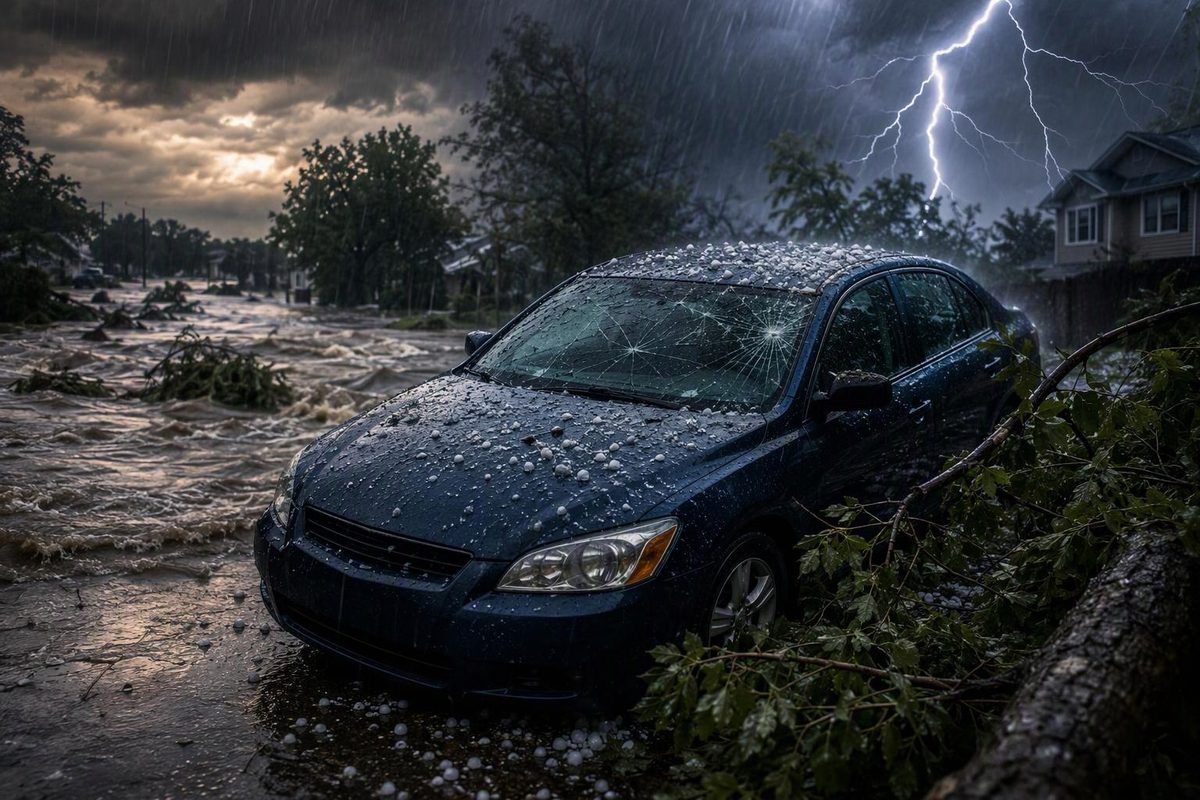
Comprehensive auto insurance generally covers theft and damage to your car from fire, vandalism, hail, flood, falling objects, broken glass and contact with animals. It protects the vehicle—not every loss connected with owning or driving it. Progressive’s comprehensive coverage explanation lists these common covered events. The Texas Department of Insurance’s auto guide also calls it “other than collision” coverage.
This guide concerns U.S. personal auto insurance. Your policy’s wording, endorsements and state rules determine the exact coverage.
Damage comprehensive usually covers
For your own car, check that comprehensive coverage is listed for that vehicle on your declarations page.
| Event | What comprehensive may pay for |
|---|---|
| Vehicle theft | Payment based on the car’s insured valuation if it is not recovered; theft-related damage if it is recovered |
| Vandalism | Repairs for damage such as keyed paint or smashed windows |
| Fire or explosion | Eligible damage to the vehicle |
| Hail, wind or flood | Storm-related body, glass or other vehicle damage |
| Falling objects | Damage from a tree limb or another object falling onto the car |
| Glass damage | Eligible windshield or window repairs or replacement |
| Contact with an animal | Damage from hitting a deer or another animal |
These are common examples, not a promise that every claim involving them qualifies. Progressive’s coverage explanation lists these events, including rocks kicked up by other vehicles. Its theft guide distinguishes unrecovered vehicles from theft-related damage to recovered cars.
The cause matters more than whether you were driving or parked. Hitting a deer is generally comprehensive; hitting another car or a fixed object is generally collision. Comprehensive is not simply “parked-car insurance,” and collision is not limited to crashes you caused. Progressive explains that collision protects your car when it hits another vehicle or object, regardless of fault.
What comprehensive does not cover
Comprehensive is not the same as “full coverage.” That phrase is informal shorthand, often meaning liability plus comprehensive and collision—not a guarantee that everything is insured. Progressive explains the distinction.
Important gaps include:
- Ordinary crash damage to your car. This generally falls under collision, not comprehensive.
- Injuries or damage you cause to others. Those are liability coverage issues. Your own accident medical expenses involve other coverages, such as medical payments or personal injury protection. TDI’s coverage guide separates these benefits.
- Wear, maintenance and mechanical breakdown. Comprehensive is not a repair warranty. For example, Part V of AssuranceAmerica’s Texas personal car policy form excludes wear and tear and mechanical or electrical failure, but makes an exception when the damage results from another covered loss. An engine damaged by a covered flood is therefore a different question from an engine that simply wears out.
- Personal belongings stolen from the car. A laptop or handbag generally is not covered by auto comprehensive insurance. Homeowners or renters insurance may apply, subject to its own terms and deductible. Progressive’s theft guide distinguishes vehicle theft from stolen belongings.
Custom equipment, excluded drivers, intentional damage and delivery or rideshare use can also create coverage gaps. Part V of the AssuranceAmerica Texas form illustrates such restrictions and exceptions. Check your own policy’s provisions before relying on it.
How much does comprehensive pay?
For a covered repair, the insurer generally pays the approved repair amount minus your comprehensive deductible, subject to the policy’s valuation limits. If eligible damage is below that deductible, there is ordinarily no payout. Progressive’s coverage overview explains the deductible and actual-cash-value limit.
For a stolen or totaled vehicle, standard coverage generally uses actual cash value (ACV): the vehicle’s value after accounting for factors such as age, mileage and condition. It does not automatically pay the price of a brand-new replacement or your remaining loan balance. TDI explains repair and total-loss valuation, and Progressive describes ACV for stolen vehicles.
Example: hail damage with a $500 deductible
Assume your car has an ACV of $12,000, your comprehensive deductible is $500, and the insurer approves $3,000 in hail repairs.
- Covered payout: $3,000 − $500 = $2,500.
- Valuation limit: Standard coverage is generally constrained by the car’s ACV; it is not unlimited repair or replacement funding.
- Exclusion: An unrelated worn-out alternator is not added to the hail claim just because the car is already at the shop.
If the same car were stolen and not recovered, a simplified ACV settlement would be $11,500 after the deductible, before applicable taxes, fees or other adjustments. If you owed $15,000, comprehensive would not automatically erase the shortfall. GAP coverage for eligible negative equity is a separate issue.
What to check before buying or dropping it
Comprehensive is generally optional under state law, but a lender or leasing company may require it. Progressive’s coverage overview notes both points.
Compare quotes using the same comprehensive deductible, then check:
- The correct vehicle: Is comprehensive listed for that car on the declarations page?
- Glass terms: Does glass use the ordinary deductible, a separate deductible or different repair terms?
- Valuation and equipment: Is payment based on ACV, and are modifications subject to special limits?
- Your financial exposure: Compare the premium with the car’s value minus the deductible—and whether you could replace it yourself after theft or a major weather loss.
A higher deductible leaves more of each covered loss with you. A lower premium is useful only if the resulting out-of-pocket amount is manageable.