
4 min read ·
Umbrella Insurance Can Cover Property Damage Liability—not Your Own Repairs
Umbrella insurance may pay for damage you cause to others’ property. See how underlying limits, deductibles and exclusions affect payment.
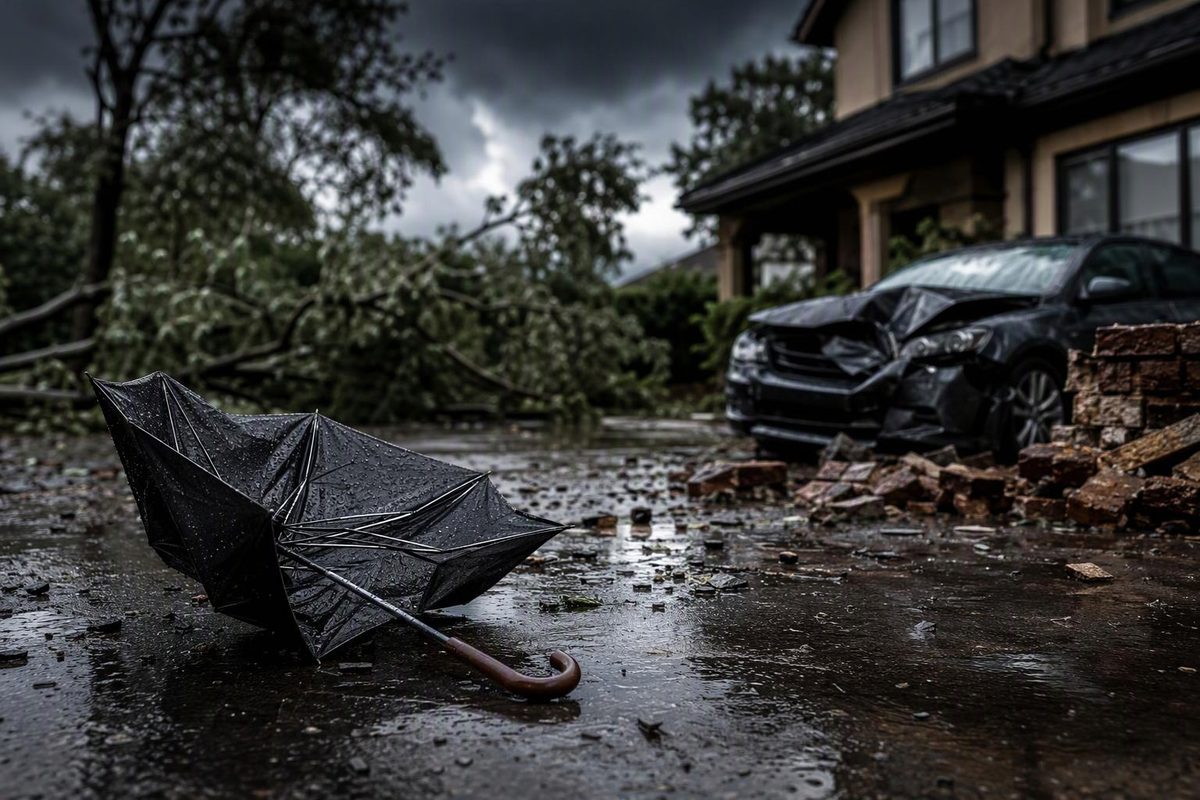
Yes—a personal umbrella policy can cover property damage you are legally responsible for causing to someone else’s property. It generally does not pay to repair your own home, car or belongings. It usually adds liability coverage above your auto, homeowners or renters liability limits. The NAIC’s umbrella insurance guide confirms both the property-damage liability protection and the exclusion for damage to your own home or vehicle.
The key question is not simply “Was property damaged?” It is “Whose property was damaged, and am I legally liable?” This article addresses U.S. personal umbrella coverage, not commercial umbrella insurance. Terms vary by insurer and state.
Which property damage may qualify?
A covered claim might involve:
- A driving accident: You crash into a storefront, damaging the building and merchandise.
- Damage to a neighbor’s property: Your negligent actions cause water damage to the downstairs neighbor’s unit.
Allstate gives both examples, explaining that umbrella coverage may pay after the applicable underlying liability limit is exhausted. The accident must also involve a covered person and meet the umbrella policy’s terms.
By contrast, hail damage to your car or damage to your own walls is not an umbrella liability claim. An umbrella does not increase your dwelling, personal-property or vehicle physical-damage limits. Nor does it fill a gap merely because your own-property claim was excluded or exceeded its limit.
Example: how the limit and deductible affect payment
Hypothetical covered accident: You accidentally drive into a store. Assume you are legally responsible for $450,000 in covered property damage, with no injuries, defense expenses or other applicable insurance included in this calculation.
| Policy detail | Assumption and effect |
|---|---|
| Auto property-damage liability limit | $100,000; the auto insurer pays that amount |
| Auto liability deductible | $0 in this example |
| Required underlying limit | $100,000, which you maintained |
| Umbrella limit | $1 million available for this accident |
| Umbrella payment | $350,000, assuming the claim is covered and no additional retention applies |
| Excluded damage | Repairs to your own car are not part of this umbrella payment |
The umbrella adds liability protection; it does not turn the accident into coverage for everything damaged. These limits are example assumptions, not universal insurer requirements.
If your own car has a covered $8,000 collision loss and a $500 collision deductible, that separate coverage would pay $7,500 under those assumptions. This follows the collision deductible mechanism explained by Progressive. The umbrella would not pay the $500 deductible or the car repairs.
An underlying-policy denial does not automatically mean umbrella coverage
Some umbrellas cover certain liabilities that an underlying policy does not cover. For those claims, a self-insured retention may apply: an amount you must bear before the umbrella pays. But an umbrella’s own exclusion can still bar payment entirely.
For a concrete wording example, American Alternative Insurance Corporation’s published Illinois sample form defines its retained limit using the greater of the scheduled underlying liability limit plus other collectible insurance, or the declarations-page self-insured retention when the umbrella applies but required primary insurance does not cover the loss. It also makes the insured responsible for a shortfall if required underlying limits are not maintained. The sample contains a June 2009 base form and January 2018 Illinois endorsement; it is an illustration, not a statement of every insurer’s current terms.
Do not lower your auto liability limit assuming the umbrella will fill the difference. Verify where the umbrella starts paying. For the broader mechanism, see how umbrella insurance works.
Exclusions worth checking before buying
“Someone else’s property” is necessary, but it is not enough. Check these situations specifically:
- Borrowed, rented or controlled property. The Illinois sample form excludes damage to property a covered person rents, occupies, uses, has custody of, controls or manages. Ask specifically about a borrowed vehicle, rented equipment or damage to your rental unit; other forms may contain different exceptions.
- Business activities. Personal umbrellas generally exclude business-related losses, including many home-business liabilities.
- Intentional damage and contractual liability. Deliberately damaging property, or accepting liability solely through a contract, may fall outside coverage. Allstate describes these general exclusions.
Before accepting a quote, ask the insurer to identify the property-damage exclusions, required underlying limits, any self-insured retention, and whether the relevant drivers, vehicles and premises qualify.
If a loss has already occurred and may reach the umbrella, notify both insurers promptly rather than waiting for the underlying payment. Follow your policies’ notice and settlement-consent requirements: the Illinois sample requires prompt notice of a loss likely to involve the umbrella and written consent before payments or obligations.