
16 min read ·
What Corrective Lenses Are and How They Help You See Clearly
Contacts are also an everyday form. Glasses and contacts are powered lenses that compensate for a vision-focusing problem and make sight clearer while worn.
Corrective lenses: the meaning in plain language
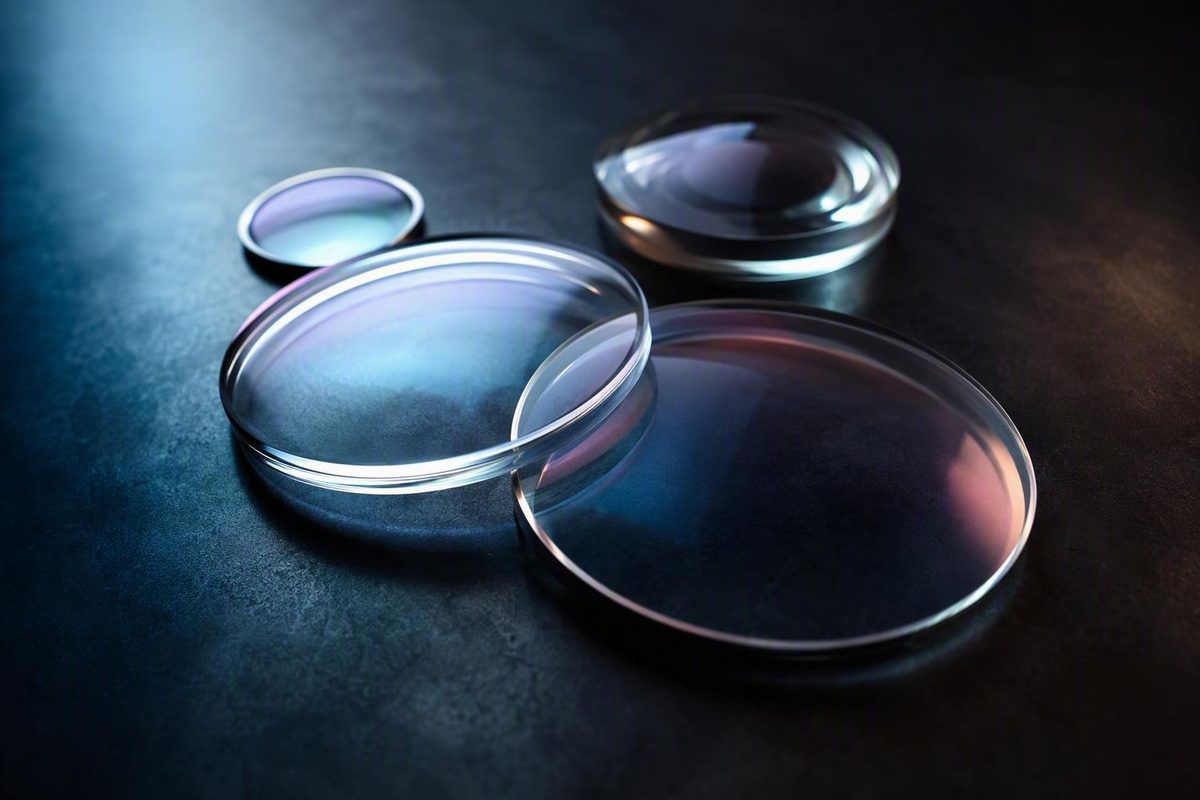
Corrective lenses are lenses with optical power that redirect incoming light so it focuses more accurately on the retina, producing clearer vision. Prescription eyeglasses and contact lenses are the most common everyday examples. Glasses sit in front of the eyes, while contacts rest directly on the eye’s surface. Both compensate for problems with how the eyes focus light, as explained in Associated Retina Consultants’ overview of corrective lenses.
The word corrective describes what the lenses do while they are being used. They compensate for a focusing problem or, in some prescriptions, help address an eye-alignment problem.
The singular and plural forms may be used in several ways:
- A corrective lens can mean one lens made for one eye.
- Corrective lenses can mean the two lenses in a pair of glasses, a pair of contacts, or the general category of lenses used to improve vision.
Some broad classifications also include intraocular lenses, which are surgically implanted inside the eye. That broader usage does not make implanted lenses interchangeable with glasses or contacts. Implantation involves surgery and a distinct medical decision-making process, while ordinary glasses and contacts are removable. A general classification of corrective lenses lists glasses, contacts, and intraocular lenses as separate forms.
The term by itself does not tell you whether a lens is single-vision, bifocal, progressive, multifocal, toric, or another design. It also does not reveal the prescription strength, diagnosis, material, coating, or insurance status. Those details must come from the prescription or the document in which the phrase appears.
Plain-language takeaway: Corrective lenses are powered lenses—usually prescription glasses or contacts—that compensate for a vision-focusing problem so you can see more clearly while using them.
How corrective lenses make blurry vision clearer
Clear vision depends on incoming light being focused appropriately on the retina, the light-sensitive tissue at the back of the eye. A refractive error is a focusing mismatch: the eye’s optical system does not bring light to the focus needed for a clear image on the retina.
A corrective lens changes the path of light before the eye completes the focusing process. Its optical power compensates for the mismatch, moving the focal point from in front of or behind the retina toward the appropriate position on the retina.
A simplified way to picture the process is:
- Light reflects from an object and travels toward the eye.
- A glasses or contact lens bends or redirects that light.
- The eye focuses the redirected light.
- The adjusted focal point falls more accurately on the retina.
- The image appears clearer.
For myopia, or nearsightedness, the uncorrected focal point falls in front of the retina, making distant objects appear blurry. Minus-power correction changes the light path to compensate. With hyperopia, or farsightedness, the focal point would otherwise fall behind the retina, and plus-power correction may be used. Convex lenses converge light and are associated with plus correction; concave lenses diverge light and are associated with minus correction. These optical relationships are summarized in Bright Eyes Optometry’s explanation of corrective lenses.
Convex and concave are broad descriptions of lens shape and optical effect. A finished prescription lens can be more complex, particularly when it includes astigmatism correction, multiple viewing zones, or prism.
Specialty approaches can work differently—for example, orthokeratology temporarily changes corneal shape—but that does not alter the ordinary meaning of corrective lenses.
The vision problems corrective lenses commonly address
Corrective lenses most often compensate for refractive errors: myopia, hyperopia, astigmatism, and presbyopia. Prism may also be incorporated into some prescriptions for selected eye-alignment problems or double vision. The common conditions and associated prescription features are summarized below, consistent with VSP’s overview of refractive errors and prescription correction.
| Condition or problem | Plain-language effect | Prescription or lens feature commonly associated with it |
|---|---|---|
| Myopia | Nearsightedness: nearby objects may be clearer than distant ones | Minus sphere power |
| Hyperopia | Farsightedness: clarity or focusing effort may be more difficult, particularly at near distances | Plus sphere power |
| Astigmatism | Focus varies by orientation, which can blur or distort vision | Cylinder and axis values; toric correction |
| Presbyopia | Reduced ability to focus at near distances | Add power; reading, bifocal, progressive, or multifocal design |
| Selected alignment problems or double vision | The eyes may not direct images together as needed | Prism correction |
Myopia
Myopia means nearsightedness. A person with myopia may see nearby objects more clearly than distant ones. Minus-power correction compensates for the eye’s refractive focus and can make distant details clearer.
A prescription might show a sphere value such as -2.00. The minus sign identifies myopia correction. That number alone does not describe the person’s complete vision, eye health, or diagnosis.
Hyperopia
Hyperopia means farsightedness. Plus-power lenses are used to compensate for its refractive focus. Although the name suggests that distant vision is always clear, the practical effect can vary. A person may have difficulty at near distances, at distance, or with the focusing effort required for either.
Astigmatism
Astigmatism requires correction that varies by orientation rather than applying the same power in every direction. A prescription commonly represents this with:
- CYL, or cylinder, for the amount of astigmatism correction; and
- Axis, for the orientation of that correction.
A toric lens is configured to provide orientation-dependent correction. Toric designs can be used in eyeglasses or contact lenses; the word does not mean “contact lens only.”
Presbyopia
Presbyopia is a near-focusing problem commonly addressed with additional near power. Depending on the person’s needs, that correction may be supplied through reading glasses, bifocals, trifocals, progressive lenses, or multifocal contacts.
Prism correction
Prism differs from ordinary refractive correction. The American Academy of Ophthalmology’s prescription guide notes that prism may be included for some people with double vision.
These descriptions are not a way to diagnose yourself. Blurry near or distance vision can have multiple causes, and symptoms alone cannot establish which prescription—or whether any corrective lens—is appropriate. An eye examination is needed to identify the cause and measure the required correction.
Lens form and lens design are not the same thing
Eyewear terms can sound like competing categories when they actually answer different questions. It helps to separate three concepts:
- Placement: Where is the lens worn?
- Optical purpose: What problem is it intended to compensate for?
- Correction design: How are its powers arranged?
“Contact” describes placement, “toric” describes astigmatism correction, and “multifocal” means that more than one viewing power is provided. These terms are compatible rather than mutually exclusive.
| Term | What it describes | Placement | Typical purpose |
|---|---|---|---|
| Eyeglasses | Lens form or placement | In a frame in front of the eyes | Removable refractive or prism correction |
| Contact lenses | Lens form or placement | Directly on the eye surface | Removable refractive correction, including some toric and multifocal designs |
| Single-vision | Arrangement of power | Glasses or contacts | One viewing range |
| Bifocal | Arrangement of powers | Commonly glasses | Two viewing ranges, usually distance and near |
| Trifocal | Arrangement of powers | Commonly glasses | Distance, intermediate, and near ranges |
| Progressive | Gradual arrangement of powers | Commonly glasses | Continuous transition among distance, intermediate, and near |
| Multifocal | Broad category for more than one viewing power | Glasses or contacts | Vision at multiple ranges |
| Toric | Orientation-dependent correction | Glasses or contacts | Astigmatism |
| Orthokeratology | Specialty contact-lens approach | Worn on the eye, generally overnight | Temporary corneal reshaping for daytime correction |
| Intraocular lens | Surgically implanted lens form | Inside the eye | Medical or surgical lens replacement or correction |
Glasses versus contacts
The distinction between glasses and contacts concerns placement. Eyeglass lenses are held a short distance in front of the eyes by a frame. Contact lenses rest directly on the eye surface. Placement affects both optics and fitting, which is why a glasses prescription and a contact-lens prescription cannot automatically be substituted for one another.
Power arrangement
Terms such as single-vision, bifocal, trifocal, progressive, and multifocal describe the number or arrangement of viewing powers:
- Single-vision supplies one viewing range.
- Bifocals divide the lens into two primary zones.
- Trifocals add a third zone.
- Progressives change power gradually across the lens.
- Multifocal is the broader category for designs that provide more than one viewing power.
Toric correction
“Toric” describes how astigmatism correction is configured. It is separate from the number of viewing ranges. A lens can therefore be toric and single-vision, or toric and multifocal.
Orthokeratology
Orthokeratology, often shortened to ortho-k, is a specialty contact-lens approach in which lenses are generally worn overnight to reshape the cornea temporarily, with the goal of providing correction during the day. This differs from conventional glasses and contacts, which redirect light while they are being worn. Individual suitability requires professional assessment; it is not an appropriate routine substitute for everyone. The distinction is described in Total Vision Solana Beach’s comparison of corrective-lens types.
Implanted lenses
An intraocular lens can fall within a broad classification of optical lenses associated with vision correction, but it requires surgery. It should not be treated as merely another removable eyewear choice. Decisions about implanted lenses belong in a clinical and surgical context rather than an ordinary glasses-versus-contacts comparison.
Common corrective-lens designs compared
Lens design determines how optical power is distributed. No design is universally best. The suitable choice depends on the prescription, required viewing ranges, daily activities, comfort, adaptation, and professional fitting.
Single-vision lenses
A single-vision lens uses one prescription across the lens for one viewing range. Depending on the prescription, that range may be:
- Distance, such as seeing road signs;
- Intermediate, such as viewing a computer at a particular working distance; or
- Near, such as reading.
Bifocal lenses
A bifocal contains two distinct power zones, commonly one for distance and another for near. Traditional bifocals usually have a visible line separating those zones. The wearer looks through different parts of the lens for different tasks.
Trifocal lenses
A trifocal adds an intermediate zone between the distance and near portions. It therefore supplies three defined viewing ranges through separate areas of the lens.
Progressive lenses
A progressive lens changes power gradually from distance through intermediate to near correction. It does not have the visible dividing lines found in traditional bifocals and trifocals. Because the powers blend through areas of the lens, its viewing zones and visual experience differ from those of lined designs.
Multifocal lenses
Multifocal is the broad category for lenses that supply more than one viewing power. Bifocals, trifocals, and progressives are all multifocal in this general sense, but the terms do not describe identical designs. Multifocal contact lenses use their own power arrangements to provide vision at different ranges.
Toric lenses
A toric lens supplies correction that varies by orientation to compensate for astigmatism. That classification is independent of viewing distance. A toric lens can be designed for one viewing range or combined with a multifocal arrangement where appropriate. These distinctions are summarized in Cannon EyeCare’s corrective-lens design guide.
Plano lenses
A plano lens has zero optical power.
Labels such as “protective,” “tinted,” or “filtering” do not by themselves mean that a lens is corrective. The relevant question is whether the lens has optical power or another prescribed component intended to compensate for a vision problem.
What the numbers on a corrective-lens prescription mean
An eye prescription provides the measurements needed to make lenses for each eye. The right and left eyes can require the same correction, but they can also need different powers or prescription components.
The common fields below are explained in the American Academy of Ophthalmology’s guide to eyeglass prescriptions.
| Term | Meaning |
|---|---|
| OD | Right eye |
| OS | Left eye |
| OU | Both eyes |
| SPH or Sphere | Spherical power for myopia or hyperopia |
| CYL or Cylinder | Amount of astigmatism correction |
| Axis | Orientation of astigmatism correction |
| Add | Additional near power |
| Prism | Separate correction for selected alignment problems or double vision |
| D or diopter | Unit of lens power |
OD, OS, and OU
The rows on a prescription often identify the eye:
- OD means the right eye.
- OS means the left eye.
- OU means both eyes.
These abbreviations identify where a measurement applies. They do not describe the type or strength of the correction.
SPH or sphere
SPH is the spherical lens power used to correct myopia or hyperopia:
- A minus sphere value indicates myopia correction.
- A plus sphere value indicates hyperopia correction.
Sphere power is measured in diopters. A value farther from zero generally represents stronger optical correction. For example, -4.00 D has more minus power than -1.00 D. Prescription strength, however, is not a stand-alone measure of eye health or total visual ability.
CYL and axis
CYL states the amount of astigmatism correction. Axis specifies the orientation of that correction on a scale from 1 to 180 degrees. Axis is a direction, not an additional measure of prescription strength.
Cylinder and axis work together.
Add
Add means additional near power. It may be used to create the near portion of bifocals, trifocals, or progressive lenses.
Prism
Prism is a separate component that may be prescribed for selected alignment problems or double vision. A prism entry may also include a base direction. It should not be interpreted as ordinary near- or farsighted correction.
Illustrative prescription example
Consider this simplified, hypothetical entry:
| Eye | SPH |
|---|---|
| OD | -2.00 |
| OS | -1.50 |
This example specifies minus sphere correction for both eyes, with different powers for the right and left eyes. It does not provide enough information to assess a real person, recommend lenses, or describe eye health. If CYL, Axis, Add, or Prism were needed, those values would appear in additional fields.
Prescription formats vary, and a blank field may have a particular meaning in context. An eye-care professional or dispensing provider can explain how the entries apply to an individual prescription.
Why glasses and contact-lens prescriptions are different
Eyeglass and contact-lens prescriptions should not be treated as interchangeable. The central reason is placement:
- Glasses sit in front of the eyes.
- Contacts rest directly on the eye surface.
That difference can affect the required optical power in some prescriptions. Contact lenses must also be fitted to the eye rather than simply mounted in a frame.
A contact-lens prescription may include:
- Sphere or power;
- Cylinder and axis, if astigmatism correction is needed;
- Add power, where applicable;
- Base curve, relating to lens fit;
- Diameter, describing lens width;
- Material information; and
- A specific brand when it forms part of the prescribed fit.
An eyeglass prescription does not ordinarily contain enough information to determine those contact-lens characteristics. Even if some power values look similar, that does not establish that a particular contact lens fits properly or is suitable for the wearer. Contact prescriptions can include base curve, diameter, material, and brand in addition to corrective values, as described in VSP’s comparison of glasses and contact-lens prescriptions.
A contact-lens fitting therefore involves more than copying numbers from an eyeglass prescription. An eye-care professional must evaluate the correction and determine an appropriate fit for the individual and the selected lens.
What to do when you see “corrective lenses” on a form or policy
When “corrective lenses” appears on a medical form, licensing document, benefits summary, or insurance policy, begin with its ordinary meaning: lenses used for vision correction.
The phrase alone does not establish:
- The person’s prescription strength;
- A particular diagnosis;
- The lens design;
- Whether it means glasses, contacts, or both in that document;
- Whether an examination or eyewear is covered; or
- Any reimbursement, copay, deductible, limit, or exclusion.
The document’s context determines what can safely be concluded. A medical form may use the phrase as a general question about vision correction. A benefits or insurance document may define the category differently. Do not infer coverage from the everyday definition alone.
When to arrange an eye examination
Blurred vision, headaches after visual tasks, frequent squinting, and difficulty seeing in low light can be reasons to seek an eye examination, but they are nonspecific symptoms. They do not prove that a person needs a particular prescription or establish the cause of the problem. A Good Vision Optical overview presents these symptoms as possible indicators rather than diagnoses.
An optometrist or ophthalmologist can evaluate vision and use refraction testing to determine the correction required for each eye. Do not select corrective power from symptoms, another person’s prescription, or an old pair of lenses.
How to interpret insurance or benefits language
Do not assume that the ordinary meaning of “corrective lenses” establishes eligibility or payment under a particular plan. Coverage depends on the actual policy and the rules that apply in the relevant jurisdiction. Insurance Roster’s About page advises readers to use its general explanations as a starting point and confirm the details in the applicable document.
Use this practical checklist:
- Identify the context. Determine whether the phrase appears on a prescription, medical form, benefits summary, insurance policy, or another document.
- Locate the document’s definition. Check whether “corrective lenses,” “eyeglass lenses,” “contacts,” or a related term is expressly defined.
- Compare the exact category. Confirm whether the wording applies to glasses, contacts, both, or another category.
- Read the applicable provisions. Check what the document actually says about the service or item in question.
- Ask the appropriate party. Direct prescription questions to an eye-care professional and document-specific coverage questions to the insurer or plan administrator.
Insurance Roster provides general insurance education, not insurance, legal, or financial advice. Its Terms and Conditions also state that coverage, claims, and deductible terms vary by policy and jurisdiction and that its material should not be treated as complete.
Frequently asked questions about corrective lenses
Are corrective lenses the same as prescription glasses?
Prescription glasses are a common type of corrective lens, but the terms are not exact synonyms. “Corrective lenses” is the broader category and commonly includes prescription eyeglasses and contact lenses. In some broad classifications, it can also include implanted lenses, although those are medically and practically distinct from removable eyewear.
The phrase does not specify the lens design. Prescription glasses can contain single-vision, bifocal, trifocal, progressive, toric, prism, or combined correction.
Do contact lenses count as corrective lenses?
Yes. Prescription contact lenses count as corrective lenses because they use optical power to compensate for refractive errors while resting directly on the eye’s surface. Contacts and glasses are identified as the two common removable forms in Associated Retina Consultants’ corrective-lens explanation.
A contact lens may be single-vision, toric, multifocal, or another prescribed design. “Contact” identifies where the lens is worn; it does not identify the condition or viewing ranges it corrects.
Do corrective lenses permanently fix eyesight?
Ordinary prescription glasses and contacts generally improve vision while they are being used. They redirect incoming light but do not ordinarily eliminate the underlying refractive error.
Some specialty or surgical approaches work differently. Orthokeratology temporarily reshapes the cornea, while intraocular lenses are surgically implanted. Neither should be treated as equivalent to ordinary removable glasses or contacts, and individual suitability requires clinical assessment.
Who determines what corrective-lens prescription I need?
An optometrist or ophthalmologist can determine the required correction through an eye examination and refraction. Refraction measures how the eyes focus light and helps establish the lens power needed for each eye. VSP’s description of refraction testing explains how an eye doctor compares lens choices when determining prescription needs.
Do not choose a prescription from symptoms, another person’s lenses, or an old prescription without appropriate professional evaluation.
Why can’t I use my glasses prescription to order contact lenses?
A glasses prescription is designed for lenses positioned in front of the eyes. Contact lenses sit directly on the eye, so their optical and fitting requirements differ.
A contact-lens prescription may also specify base curve, diameter, material, and brand. Those details help identify the lens fitted and assessed for the wearer. An eyeglass prescription alone does not establish contact-lens suitability or fit, even when some power values appear similar.
Corrective lenses meaning: the bottom line
Corrective lenses are optical lenses used to compensate for vision-focusing problems, with prescription glasses and contacts as the everyday examples. Glasses versus contacts describes lens placement; terms such as single-vision, progressive, multifocal, and toric describe how correction is configured; and prescription values specify the optical power or other components needed for each eye.
An eye-care professional must determine an individual prescription. When the term appears in an insurance or benefits document, its coverage meaning must be confirmed from that document rather than inferred from the general definition.